"14-Fold Surge in Chinese Ultrasound Patients After Moon Jae-in Care Introduction"
Rep. Lee Jong-sung of the People Power Party Claims
"Dependent Benefits Immediately Upon Entry"
Since the implementation of 'Moon Jae-in Care,' which focuses on strengthening health insurance coverage, the proportion of Chinese undergoing magnetic resonance imaging (MRI) and ultrasound examinations has significantly increased.
According to Lee Jong-sung, a member of the National Assembly's Health and Welfare Committee (People Power Party), an analysis of the National Health Insurance Corporation's submitted audit data revealed that the number of foreigners who underwent MRI and ultrasound examinations last year after the implementation of Moon Jae-in Care was 270,781, a tenfold increase compared to 24,206 in 2017.
![[Image source=Yonhap News]](http://www.asiae.co.kr/news/img_view.htm?img=2023101808254119260_1697585141.jpg)
By nationality, Chinese accounted for 64.9% of the total, overwhelmingly surpassing the next largest group, Vietnamese (7.4%). The number of Chinese patients who underwent MRI scans was 27,476, more than three times the 8,016 in 2017. The number of Chinese who received ultrasound examinations was 148,361, a 14-fold increase compared to 10,197 in 2017. The number of Chinese who underwent brain (cerebrovascular) and spinal examinations also increased more than fourfold over five years.
Among Chinese who received MRI and ultrasound examinations, 24.5% and 20.4%, respectively, were dependents of workplace subscribers, which is analyzed to be parents brought to Korea by Chinese workplace subscribers residing in Korea. This is because they can receive Korean health insurance benefits as dependents immediately upon entry.
Assemblyman Lee Jong-sung stated, "Dependents of foreign workplace subscribers can receive benefits immediately upon entry, making them the main culprits of 'health insurance freeloading,'" and added, "It is problematic that foreigners have received more health insurance benefits than our citizens following the expansion of MRI and ultrasound coverage, which symbolizes Moon Care. The system must be improved promptly to prevent 'health insurance freeloading' by foreigners."
Accordingly, the Ministry of Health and Welfare is pursuing measures to strengthen the eligibility requirements for health insurance coverage for foreign dependents. A legislative amendment to strengthen the current 'immediate upon entry' to 'six months after entry' has been submitted to the National Assembly's Legislation and Judiciary Committee.
![Chinese woman sharing 'Korean Health Insurance Money-Saving Tips' [Image source=Captured from Baidu video]](http://www.asiae.co.kr/news/img_view.htm?img=2023101808260519262_1697585165.jpg)
Chinese woman sharing 'Korean Health Insurance Money-Saving Tips' [Image source=Captured from Baidu video]
View original imagePreviously, on Chinese social networking services (SNS), a video titled "Why is Korean Health Insurance a Haoyangmao?" widely shared the method of 'health insurance freeloading,' sparking controversy. 'Haoyangmao' originally means 'plucking sheep's wool,' but recently among young Chinese, it refers to 'taking advantage of benefits such as coupons or promotional events to gain profit without spending money.'
Hot Picks Today
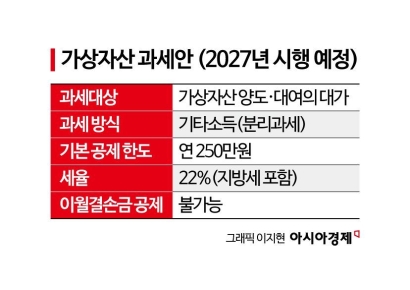 "Stocks Are Not Taxed, but Annual Crypto Gains Over 2.5 Million Won to Be Taxed Next Year... Investors Push Back"
- "Not Jealous of Winning the Lottery"... Entire Village Stunned as 200 Million Won Jackpot of Wild Ginseng Cluster Discovered at Jirisan
- General Strike D-1: Final Negotiations Between Samsung Electronics Labor and Management Over One Key Issue
- "How Did an Employee Who Loved Samsung End Up Like This?"... Past Video of Samsung Electronics Union Chairman Resurfaces
- "Even With a 90 Million Won Salary and Bonuses, It Doesn’t Feel Like Much"... A Latecomer Rookie Who Beat 70 to 1 Odds [Scientists Are Disappearing] ③
The video offered tips to maximize health insurance benefits in Korea, including ▲getting a free health checkup once every two years (checking eligibility for physical examination), ▲receiving scaling and wisdom tooth extraction cheaply in Korea, and ▲not worrying about the cost of tertiary hospitals since they also have health insurance benefits, so be sure to bring a referral letter.
© The Asia Business Daily(www.asiae.co.kr). All rights reserved.