"The Real Impact of High Interest Rates Begins Now... The Real Economy Will Be Shaken for 1-2 Years"
1-2 Years Required for Interest Rate Hike Shock to Materialize
Next Year Will Be More Challenging Than This Year
Artificial Intervention May Hinder Economic Cycles and Worsen Problems
Expectations for Passing the Economic Trough Remain Valid
Positive Outlook for Bond Investments... Conservative Approach to Alternatives Focused on Secondary Markets
Due to the possibility of prolonged high interest rates and concerns about an economic downturn, the investment outlook for the fourth quarter of this year appears somewhat bleak. In particular, the period from now through next year is expected to be when the cumulative impact of previous interest rate hikes becomes fully realized. While public markets such as stocks and bonds have already undergone a period of adjustment, it is anticipated that a full-scale correction will occur in private markets, including alternative investments. Uncertainty is expected to increase further, as major countries such as the United States, Europe, and Korea are all facing significant political events. We examined the investment opportunities and risks for the fourth quarter and early next year as seen by major institutional investors.

1-2 Years Required for Interest Rate Hike Shock to Materialize
The Chief Investment Officer (CIO) of Institution A expressed concern, stating, "The sharp rise in stock prices in the first half of this year was a reaction to last year's steep decline and the result of overly optimistic sentiment. The key issue for the fourth quarter is how the shock from rapid interest rate hikes will manifest in the real economy." He interpreted the first-half stock market rally as having run too far ahead, fueled by optimism and technological innovation stories such as artificial intelligence, secondary batteries, and semiconductors.
In fact, both domestic and international stock markets showed unexpected trends in the first half of this year. Initially, experts predicted a "low in the first half, high in the second half" scenario, with a sluggish first half followed by a recovery in the second half. However, stronger-than-expected economic performance in the United States and positive IT growth prospects led to a strong rebound in major developed markets during the first half. He commented, "We have not yet observed the true impact of interest rate hikes, so the real effects are only beginning now." He added, "There are some hasty predictions that the economy will enter a 'Goldilocks' phase, achieving moderate growth and subdued inflation despite rapid rate hikes. However, it typically takes at least one to two years for the shock of rate hikes to be fully reflected in the real economy," offering a somewhat pessimistic outlook.

Next Year Will Be More Challenging Than This Year
The CIO of Institution B commented, "We are currently in a phase where the abnormal disconnect between the market and policy is being resolved, and the two are converging. In fact, I believe next year will be even more difficult and uncertain than this year." He noted, "The key issue is how long the 'weak links' in finance and industry can withstand prolonged high interest rates." He also predicted that uncertainty would increase further due to intensified conflicts over supply chain restructuring, movements by Middle Eastern and Russian actors regarding oil prices, and the complex political schedules in major countries such as the United States, the United Kingdom, and Taiwan.
If high interest rates persist, there is a risk that financial distress could emerge among self-employed individuals and young people in their 20s and 30s, whose foundations were weakened by the COVID-19 pandemic. Real estate project financing (PF), amounting to approximately 140 trillion won, is also a ticking time bomb. As of the end of last year, there were 3,903 marginal companies unable to pay interest with their earnings. Among them, 903 companies had been classified as marginal for more than five years, accounting for 23.1% of all marginal companies. Warning signals are flashing across the financial investment market, with delinquency rates at lending companies exceeding 11%.
Artificial Intervention May Hinder Economic Cycles and Worsen Problems
There are also concerns that policy interventions targeting 'weak links' could negatively affect the overall economic cycle and exacerbate problems. Next year, Korea will hold general elections, and the United States will have a presidential election. Institutional investors expect that excessive economic policy interventions may occur due to political needs and are concerned about the resulting negative effects. In particular, anxiety is mounting among institutions regarding real estate loans, including project financing (PF). The CIO of Institution C stated, "The real estate sector is facing serious problems. This is an opportunity to address the underlying issues and foster recovery, but with next year's general election approaching, only temporary fixes are being applied." He warned, "If these problems are merely covered up and ignored, they will eventually explode on a larger scale." He added, "The same is true in the United States, where, ahead of next year's presidential election, one side is raising interest rates to withdraw excess liquidity, while the government is issuing more government bonds and injecting more money, creating policy inconsistency. If the economic cycle is disrupted due to political needs, there will inevitably be consequences."
Expectations for Passing the Economic Trough Remain Valid
There is still hope that the global economy is passing through its lowest point. The OECD Composite Leading Indicator has been recovering since hitting a low in October last year. Although the global manufacturing sector remains sluggish, rapidly shrinking inventories provide clear signals that the manufacturing downturn is bottoming out. Institutions are closely monitoring whether China’s manufacturing sector will recover. While the recovery of China's Manufacturing Purchasing Managers' Index (PMI) is seen as positive, there is caution regarding the potential for inventory build-up. As the air conditioning season in Middle Eastern oil-producing countries ends and hurricane concerns subside, the pace of oil price increases is also expected to slow. However, due to extended additional production cuts by Saudi Arabia and Russia, as well as the onset of the heating season in the Northern Hemisphere, oil demand is expected to exceed supply through the end of the year, limiting any decline in oil prices. If the upward trend in oil prices stabilizes, it could lead to stable government bond yields and gradually ease uncertainty in the global financial markets.
Related Articles
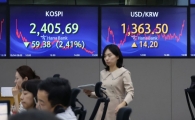 Foreigners Shrink Amid High Interest Rates and Exchange Rates, Selling Pressure in Stagnant Stock Market
- Fuel Tax Reduction Measures Extended Until Year-End... Choo Kyung-ho Actively Considering 2-Month Extension
- Lee Chang-yong "High interest rates will persist for a long time... Financial stability system must be improved"
- "High Interest Rates and Economic Recession..." Nationwide Officetel Transactions Halved
Positive Outlook for Bond Investments... Conservative Approach to Alternatives Focused on Secondary Markets
From an investment perspective, bond investments are expected to continue for the time being. The CIO of Institution D commented, "Interest rates are expected to remain high for a while, which will increase financial market risks. Stocks have broken through support levels and entered a downward phase, though technical rebounds are possible." He predicted, "For bond investments, interest rates are likely to peak in the fourth quarter, making the outlook positive." Alternative investments are expected to face continued challenges as high interest rates persist. He expressed a positive outlook on senior and secondary investments, as well as investments in infrastructure assets.
© The Asia Business Daily(www.asiae.co.kr). All rights reserved.







