Kyung Hee University Research Team Develops New Material to Advance OLED Technology
The research team led by Professor Park Jong-wook of the Department of Chemical Engineering at Kyung Hee University (President Han Gyuntae) has developed a new material to enhance OLED performance through joint research with Professor Park Soo-young's team at Seoul National University.
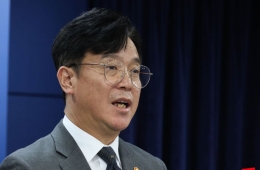
![Professor Park Jong-wook, Department of Chemical Engineering, Kyung Hee University. [Image source=Yonhap News]](http://www.asiae.co.kr/news/img_view.htm?img=2023091417121576414_1694679136.jpg)
Professor Park Jong-wook, Department of Chemical Engineering, Kyung Hee University. [Image source=Yonhap News]
View original imageThe performance of OLEDs used in mobile phones and TV displays is distinguished by how efficiently they can produce the three primary colors of light: red, green, and blue. Among these, blue is more challenging to achieve than red and green, making it a critical factor in determining OLED performance.
The material proposed by the research team recorded world-class blue light emission efficiency. They presented a new candidate material group that can be utilized in OLED development and filed a patent based on the developed technology. This research was recognized for its excellence and published in the September issue of the prestigious journal Nature Communications (IF=16.6).
Among the three primary colors of light, blue has the shortest wavelength but low energy efficiency due to its high band energy. While red and green can improve efficiency in various ways compared to blue, methods to enhance blue efficiency are relatively limited. Unlike existing blue light-emitting materials, the research team inserted silicon atoms into the molecule. This maximized energy transfer within the luminescent material, increasing emission efficiency. The newly developed material achieved emission optimization through characteristics such as intermolecular distance, amorphous thin-film form, high molecular orientation, and rapid energy transfer.
The material developed by the research team recorded a world-class blue emission efficiency of over 38% using only a two-component system, not the typical three-component system. Additionally, it succeeded in demonstrating blue emission efficiency exceeding 30% even under a high brightness state of 1000 nits, which had not been achieved before. Professor Park Jong-wook explained the significance of the research, saying, "Unlike before, we were able to optimize and design molecules through silicon atoms. By applying principles like those in this study, it is possible to design light-emitting materials using many other atoms. This could lead to the emergence of numerous new material candidates in the future, providing an opportunity for OLEDs to make a significant leap forward."
Hot Picks Today
 "Stocks Are Not Taxed, but Annual Crypto Gains Over 2.5 Million Won to Be Taxed Next Year... Investors Push Back"
- "Don't Throw Away Coffee Grounds" Transformed into 'High-Grade Fuel' in Just 90 Seconds [Reading Science]
- Signed Without Viewing for 1.6 Billion Won... Jamsil and Seongbuk Jeonse Prices Jump 200 Million Won in a Month [Real Estate AtoZ]
- "Groups of 5 or More Now Restricted"... Unrelenting Running Craze Leaves Citizens and Police Exhausted
- "Even With a 90 Million Won Salary and Bonuses, It Doesn’t Feel Like Much"... A Latecomer Rookie Who Beat 70 to 1 Odds [Scientists Are Disappearing] ③
Demand for blue light-emitting materials is expected to increase with the advancement of the display market. This research also raises the possibility of domestic production of display materials. Furthermore, it secured future core technologies to improve market share. Professor Park Jong-wook's research team plans to continue developing materials using silicon atoms and will also pursue the development of blue light-emitting devices using atoms other than silicon. Professor Park stated, "We plan to develop materials with high efficiency and long lifespan to create future value while striving to secure national technological competitiveness."
© The Asia Business Daily(www.asiae.co.kr). All rights reserved.