'My Nose is on Fire' in China... North Korea, China, Russia Close Ties Shift from 'Key Link' to 'Weak Link'
China Keeps Distance at North Korea-Russia Summit
"China's Biggest Challenge is Economic Recovery"
Amid the solidification of the honeymoon relationship between North Korea and Russia following the summit between North Korean State Affairs Commission Chairman Kim Jong-un and Russian President Vladimir Putin, attention is focusing on China’s ‘silence,’ which was the key link in the North Korea-China-Russia triangular alliance. China has so far played the role of ‘Russia’s backer and North Korea’s patron,’ but since North Korea’s Victory Day, it has shown an ambiguous ‘distancing’ attitude. Analysts suggest this reflects China’s predicament of being ‘overwhelmed by its own problems,’ such as global supply chain isolation and economic crisis. Therefore, China is expected to maintain a somewhat ambiguous stance of neither too close nor too distant (不可近不可遠) toward North Korea-China and North Korea-Russia relations for a considerable period.
![[Image source=Yonhap News]](http://www.asiae.co.kr/news/img_view.htm?img=2023091318002674721_1694595626.jpg)
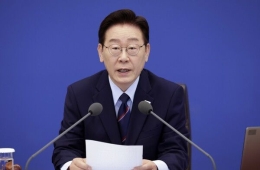
According to diplomatic sources on the 14th, Mao Ning, spokesperson for China’s Ministry of Foreign Affairs, drew a clear line during the regular briefing on the 12th by stating, “The visit of the North Korean leader to Russia is a matter between North Korea and Russia,” and has not expressed a clear position on the North Korea-Russia summit. Although the possibility of trilateral military exercises among North Korea, China, and Russia was raised following the summit, the prevailing view is that it is unlikely to materialize given China’s lukewarm attitude. This change in stance was openly reflected in the significant downgrade of the rank of Chinese officials sent by the Chinese Party and government delegation to the Victory Day ceremony on July 27.
The Chinese delegation led by Vice Premier Liu Guozhong had a lower power ranking compared to the 70th anniversary of the regime’s establishment five years ago. In 2018, Li Zhanshu, the third-ranking member of the Communist Party Politburo Standing Committee and Chairman of the Standing Committee of the National People’s Congress (equivalent to the Speaker of the National Assembly), led the delegation as a special envoy of President Xi Jinping during his visit to North Korea.
China Prioritizes Economic Recovery... Begins Distancing from North Korea and Russia
Experts believe that China is continuing solidarity with North Korea and trade with Russia but has started to reconsider the strategic interests of the North Korea-China-Russia alliance in light of isolation from the West and the crisis of supply chain realignment triggered by the United States. Joo Jae-woo, head of the China Research Center at the Korea Institute for National Strategy, said, “China’s biggest challenge is economic recovery, and improving relations with the United States is an urgent priority for this.” He added, “The relationship with Russia is based on mutual interests as an energy resource supplier, so it is expected that China will minimize its involvement to avoid provoking each other.”
![[Image source=Yonhap News]](http://www.asiae.co.kr/news/img_view.htm?img=2023091410562675580_1694656586.jpg)
In fact, the Chinese economy continues to struggle due to defaults and bankruptcies among real estate developers, as well as declines in investment and consumption. All economic growth drivers, including exports and domestic demand, are sluggish. China officially projected a growth rate of about 5% this year, but exports have decreased over the past four months, and international credit rating agencies have lowered economic growth forecasts due to the real estate market crisis. The Chinese government officially expected growth of around 5% this year following 5.5% growth in the first half of the year and 3% last year, but some institutions have revised their forecasts downward to as low as 4.5% since early this year or late last year.
As a result, it is diagnosed that China, which was effectively the hub of the North Korea-China-Russia triangular formation, has now become the ‘weak link.’ China has leveraged its overwhelming influence over North Korea to enhance the negotiating power of South Korea, the United States, and Japan. However, since U.S. Secretary of State Antony Blinken’s visit to China in June, China has inevitably become conscious of U.S. containment and pressure.
Weak Link of North Korea-China-Russia Highlighted... Limits of the Triangular Alliance
This change in attitude stems from the analysis that China is not in a position to support strengthening military cooperation with Russia and North Korea. Since Russia’s invasion of Ukraine in February last year, China has been urged by the international community not to supply weapons to Russia. Although Chinese President Xi Jinping visited Moscow in March this year and met President Putin to enhance economic and trade cooperation between China and Russia, he drew a line at military support. Furthermore, China has positioned itself as a ‘mediator in the Ukraine war.’ This means there is little justification or reason for China to join the strategic alliance between North Korea and Russia, which is expected to face strong Western backlash.
Above all, North Korea and Russia have lost much diplomatic legitimacy due to international sanctions and criticism over nuclear missile development and the invasion of Ukraine, respectively. If China were to overly sympathize with them, it could face evaluations that its ‘standing’ in the international community has declined.
Hot Picks Today
 "Stocks Are Not Taxed, but Annual Crypto Gains Over 2.5 Million Won to Be Taxed Next Year... Investors Push Back"
- "Don't Throw Away Coffee Grounds" Transformed into 'High-Grade Fuel' in Just 90 Seconds [Reading Science]
- Despite Warnings of "Do Not Enter, You May Not Make It Out Alive"... Foreign Tourist Stranded After Unauthorized Climb on Jeju Sanbangsan
- Signed Without Viewing for 1.6 Billion Won... Jamsil and Seongbuk Jeonse Prices Jump 200 Million Won in a Month [Real Estate AtoZ]
- "Even With a 90 Million Won Salary and Bonuses, It Doesn’t Feel Like Much"... A Latecomer Rookie Who Beat 70 to 1 Odds [Scientists Are Disappearing] ③
This is why the limits of the North Korea-China-Russia triangular cooperation are being highlighted. For China, where the outcome of bilateral confrontation with the United States is more important than bloc confrontation, the expansion of military cooperation-centered North Korea-China-Russia triangular cooperation could result in more losses than gains. This is why there is an interpretation that China could be the ‘missing link’ in the North Korea-China-Russia alliance, which aims to showcase solidarity while targeting the South Korea-United States-Japan cooperation.
© The Asia Business Daily(www.asiae.co.kr). All rights reserved.