Declared RE100... The Power Supply Dilemma of Yongin Semiconductor Cluster
The Yongin semiconductor cluster, set to become the world's largest advanced semiconductor production facility with over 200 semiconductor fabless, materials, components, and equipment companies sequentially moving in, is facing difficulties in its progress due to power supply issues.

On the 12th, the Ministry of Trade, Industry and Energy visited the planned site for the Yongin system semiconductor cluster along with Korea Electric Power Corporation (KEPCO) and semiconductor industry stakeholders to discuss cooperation measures to supply the expected power demand of over 10 gigawatts (GW) by 2050. This was a follow-up to the "Yongin Semiconductor Cluster Power Supply Measures Meeting" held last July, chaired by the Minister of Trade, Industry and Energy, with participation from the Ministry of Land, Infrastructure and Transport, KEPCO, and executives from Samsung Electronics and SK Hynix.
Stable power supply is essential for the Yongin semiconductor cluster to function properly. The government and semiconductor industry anticipate a power demand exceeding 10GW by 2050, when the cluster construction and corporate investments are completed. This corresponds to about one-quarter of the current power demand in the Seoul metropolitan area.
Accordingly, the government and KEPCO are promoting a plan to build LNG power plants within the industrial complex that can be constructed within 2 to 3 years to supply the electricity needed in the early stages of cluster development. The plan involves installing six LNG power plants to initially supply about 3GW of required power to the industrial complex, and by 2042, when all five semiconductor factories are operational, to supply 10GW. It is calculated that without LNG power plants, the initial establishment of the Yongin semiconductor cluster itself would be impossible.

The government is developing Yongin, Gyeonggi Province, into a national high-tech industrial complex to create the world's largest semiconductor cluster, and designating 14 new national industrial complexes in other regions to foster advanced industries such as semiconductors, future vehicles, and space. The photo shows the area around Namsa-eup, Cheoin-gu, Yongin-si, Gyeonggi Province, designated as a semiconductor national industrial complex. Photo by Jinhyung Kang aymsdream@
View original imageHowever, on the same day, the Democratic Party's Carbon Neutrality Committee held a press conference claiming that the Yongin semiconductor cluster is ignoring the global trend of RE100 (an international corporate agreement to source 100% of electricity used by companies from renewable energy such as wind and hydro by 2050) and demanded the cancellation of the plan to build six LNG power plants within the cluster. They raised their voices insisting that instead of the LNG power plant construction plan, which RE100 does not recognize, a renewable energy supply plan should be established.
The Carbon Neutrality Committee stated, "The Ministry of Trade, Industry and Energy has failed to prepare a renewable energy supply plan in anticipation of RE100 and the full implementation of the Carbon Border Adjustment Mechanism," adding, "The solar power facility capacity within the industrial complex is only 70MW, which is less than 1% of the Yongin semiconductor cluster's demand (10GW)." They also said, "Establishing a system semiconductor industrial complex in Yongin will only exacerbate the already saturated and overly concentrated Seoul metropolitan area."
Hot Picks Today
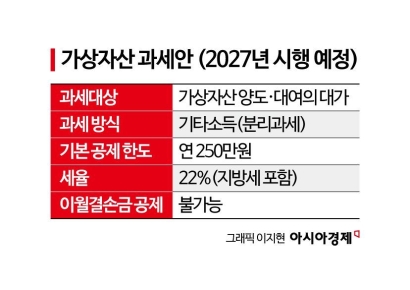 "Stocks Are Not Taxed, but Annual Crypto Gains Over 2.5 Million Won to Be Taxed Next Year... Investors Push Back"
- "Not Jealous of Winning the Lottery"... Entire Village Stunned as 200 Million Won Jackpot of Wild Ginseng Cluster Discovered at Jirisan
- "Rather Than Endure a 1.5 Million KRW Stipend, I'd Rather Earn 500 Million in the U.S." Top Talent from SNU and KAIST Are Leaving [Scientists Are Disappearing] ①
- "How Did an Employee Who Loved Samsung End Up Like This?"... Past Video of Samsung Electronics Union Chairman Resurfaces
- "Even With a 90 Million Won Salary and Bonuses, It Doesn’t Feel Like Much"... A Latecomer Rookie Who Beat 70 to 1 Odds [Scientists Are Disappearing] ③
Samsung Electronics and SK Hynix, the core pillars of the Yongin semiconductor cluster, have declared RE100 with a target year of 2050 to convert 100% of the electricity used at their domestic sites to renewable energy. Accordingly, even if the government proceeds with the Yongin semiconductor cluster construction through LNG power plants immediately, it faces the challenge of gradually reinforcing long-distance transmission networks to expand the supply of renewable energy. Global companies such as Apple are pressuring semiconductor partners to meet RE100 in line with the global RE100 trend. There is also an analysis that if Korean semiconductor companies do not properly implement RE100, semiconductor product exports could decrease by 31%.
© The Asia Business Daily(www.asiae.co.kr). All rights reserved.







