The Opposition Party Also Considers Legislation to "Reduce Income Tax by Number of Children"...Focus on Regular National Assembly Session
Opposition to Submit Own Tax Law Amendment Proposal Next Month
"Under Review... In-Depth Discussion on Adoption"
Annual Tax Revenue Decrease of 3.6 Trillion Won Poses Challenge

The Democratic Party of Korea is considering legislation that would reduce income tax rates based on the number of children. Attention is focused on whether parliamentary discussions will accelerate, as Kang Dae-sik, a member of the ruling People Power Party, has already proposed an amendment to the Income Tax Act that applies differentiated comprehensive income tax rates according to the number of children. However, Kang’s proposal, modeled after France’s low birthrate solution tax system called 'N to the power of N,' faces obstacles as the fiscal authorities have expressed reluctance due to the expected tax revenue loss of about 3.6 trillion won annually.
According to political circles on the 29th, the Democratic Party’s Special Committee on Tax and Fiscal Reform has begun discussions on the amendment to the Income Tax Act that applies differentiated income tax rates based on the number of children. Lee Yong-seop, chair of the Special Committee on Tax and Fiscal Reform, said, "Because the low birthrate issue is serious, the related Income Tax Act amendment is under review," adding, "Whether to adopt it will be decided after in-depth discussions within the special committee."
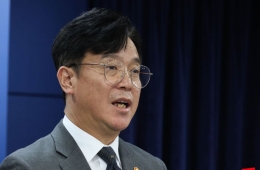
![President Yoon Suk-yeol is speaking at the Cabinet meeting held on the 29th at the Presidential Office building in Yongsan, Seoul. On this day, the "2023 Tax Reform Bill" was finally approved and is scheduled to be submitted to the National Assembly on the first day of the regular session next month. [Image source=Yonhap News]](http://www.asiae.co.kr/news/img_view.htm?img=2023082915221056003_1693290129.jpg)
President Yoon Suk-yeol is speaking at the Cabinet meeting held on the 29th at the Presidential Office building in Yongsan, Seoul. On this day, the "2023 Tax Reform Bill" was finally approved and is scheduled to be submitted to the National Assembly on the first day of the regular session next month. [Image source=Yonhap News]
View original imageThe Democratic Party plans to discuss the amendment together with the government’s '2023 Tax Reform Bill,' which will be submitted to the regular National Assembly session on the 1st of next month.
At a recent tax reform bill forum hosted by Jin Sun-mi, a member of the National Assembly’s Strategy and Finance Committee from the Democratic Party, Professor Jung Se-eun of Chungnam National University, a member of the Democratic Party’s Special Committee on Tax and Fiscal Reform, expressed the opinion that the basic income tax deduction for multi-child families should be increased. Professor Jung said, "Support should be strengthened for middle-class and lower salaried workers, self-employed individuals, and multi-child families whose real income has decreased due to inflation," adding, "If the basic deduction amount is increased, higher-income taxpayers may receive more benefits, so it should only apply to taxpayers below a certain income threshold."
If income tax is differentiated by number of children... average tax revenue decrease of 3.6 trillion won over 5 years
The Income Tax Act amendment proposed earlier by Representative Kang applies differentiated basic tax rates according to the number of children. For families with one child, the tax rate across all brackets is reduced by 2 percentage points; for two children, by 3 percentage points; and for three or more children, by 4 percentage points. The current Income Tax Act applies a progressive tax system ranging from 6% to 45% across taxable income brackets regardless of the number of children.
The National Assembly Budget Office’s cost estimate shows that if income tax rates are differentiated by number of children, tax revenue will decrease starting from 1.86 trillion won in 2024, then 4.59 trillion won in 2025, 3.91 trillion won in 2026, 3.85 trillion won in 2027, and 3.79 trillion won in 2028. The average annual decrease over five years is estimated at 3.6 trillion won, totaling about 18 trillion won.

Income tax is a national tax, and if the amendment is enacted, it will result in reduced tax revenue. However, experts evaluate that this tax revenue decrease will not significantly burden the national finances. According to the National Tax Service, income tax revenue amounted to 128.7 trillion won in 2022. Over the past three years, income tax revenue has increased by about 10 trillion won annually, so even if some tax revenue decreases, it is unlikely to have a major impact. Baek Je-heum, chairman of the Korea International Tax Association (and former president of the Korean Tax Law Association), said, "About 100 trillion won is spent on childbirth encouragement budgets. Although there is a decrease in tax revenue, from a long-term perspective, the benefits are greater and can offset the revenue loss," adding, "If the government manages it skillfully, it can be a good policy."
Hot Picks Today
 "Stocks Are Not Taxed, but Annual Crypto Gains Over 2.5 Million Won to Be Taxed Next Year... Investors Push Back"
- "Don't Throw Away Coffee Grounds" Transformed into 'High-Grade Fuel' in Just 90 Seconds [Reading Science]
- Signed Without Viewing for 1.6 Billion Won... Jamsil and Seongbuk Jeonse Prices Jump 200 Million Won in a Month [Real Estate AtoZ]
- "Groups of 5 or More Now Restricted"... Unrelenting Running Craze Leaves Citizens and Police Exhausted
- "Even With a 90 Million Won Salary and Bonuses, It Doesn’t Feel Like Much"... A Latecomer Rookie Who Beat 70 to 1 Odds [Scientists Are Disappearing] ③

However, the government holds a negative stance on such legislation. With recent concerns about a 'tax revenue shortfall,' the government finds the expected tax revenue decrease from this amendment burdensome. In fact, national tax revenue until the first half of this year was 178.5 trillion won, which is 39.7 trillion won (18.2%) less than last year. A Ministry of Economy and Finance official said, "The recently announced tax reform bill does not include the proposed Income Tax Act amendment," adding, "We will observe the parliamentary discussion process."
© The Asia Business Daily(www.asiae.co.kr). All rights reserved.