Japan's Discharge of Contaminated Water... China Announces "Complete Ban on Imports of Japanese Seafood"
![On the 24th, in front of Jukdo Market in Pohang, Gyeongbuk, the Pohang Citizens' Action Against Fukushima Contaminated Water Discharge, composed of civic groups including the Pohang Environmental Movement Union, held a press conference opposing the discharge of contaminated water from the Japanese nuclear power plant. <br>[Image source=Yonhap News]](http://www.asiae.co.kr/news/img_view.htm?img=2023082417493051468_1692866969.jpg)
On the 24th, in front of Jukdo Market in Pohang, Gyeongbuk, the Pohang Citizens' Action Against Fukushima Contaminated Water Discharge, composed of civic groups including the Pohang Environmental Movement Union, held a press conference opposing the discharge of contaminated water from the Japanese nuclear power plant.
[Image source=Yonhap News]
As Japan began discharging contaminated water from the Fukushima Daiichi Nuclear Power Plant into the ocean, China has imposed a complete ban on imports of Japanese seafood.
On the 24th, the General Administration of Customs of China issued a statement saying, "To prevent the radioactive contamination risk posed by the discharge of nuclear-contaminated water from Fukushima, protect the health of Chinese consumers, and ensure the safety of imported food, from today onwards, all seafood originating from Japan will be completely banned from import."
China strongly criticized Japan's discharge of contaminated water.
Wang Wenbin, spokesperson for the Chinese Ministry of Foreign Affairs, stated at a regular briefing that "China firmly opposes and strongly condemns Japan's unilateral commencement of ocean discharge of contaminated water from the Fukushima nuclear accident, ignoring strong opposition from the international community," and emphasized that "China has already lodged a stern negotiation with Japan."
He added, "We demand that the Japanese government stop its wrongful actions," and pointed out that "the ocean discharge of nuclear-contaminated water is an extremely selfish and irresponsible act that disregards the international public interest."
China had previously banned seafood imports from 10 regions in Japan, including Fukushima Prefecture, but with the start of Japan's contaminated water discharge, the import ban has been expanded to cover all regions of Japan.
The General Administration of Customs explained that this measure is in accordance with the "China Food Safety Law," the "China Import and Export Food Safety Management Law," and the World Trade Organization's "Agreement on the Application of Sanitary and Phytosanitary Measures."
China has also expressed doubts about the investigation results of the International Atomic Energy Agency (IAEA) regarding Japan's contaminated water discharge.
Spokesperson Wang said on the day, "If the nuclear-contaminated water is safe, there is no need to discharge it into the ocean; if it is not safe, it should not be discharged into the ocean at all," and he emphasized, "I want to highlight that a considerable number of people within Japan also question and oppose the Japanese government's discharge of contaminated water."
Hot Picks Today
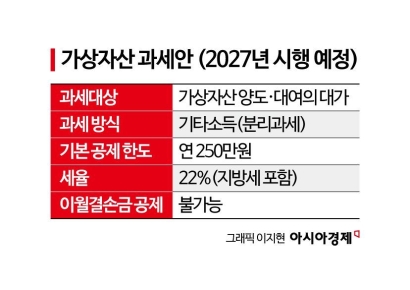 "Stocks Are Not Taxed, but Annual Crypto Gains Over 2.5 Million Won to Be Taxed Next Year... Investors Push Back"
- "Not Jealous of Winning the Lottery"... Entire Village Stunned as 200 Million Won Jackpot of Wild Ginseng Cluster Discovered at Jirisan
- "Even With a 90 Million Won Salary and Bonuses, It Doesn’t Feel Like Much"... A Latecomer Rookie Who Beat 70 to 1 Odds [Scientists Are Disappearing] ③
- "Rather Than Endure a 1.5 Million KRW Stipend, I'd Rather Earn 500 Million in the U.S." Top Talent from SNU and KAIST Are Leaving [Scientists Are Disappearing] ①
- "How Did an Employee Who Loved Samsung End Up Like This?"... Past Video of Samsung Electronics Union Chairman Resurfaces
Earlier, on the 7th of last month, the Chinese government announced that it was closely monitoring the impact of the contaminated water discharge on food and would "take all necessary measures in a timely manner."
© The Asia Business Daily(www.asiae.co.kr). All rights reserved.







