[Reporter’s Notebook] The 'Shock and Haste' of Government R&D Budget Cuts
![[Reporter’s Notebook] The 'Shock and Haste' of Government R&D Budget Cuts](http://www.asiae.co.kr/news/img_view.htm?img=2023051711000133731_1684288801.jpg)
'Shock and haste.'
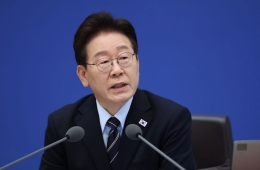
These are the two words that come to mind when looking at the government's announcement on the 22nd regarding next year's major research and development (R&D) budget cuts. Minister Lee Jong-ho of the Ministry of Science and ICT announced that the major R&D budget under the ministry's jurisdiction for next year, initially set at 24.9 trillion won, will be reduced by 3.4 trillion won to 21.5 trillion won. This is a 13.9% cut compared to this year. The national R&D budget has consistently increased under the justification of being a 'century-long national plan.' Although there was a 97.1 billion won (10.5%) cut during the Roh Tae-woo administration in 1991, this is the largest cut in history.
Besides the budget, the institutional reform proposals are also unprecedented. Overseas major research institutions that 'share values' will be directly involved in national R&D. The ideology of 'alliance' has appeared in science and technology R&D, where national interests are sharply contested. Meritocracy, which had been disappearing due to hindering challenging research, has been revived. The budget for government-funded research institutes, including research allowances, will be cut by 10%, and annual performance evaluations will be conducted for each ministry's R&D, with the bottom 20% subject to restructuring.
Regarding these unprecedented administrative measures, Minister Lee explained, "Inefficiencies occurred as the budget rapidly increased during previous administrations." Until now, some R&D fields have seen budget allocations distributed regardless of importance or necessity. Although President Yoon Suk-yeol's mention of the 'cartel' issue on June 28 may have been somewhat exaggerated in expression, it is a problem that must be corrected.
However, the grounds and criteria matching the 'shock' of the largest-ever cut remain unclear. There was only a single remark from the president. No one has explained in which parts of the national R&D the cartel formed, how inefficiently the budget was executed, or how they plan to correct it. The Ministry of Science and ICT also limited its explanation to stating there are 'cartel-like elements.' This is insufficient as an explanation for suddenly making drastic cuts after remaining silent for a year and six months since the March 2022 presidential election. There are growing concerns that the sudden budget cuts could shake the century-long national plan in the era of the 4th Industrial Revolution, where science and technology have emerged as the most important means of national development.
Hot Picks Today
 "Stocks Are Not Taxed, but Annual Crypto Gains Over 2.5 Million Won to Be Taxed Next Year... Investors Push Back"
- "Don't Throw Away Coffee Grounds" Transformed into 'High-Grade Fuel' in Just 90 Seconds [Reading Science]
- KEPCO Three-Year Bond Yield Surpasses 4%... Warning Signs of Liquidity Crunch in Bond Market
- "Groups of 5 or More Now Restricted"... Unrelenting Running Craze Leaves Citizens and Police Exhausted
- "Even With a 90 Million Won Salary and Bonuses, It Doesn’t Feel Like Much"... A Latecomer Rookie Who Beat 70 to 1 Odds [Scientists Are Disappearing] ③
The appearance of the word 'value' under the pretext of international science and technology exchange is also incongruous. Consider Nuriho, which allies such as the United States and Japan all refused to provide technology for. No country easily shares science and technology critical to security and the economy with others. Moreover, the announcement was made without detailed preparations such as methods for joint utilization of intellectual property rights (IP). Even in research fields urging the necessity of overseas exchanges, criticism of haste is strong. The full-scale implementation of meritocracy raises concerns about hindering autonomous and creative research achievements. Amid shortages of science and engineering talent and incidents of overseas outflow, the proposal to drastically cut the budget for government-funded research institutes and even reduce allowances has been criticized as 'unrealistic.'
© The Asia Business Daily(www.asiae.co.kr). All rights reserved.