Every Other House is a 'Coffee Heaven' in Korea... Coffee Bean Imports Have Decreased
Decrease in First Coffee Imports from January to July This Year
Factors Include Base Effect and Reduced Coffee Production
This year, the scale of coffee imports in Korea has decreased compared to the previous year. If the current trend continues until the end of the year, it is expected that the volume of coffee imports will decline for the first time in five years.
According to trade statistics from the Korea Customs Service on the 21st, coffee imports from January to July this year amounted to 109,752 tons (t), a 3.9% decrease compared to the same period last year. Accordingly, the value of coffee imports also fell by 9.5% year-on-year to 646.73 million dollars.
The volume and value of coffee imports include all coffee husks and coffee substitutes containing coffee, regardless of whether they are roasted or decaffeinated.

Coffee import volume has steadily grown significantly over the past five years. It was 158,000t in 2018, 168,000t in 2019, 177,000t in 2020, 189,000t in 2021, and 205,000t last year.
The import value also increased from 640 million dollars (approximately 858.2 billion KRW) in 2018 to 920 million dollars (approximately 1.2337 trillion KRW) in 2021, reaching 1.3 billion dollars (approximately 1.74 trillion KRW) last year.
The reasons for the decrease in coffee import volume include the base effect caused by rapid growth over recent years and a decline in coffee production in exporting countries. Major coffee-producing countries such as Brazil and Indonesia have seen a sharp drop in coffee harvests due to recent climate changes.
In the case of Indonesia, the world's third-largest producer of Robusta coffee beans, the U.S. Department of Agriculture has forecasted that coffee harvests could decrease by 20% until next year.
![The number of coffee specialty shops in Korea is reported to be among the highest in the world. The photo is not related to any specific expression in the article. [Image source=Yonhap News]](http://www.asiae.co.kr/news/img_view.htm?img=2023082108551045642_1692575710.jpg)
The number of coffee specialty shops in Korea is reported to be among the highest in the world. The photo is not related to any specific expression in the article. [Image source=Yonhap News]
View original imageMeanwhile, per capita coffee consumption among adults in Korea is at a level comparable to Western countries.
According to a study by the Hyundai Research Institute, since 2015, the average annual coffee consumption per Korean has been 291 cups (based on 10g of coffee beans), more than twice the global average of 130 cups. In 2018, domestic consumption (353 cups) was nearly three times higher than the global average (132 cups).
Hot Picks Today
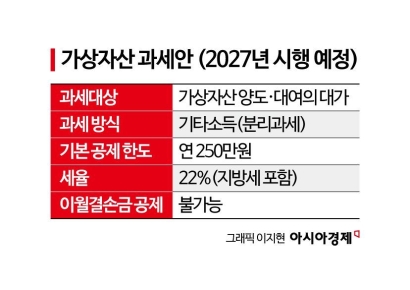 "Stocks Are Not Taxed, but Annual Crypto Gains Over 2.5 Million Won to Be Taxed Next Year... Investors Push Back"
- "Not Jealous of Winning the Lottery"... Entire Village Stunned as 200 Million Won Jackpot of Wild Ginseng Cluster Discovered at Jirisan
- "Rather Than Endure a 1.5 Million KRW Stipend, I'd Rather Earn 500 Million in the U.S." Top Talent from SNU and KAIST Are Leaving [Scientists Are Disappearing] ①
- "How Did an Employee Who Loved Samsung End Up Like This?"... Past Video of Samsung Electronics Union Chairman Resurfaces
- "Even With a 90 Million Won Salary and Bonuses, It Doesn’t Feel Like Much"... A Latecomer Rookie Who Beat 70 to 1 Odds [Scientists Are Disappearing] ③
Korea ranks second in the world for per capita coffee consumption, following France, which is first with 551.4 cups. The number of coffee shops per one million people is 1,384, the highest in the world, more than twice that of Japan, which ranks second with 529 shops. The coffee market size exceeded 4.3 billion dollars (approximately 5.76 trillion KRW) in 2021, increasing more than 13 times from 300 million dollars (approximately 420 billion KRW) in 2007.
© The Asia Business Daily(www.asiae.co.kr). All rights reserved.