Typhoon 'Khanun' Breaks Branch of Natural Monument Jeongipumsong Pine Tree
Two Branches Broken by 18.7m/s Wind and Rain
Boeun-gun and Tree Hospital Conduct Urgent Diagnosis of Current Condition
![On the 10th, two branches of Jeongipumsong Pine Tree (Natural Monument No. 103) in Songnisan were broken and hanging down due to the rain and wind brought by Typhoon Khanun, the 6th typhoon. <br>[Image source=Yonhap News]](http://www.asiae.co.kr/news/img_view.htm?img=2023081020494137212_1691668182.jpg)
On the 10th, two branches of Jeongipumsong Pine Tree (Natural Monument No. 103) in Songnisan were broken and hanging down due to the rain and wind brought by Typhoon Khanun, the 6th typhoon.
[Image source=Yonhap News]
Two branches of the 600-year-old Jeongipumsong Pine Tree in Sogrisan (Natural Monument No. 103) were broken by the rain and wind brought by Typhoon Khanun, the 6th typhoon of the season.
According to Boeun County on the 10th, around 1:30 PM that day, a public official on patrol discovered two branches extending northward (towards Beopjusa Temple) had broken and were hanging down.
The branches, about 15 to 20 cm in diameter, located at mid-height of the Jeongipumsong, were snapped. The lengths of the broken branches are reported to be approximately 6 to 7 meters and 3.5 meters respectively.
On that day, Sogrisan experienced strong rain and wind with a peak wind speed of 18.7 m/s due to the influence of Typhoon Khanun. The wind was so strong that it was difficult for an adult to walk against it.
Boeun County reported the current situation to the Cultural Heritage Administration and called in experts from Cheongju Tree Hospital to accurately assess the condition of the Jeongipumsong.
A Boeun County official said, “The broken area corresponds to about 70% of the total height of the Jeongipumsong,” adding, “Fortunately, it does not seem to be a thick branch that supports the tree’s overall shape.” He further explained, “The entrance to Sogrisan where the Jeongipumsong stands is a place where strong valley winds blow. It appears that the branches, weighed down by heavy rain, could not withstand the strong wind and eventually broke.”
Estimated to be around 600 years old, the Jeongipumsong has weakened since the 1990s and has suffered damage from natural disasters such as typhoons. In 1993, it lost a large branch on the northeast side due to strong winds, and five years later in 1998, another branch right next to it was lost.
Hot Picks Today
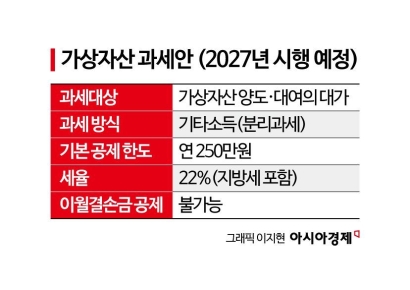 "Stocks Are Not Taxed, but Annual Crypto Gains Over 2.5 Million Won to Be Taxed Next Year... Investors Push Back"
- "Not Jealous of Winning the Lottery"... Entire Village Stunned as 200 Million Won Jackpot of Wild Ginseng Cluster Discovered at Jirisan
- "Even With a 90 Million Won Salary and Bonuses, It Doesn’t Feel Like Much"... A Latecomer Rookie Who Beat 70 to 1 Odds [Scientists Are Disappearing] ③
- "Rather Than Endure a 1.5 Million KRW Stipend, I'd Rather Earn 500 Million in the U.S." Top Talent from SNU and KAIST Are Leaving [Scientists Are Disappearing] ①
- "How Did an Employee Who Loved Samsung End Up Like This?"... Past Video of Samsung Electronics Union Chairman Resurfaces
In 2004, heavy snow caused the loss of five large and small branches, causing the Jeongipumsong’s distinctive elegant conical shape to disappear. Since then, in 2007, 2010, and 2012, the tree has suffered damage with large and small side branches breaking due to typhoons and gusts of wind.
© The Asia Business Daily(www.asiae.co.kr). All rights reserved.







