Opposition Party Launches Collective Action Against Contaminated Water Discharge... From Fasting to Overnight Sit-in Protests
Lee Jae-myung "I Will Definitely Stop It"
Japan Protest Visit, Plans for 2-Day Overnight Sit-in
Justice Party Also Promotes Visit of Japan SDP Officials to Korea
As the International Atomic Energy Agency (IAEA) released a review report stating that Japan's plan to discharge contaminated water from Fukushima meets safety standards, the opposition parties have begun a comprehensive response. While party-affiliated lawmakers have engaged in relay fasting and walking pilgrimages, they plan to initiate collective actions such as protests outside the parliament and overnight sit-ins. Alongside this, they are also pushing for a parliamentary hearing, legislative review, and solidarity with neighboring countries.
The Democratic Party of Korea held a rally condemning the Fukushima contaminated water discharge at the National Assembly on the 5th, marking the start of a full-scale protest. Lee Jae-myung, leader of the Democratic Party, convened an emergency party meeting that morning and stated, "We will definitely stop the Fukushima ocean dumping," adding, "We must prevent the discharge as much as possible until safety is guaranteed."
Park Kwang-on, the floor leader of the Democratic Party, commented on the IAEA report, saying, "Japan made the decision and must take responsibility; this means we sided with Japan," urging lawmakers to "take various practical actions."
After the party meeting, party-affiliated lawmakers gathered on the steps in front of the rotunda hall of the National Assembly, holding placards reading "Oppose Fukushima Contaminated Water Ocean Dumping" and "IAEA Report is a Japan-tailored Empty Report," shouting "Oppose Ocean Dumping."
Wi Sung-gon, chairman of the Countermeasures Committee to Prevent Fukushima Contaminated Water Ocean Dumping, pointed out in a resolution, "The IAEA final report neither verified the performance of the Advanced Liquid Processing System (ALPS) nor confirmed how many radioactive nuclides are contained in the contaminated water," and added, "Furthermore, it fails to meet the justification and optimization requirements of the IAEA general safety guidelines."
He then demanded that the Japanese government withdraw its discharge plan and propose alternative treatment methods other than ocean dumping. He also called on the Yoon Seok-yeol administration to file a lawsuit against Japan at the International Tribunal for the Law of the Sea and to implement provisional measures against the contaminated water dumping. He urged the People Power Party to cooperate in activating a parliamentary verification special committee and holding hearings.

Lee Jae-myung, the party leader, and Park Kwang-on, the floor leader, along with other members of the Democratic Party of Korea, are shouting slogans at the rally to stop the discharge of Fukushima contaminated water held on the stairs of the Rotunda Hall in the National Assembly on the 5th. Photo by Kim Hyun-min kimhyun81@
View original imageThe Democratic Party currently opposes the contaminated water discharge, with some lawmakers continuing fasting and walking pilgrimages. Democratic Party lawmaker Woo Won-shik, who has been fasting for ten days, has started an indefinite fast, and Democratic Party members of the National Assembly's Environment and Labor Committee began a relay fast the day before to block the discharge of contaminated water from the Fukushima nuclear power plant. Democratic Party lawmaker Kim Yong-min has been conducting an 800 km walking pilgrimage along the southern coast since the 21st of last month.
The Democratic Party plans a comprehensive response going forward. On this day, the leadership announced preparations to promote a parliamentary hearing, convene standing committees and joint meetings to discuss countermeasures, and conduct urgent inquiries. Domestically, they are pursuing solidarity with the four opposition parties (Democratic Party, Justice Party, Basic Income Party, Progressive Party), and internationally, they are also seeking solidarity with neighboring countries adjacent to the Pacific Ocean. They plan to conduct legislative reviews to ban all imports of Japanese products if Japan begins the discharge.
They will also carry out collective protests outside the parliament and overnight sit-ins. Party-affiliated lawmakers plan to hold relay filibusters and overnight sit-ins, including a rally, at the rotunda hall of the National Assembly main building starting the evening of the 6th. Subsequently, the 'Parliamentary Group to Prevent Ocean Dumping during Japan Visit,' led by lawmaker Ahn Min-seok, will visit Japan from the 10th to the 12th. They intend to visit the official residence of Japanese Prime Minister Kishida Fumio and the Japanese National Diet with four representatives of fishermen to express opposition to the contaminated water discharge before returning.
To implement these plans, the party will establish an internal 'control tower' to devise strategies to block the contaminated water discharge. Lee So-young, the party's floor spokesperson, explained in a back briefing, "As the discharge approaches and public concerns grow, the leadership agreed on the need for a comprehensive control tower to respond strongly, and lawmakers empathized," adding, "It will be operated like a situation room."
![[Image source=Yonhap News]](http://www.asiae.co.kr/news/img_view.htm?img=2023070511095687220_1688522996.jpg)
The Justice Party also took direct action on the same day to protest the contaminated water discharge. Lee Jeong-mi, leader of the Justice Party, who has been fasting for ten days, criticized the IAEA report during an emergency executive committee meeting held in front of the Japanese Embassy, calling it "a pardon and alibi for Japan's ocean dumping" and pointing out the report's problems. She added, "Instead of ocean dumping, it should be stored on land in a 'Peace Safety Tank,'" and said, "A 100,000-ton-class oil storage tank facility can store nuclear contaminated water long-term." Lee promised, "The Justice Party will pursue a parliamentary hearing to scrutinize the risks and illegality of ocean dumping, including this report."
The Justice Party's Task Force to Prevent Unauthorized Dumping of Contaminated Water also issued a statement that day, saying, "It is necessary to verify the final report through a special committee and respond at the parliamentary level to Fukushima nuclear contaminated water unauthorized dumping," and urged, "We call for the establishment of a parliamentary special committee at the July extraordinary session."
Hot Picks Today
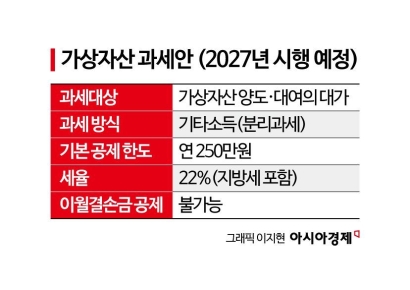 "Stocks Are Not Taxed, but Annual Crypto Gains Over 2.5 Million Won to Be Taxed Next Year... Investors Push Back"
- "Not Jealous of Winning the Lottery"... Entire Village Stunned as 200 Million Won Jackpot of Wild Ginseng Cluster Discovered at Jirisan
- "Even With a 90 Million Won Salary and Bonuses, It Doesn’t Feel Like Much"... A Latecomer Rookie Who Beat 70 to 1 Odds [Scientists Are Disappearing] ③
- General Strike D-1: Final Negotiations Between Samsung Electronics Labor and Management Over One Key Issue
- "How Did an Employee Who Loved Samsung End Up Like This?"... Past Video of Samsung Electronics Union Chairman Resurfaces
To oppose the contaminated water discharge, the Justice Party is arranging a visit to South Korea from July 6 to 8 by Ryuko Otsubaki, a member of the Japanese Social Democratic Party's House of Councillors, and Ryoichi Hattori, the party secretary-general. They plan to visit and support Justice Party leader Lee Jeong-mi, who is fasting, as well as Democratic Party lawmakers Woo Won-shik and Yoon Jae-gap, and hold meetings with lawmakers.
© The Asia Business Daily(www.asiae.co.kr). All rights reserved.