Jeonnam Province Launches Full-Scale Response to Minimize Damage from Red Tides and High Water Temperatures
Jeonnam Province has launched an all-out response system by preparing a strengthened comprehensive plan and holding a countermeasure committee to minimize the damage caused by red tides and high water temperatures, which cause significant harm to aquaculture fishermen.
Recently, Jeonnam Province established the '2023 Red Tide and High Water Temperature Response Comprehensive Plan,' which includes five major strategies: ▲ Establishing a prevention-centered response system ▲ Expanding surveillance and forecasting infrastructure ▲ Joint field response by public and private sectors ▲ Support for damage recovery and business stability ▲ Institutional improvement and technology dissemination.

Additionally, on the 26th, the 'Red Tide and High Water Temperature Countermeasure Committee,' attended by experts and others, was held at the provincial office to exchange opinions on the '2023 Red Tide and High Water Temperature Response Comprehensive Plan' and discuss measures such as the establishment of response support and control equipment, expansion of surveillance and forecasting infrastructure, and joint field response plans by public and private sectors.
Furthermore, on the 12th of next month, a '2023 Red Tide Control Simulation Drill' will be conducted in a densely populated sea cage aquaculture area in Sinji-myeon, Wando, where a simulated red tide outbreak will be set. The drill will mobilize a total of 26 vessels, including 2 from the province, 2 from Wando County, 2 from the Coast Guard, and 20 fishing boats, to carry out control operations, aiming to elevate practical response capabilities to the next level.
The National Institute of Fisheries Science and the Korea Meteorological Administration forecast that this year’s water temperature will be 0.5 to 1°C higher than average, with increased rainfall. Accordingly, high water temperature warnings are expected to be issued in early July, and red tide warnings are predicted to be issued in late July, one month earlier than last year.
Choi Jeong-gi, Director of the Marine Fisheries Bureau of Jeonnam Province, said, “As the discharge of contaminated water from Fukushima, Japan, is imminent, causing a slowdown in seafood consumption and making it a difficult time for aquaculture fishermen, we will thoroughly prepare to prevent damage from red tides and high water temperatures.” He added, “We also hope that fishermen actively participate in the ‘Protect Your Own Fish Farm Movement’ and the large-scale simultaneous control operations when red tides occur.”
Hot Picks Today
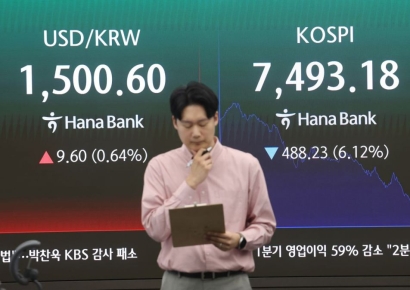 After Topping 8,000 Instead of Hitting 10,000... KOSPI Plunges—When Will It Rebound?
- "Samsung and Hynix Were Once for the Underachievers"... Hyundai Motor Employee's Lament
- [Breaking] Court Rules Against Samsung Electronics Union...1 Billion Won per Day Penalty for Exceeding Strike Scope
- Global Big Tech Joins AI Firms in Full-Scale AI Agent Showdown
- "That? It's Already Stashed" Nightlife Scene Crosses the Line [ChwiYak Nation] ③
In Jeonnam last year, a red tide advisory was issued on August 26 in the waters from Dolsando, Yeosu to Oenaro Island, Goheung, and was upgraded to a warning on August 30, raising concerns about damage. However, by mobilizing 435 personnel and 329 pieces of equipment and spreading a total of 1,964 tons of loess in the Yeosu to Wando waters, proactive measures were taken, resulting in no red tide damage at all.
© The Asia Business Daily(www.asiae.co.kr). All rights reserved.