Economic 6 Organizations "Stop the Submission of the Trade Union Act Amendment Bill to the Plenary Session"
The business community has urged the suspension of the submission of the Labor Union Act amendment bill to the National Assembly plenary session. As opposition parties including the Democratic Party of Korea are pushing to directly submit the amendment bill to the plenary session on the 24th, the business community has once again clearly expressed its opposition.
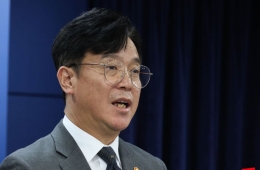
On the 23rd, six major economic organizations?the Korea Employers Federation, the Korea Chamber of Commerce and Industry, the Federation of Korean Industries, the Korea International Trade Association, the Korea Federation of Small and Medium Business, and the Korea Association of Mid-sized Enterprises?issued a joint statement at the National Assembly communication center, calling for the suspension of the submission of the Labor Union Act amendment bill to the plenary session.
The six economic organizations began by saying, "We are deeply dismayed by the situation where even the Legislative and Judiciary Committee, the last bastion for reviewing the legal system, is excluded and the bill is being pushed through." They argued, "If the amendment passes, the foundation of our country's legal system will be shaken, and labor-management relations will reach an irreparable breakdown."
Additionally, the six organizations claimed that the amendment indiscriminately expands the scope of employers, violating the principle of clarity in criminal law and undermining legal stability.

They also expressed concerns that in a situation where employers face a high risk of criminal punishment for unfair labor practices when refusing collective bargaining, serious confusion will arise on the ground over whether the primary contractor is considered an employer under the Labor Union Act. They further mentioned conflicts with the Labor Union Act system regarding bargaining units and procedures.
The six organizations pointed out, "If the concept of labor disputes is expanded, industrial sites will be devastated by chaos and conflicts caused by strikes." According to the amendment, issues that should be resolved through judicial procedures, such as unfair dismissal and reinstatement of dismissed workers, as well as employers' high-level managerial decisions including investment decisions, workplace relocation, and restructuring, could become subjects of labor disputes.
Hot Picks Today
 "Stocks Are Not Taxed, but Annual Crypto Gains Over 2.5 Million Won to Be Taxed Next Year... Investors Push Back"
- "Don't Throw Away Coffee Grounds" Transformed into 'High-Grade Fuel' in Just 90 Seconds [Reading Science]
- Musinsa Issues Second Apology for 2019 'Park Jongcheol Advertisement Controversy'... "A Stern Lesson"
- "Groups of 5 or More Now Restricted"... Unrelenting Running Craze Leaves Citizens and Police Exhausted
- "Even With a 90 Million Won Salary and Bonuses, It Doesn’t Feel Like Much"... A Latecomer Rookie Who Beat 70 to 1 Odds [Scientists Are Disappearing] ③
Finally, they expressed concern that "the amendment contains provisions contrary to civil joint tort liability for damages and effectively limits claims for damages, which will lead to the spread of illegal acts by labor unions."
© The Asia Business Daily(www.asiae.co.kr). All rights reserved.