[Global Issue+] Muddy Standoff as Weather Warms... Ukraine-Russia Spring Clash Hindered by 'Global Warming'
Permafrost Thawing Stalls Advance
Even as Western Tanks Arrive, Counterattack Remains Difficult
The Russian government has claimed that there was a drone attack on the Kremlin and blamed Ukraine for it, raising concerns that the frontline situation between the two countries, which had been relatively calm for a while, may become intense again. Russia had originally been preparing for a spring offensive since March, but contrary to expectations, the offensive did not take place. Instead, it is anticipated that Ukraine will launch a large-scale counterattack around May 9, Russia’s Victory Day, drawing international attention.
![[Image source=Reuters Yonhap News]](http://www.asiae.co.kr/news/img_view.htm?img=2023050410441120973_1683164651.jpg)
The reason the Russian spring offensive was delayed, contrary to expectations at the end of last year, is reportedly because the 'rasputitsa' phenomenon?where the permanent permafrost in the Ukraine region melts and turns into muddy terrain?started earlier than expected.
Rasputitsa, which usually occurs in Ukraine and Russia during the autumn months of September to October and again in spring around April to May, began this year as early as February due to global warming, significantly slowing the advance of Russian forces. It is now analyzed that this phenomenon is also hindering Ukraine’s preparations for a counterattack.
Western Tanks Arriving One After Another... But Ukraine’s Counterattack Schedule Delayed
![[Image source=Reuters Yonhap News]](http://www.asiae.co.kr/news/img_view.htm?img=2023050410445020974_1683164690.jpg)
According to the New York Times (NYT) on the 1st (local time), Ukraine’s 43rd Independent Artillery Brigade, which received German-made PzH-2000 self-propelled howitzers and ammunition, is struggling to advance as the howitzers get stuck in the mud due to rasputitsa. Although tanks and self-propelled artillery from the West are arriving in Ukraine to stop Russia’s spring offensive, they are not being effectively used for counterattacks once deployed on the front lines.
The situation is similar for Russian forces. Since November last year, Russian troops have been stuck around Bakhmut, a major battleground on the eastern Donbas front, and have yet to fully control the city. In February to March last year, Russia attempted to regain momentum by breaking through the front lines with armored vehicles and tanks in the east, but they suffered heavy losses after getting bogged down in the mud.
The rasputitsa phenomenon is notoriously difficult for both Russia and Ukraine, but this year it has arrived particularly early and is lasting longer. Due to global warming, temperatures in high-latitude regions are rising rapidly, and the permafrost is melting quickly, making it difficult to find a breakthrough.
Record-Breaking El Nino Expected This Year... Will the War Prolong?
![[Image source=Reuters Yonhap News]](http://www.asiae.co.kr/news/img_view.htm?img=2023050416202621597_1683184826.jpg)
This year, an unprecedented El Nino phenomenon, caused by extreme heat, is also forecasted, raising concerns that the permafrost in high-latitude regions will melt faster and more extensively during the summer.
According to the World Meteorological Organization (WMO), the risk of El Nino occurring in the second half of this year is increasing. WMO analyzes that the probability of El Nino occurring between July and September this year is as high as 80%. El Nino refers to the phenomenon where the surface water temperature in the central and eastern equatorial Pacific Ocean is higher than average. When El Nino occurs, atmospheric temperatures also rise significantly, which is feared to exacerbate global warming.
Petteri Taalas, Secretary-General of the WMO, warned, "If El Nino intensifies, global warming could accelerate rapidly, and the likelihood of the (global average) temperature reaching record highs will increase." Even if the opposite La Nina phenomenon, where surface water temperatures drop, occurs, this effect is mitigated, and instead, there is a risk that global temperatures could soar to record levels due to El Nino.
Hot Picks Today
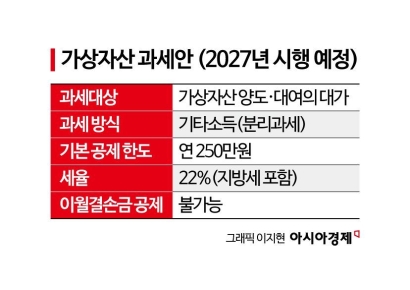 "Stocks Are Not Taxed, but Annual Crypto Gains Over 2.5 Million Won to Be Taxed Next Year... Investors Push Back"
- "Not Jealous of Winning the Lottery"... Entire Village Stunned as 200 Million Won Jackpot of Wild Ginseng Cluster Discovered at Jirisan
- "Rather Than Endure a 1.5 Million KRW Stipend, I'd Rather Earn 500 Million in the U.S." Top Talent from SNU and KAIST Are Leaving [Scientists Are Disappearing] ①
- "How Did an Employee Who Loved Samsung End Up Like This?"... Past Video of Samsung Electronics Union Chairman Resurfaces
- "Even With a 90 Million Won Salary and Bonuses, It Doesn’t Feel Like Much"... A Latecomer Rookie Who Beat 70 to 1 Odds [Scientists Are Disappearing] ③
Climate anomalies are expected to spread not only in Ukraine but worldwide. When El Nino occurs, rainfall increases in South America and West Africa, while severe droughts may occur in Australia, Indonesia, and South Asia. In South Korea, the risk of floods increases during the summer and early winter due to El Nino’s influence. The severe climate crisis is expected to have a significant impact on the Ukraine war going forward.
© The Asia Business Daily(www.asiae.co.kr). All rights reserved.







