China's Growth Forecast Revised Upward, Korea's Growth Boost Effect Around 0.3%P... Inflation Remains a Burden
[Asia Economy Reporter Seo So-jeong] With China's reopening (resumption of economic activities) raising its growth forecast from 3.0% last year to 5.0% this year, an analysis suggests that the effect on boosting South Korea's economic growth will be around 0.3 percentage points. The number of Chinese tourists, which dropped from about 6 million in 2019 to 200,000 last year, is expected to recover to 2 million this year due to China's reopening, contributing to the improvement of the domestic service industry's business conditions.
On the 27th, the Bank of Korea stated in its report titled "The Impact of China's Reopening on Our Economy," "As China's reopening has accelerated more than expected, the growth forecast for China this year was revised upward from 4.5% in November last year to 5% in February, and the reflected growth-enhancing effect is estimated at 0.1 percentage points."
China's reopening is expected to positively affect our economy through the recovery of exports to China and the influx of tourists. In particular, with the resumption of short-term visa issuance for arrivals from China on the 11th and the lifting of the mandatory polymerase chain reaction (PCR) testing from March, the influx of Chinese tourists is expected to intensify starting next month.

Exports of goods to China, which had been significantly contracted due to China's lockdown policies, are expected to gradually recover in the second half of the year due to the reopening effect. Yoon Yong-jun, head of the Asia-Pacific Economic Team at the Bank of Korea's Research Department, forecasted, "Initially, exports of chemical products sensitive to China's domestic demand will recover, followed by IT exports such as mobile phones and semiconductors with a time lag."
In particular, the influx of Chinese tourists, who have a large per capita expenditure, is expected to significantly contribute to the improvement of the domestic service industry's business conditions. Chinese tourists spend $1,689 per person (based on 2019), which is higher than tourists from other countries such as the United States ($1,106) and Japan ($675). According to input-output analysis, an increase of 1 million Chinese tourists raises South Korea's gross domestic product (GDP) growth rate by about 0.08 percentage points.
However, there is also a possibility that the domestic growth-enhancing effect from China's reopening may fall short of the historical average due to China's consumption-centered recovery, accumulated inventory, and sluggish external demand.
In particular, China's economic recovery could exert upward pressure on domestic consumer prices through rising international raw material prices. When international oil prices rise, there is concern about secondary ripple effects on prices of other goods and services within consumer prices, in addition to increases in petroleum product prices and heightened pressure to raise public utility fees (electricity, city gas, etc.).
Hot Picks Today
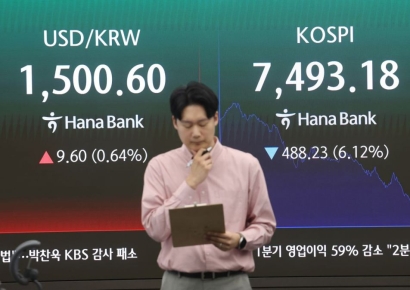 After Topping 8,000 Instead of Hitting 10,000... KOSPI Plunges—When Will It Rebound?
- "Samsung and Hynix Were Once for the Underachievers"... Hyundai Motor Employee's Lament
- [Breaking] Court Rules Against Samsung Electronics Union...1 Billion Won per Day Penalty for Exceeding Strike Scope
- Six Economic Organizations Urge Withdrawal of Samsung Electronics Strike Plan...Warn of National Loss of Opportunity
- "That? It's Already Stashed" Nightlife Scene Crosses the Line [ChwiYak Nation] ③
Team leader Yoon said, "China's reopening is expected to positively affect our economy through the recovery of exports to China and the influx of tourists, but in terms of prices, it could exert upward pressure on domestic consumer prices through rising prices in China and increased Chinese tourists."
© The Asia Business Daily(www.asiae.co.kr). All rights reserved.







