Only the Middle Class Closed Their Wallets Amid US Inflation
WSJ "Middle Class Hit Hardest by Inflation"
[Asia Economy Reporter Haeyoung Kwon] The purchasing power of middle-class households in the United States has declined the most sharply due to soaring inflation. This is attributed to the worst inflation triggered by the Ukraine war, which caused prices of groceries, gasoline, and automobiles to surge.
On the 28th (local time), The Wall Street Journal (WSJ) reported, "Inflation is often called a tax on the poor, but this time it has hit the middle class the hardest."
According to the U.S. Congressional Budget Office (CBO), the purchasing power of middle-class households with wage income fell by 2.9% compared to a year ago. In contrast, households in the bottom 20% income bracket and the top income bracket saw increases of 1.5% and 1.1%, respectively. The income of middle-class households is $70,784 based on the U.S. Census Bureau's data for 2021.

Low-income households benefited from an unusually low unemployment rate, making it easier to find jobs, and wage increases led to income growth exceeding living expenses. Government support was also strengthened during the COVID-19 pandemic. For high-income households, although many experienced significant losses in stock and bond markets, their high income and savings allowed them to maintain aggressive consumption and spending.
On the other hand, the middle class was particularly exposed to risks as prices of goods and services they mainly purchase, such as automobiles and gasoline, mostly rose. Studies also show that the perceived inflation rate is higher among the middle class. According to the London School of Economics, the middle class experienced inflation exceeding 15% over the past three years (2020?2022), while the top high-income and bottom low-income groups experienced inflation rates below 14% during the same period.
The proportion of middle-class households reporting difficulty in maintaining their livelihood also increased, according to Census Bureau surveys. A similar result was shown in a survey conducted by the University of Michigan this year. In the University of Michigan survey, the proportion of middle-class households responding that their current financial situation has worsened dropped to a level close to that of low-income households. Just two years ago, the middle class's confidence in their financial status was similar to that of high-income households. Most middle-class households cited inflation as the cause of their deteriorating financial situation.
WSJ stated, "Initially, low-income households experienced inflation, but now the middle class, which has a high exposure to prices that have risen particularly sharply such as automobiles and gasoline, is being hit. Inflation is eating away at the middle class the most."
The recent slowdown in inflation is a positive sign. The U.S. Consumer Price Index (CPI) inflation rate peaked at 9% in June and fell to 7.1% in November. Although food prices continue to rise, the recent decline in gasoline prices had a significant impact. However, the media reported that the easing of inflation is coming with other forms of risk.
Hot Picks Today
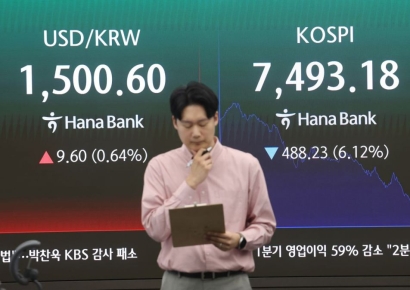 After Topping 8,000 Instead of Hitting 10,000... KOSPI Plunges—When Will It Rebound?
- "Samsung and Hynix Were Once for the Underachievers"... Hyundai Motor Employee's Lament
- [Breaking] Court Rules Against Samsung Electronics Union...1 Billion Won per Day Penalty for Exceeding Strike Scope
- Court Partially Grants Samsung Electronics' Injunction to Prohibit Industrial Action... 100 Million Won Penalty Per Day for Violations
- "That? It's Already Stashed" Nightlife Scene Crosses the Line [ChwiYak Nation] ③
WSJ said, "The cost of easing inflation will be slower economic growth and higher unemployment," adding, "Many economists are mentioning unemployment rates and recessions higher than the Federal Reserve's forecasts."
© The Asia Business Daily(www.asiae.co.kr). All rights reserved.







