Foreigners Sell 1 Trillion Won in December Alone... Semiconductor Stocks Sold More
'China Run' Effect Fades, Sudden Shift from Buying to Selling in Oct-Nov
SK Hynix Sold 430 Billion KRW, Samsung Electronics Sold 175.7 Billion KRW, Ranking 1st and 2nd in Net Selling
[Asia Economy Reporter Minji Lee] The KOSPI continues to struggle due to a change of heart among foreign investors. Foreigners purchased 7 trillion won worth of domestic stocks over October and November, but this month they have sold more than 1 trillion won. The main target of foreign selling is the semiconductor sector, as earnings forecasts have worsened due to economic recession and interest rate hikes.

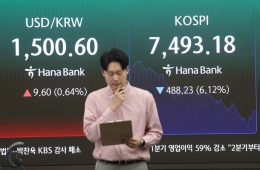
According to the Korea Exchange on the 21st, foreign investors sold stocks worth 1.0825 trillion won on the KOSPI from the 1st to the 20th of this month. This contrasts with October and November, when they bought 3.3 trillion won and 3.9 trillion won worth of stocks respectively, engaging in a ‘buy KOSPI’ trend. Due to this reversal in foreign sentiment within a month, the KOSPI dropped 5.63% from 2472.53 to 2333.29.
The shift to selling by foreigners is largely due to the disappearance of expectations for monetary easing and a reduction in the ‘China-Run’ effect, where funds were withdrawn from China and invested in other emerging markets. Although COVID-19 cases are rising in China, the Chinese government has shifted from its ‘zero COVID’ policy and is easing quarantine restrictions. Meanwhile, at the December Federal Open Market Committee (FOMC) meeting, Jerome Powell, Chair of the Federal Reserve (Fed), emphasized maintaining the interest rate hike stance for a longer period. Additionally, the semiconductor sector, a key export industry for Korea, is experiencing a growing contraction, which has negatively impacted investor sentiment. The decline in the won-dollar exchange rate has also contributed to the foreign selling pressure.
Kim Young-hwan, a researcher at NH Investment & Securities, said, “As the won-dollar exchange rate fell below the 1,300 won level, the exchange rate advantage diminished. Foreign investors are sensitive to the economy in the long term, so for them to return to buying, expectations for a global economic turnaround need to increase.”
The sector with concentrated foreign net selling is semiconductors. This month, SK Hynix ranked first in net selling with 430 billion won, followed by Samsung Electronics with 175.7 billion won. These amounts accounted for half of the foreign net selling value on the KOSPI. The warning signs for the domestic semiconductor industry have intensified; according to the Ministry of Science and ICT, semiconductor exports totaled 11.21 trillion won last month, a drop of more than 29% compared to the same month last year.
Another short-term negative factor was the sharp decline in earnings estimates for U.S. semiconductor company Micron, which announced its results on the 21st (local time). Micron’s performance is used as an indicator to gauge the earnings of major semiconductor companies. Global investment banks (IBs) are not recommending buying Micron’s stock. European investment bank Deutsche Bank lowered Micron’s target price from $60 to $55. Lee Seung-woo, a researcher at Eugene Investment & Securities, emphasized, “Since Micron has proactively issued a strong earnings warning, the likelihood of optimistic news is low.”
Hot Picks Today
 "Samsung and Hynix Were Once for the Underachievers"... Hyundai Motor Employee's Lament
- "Sold Everything Fearing Bankruptcy, Then It Soared 3,900 Times: How a Stock Once Feared for Delisting Became an AI Powerhouse"
- Court Partially Grants Samsung Electronics' Injunction to Prohibit Industrial Action... 100 Million Won Penalty Per Day for Violations
- [US-China Summit] China to Purchase $17 Billion in US Agricultural Products Annually...Real Gains for Beijing
- "That? It's Already Stashed" Nightlife Scene Crosses the Line [ChwiYak Nation] ③
Meanwhile, the sector where foreigners have concentrated their buying is related to secondary batteries. Foreigners bought Samsung SDI the most, with 250.8 billion won. LG Chem (74.2 billion won) and POSCO Chemical (49.2 billion won) also ranked high among the top purchases.
© The Asia Business Daily(www.asiae.co.kr). All rights reserved.