UNIST Develops AI for Predicting Anticancer Drug Responsiveness Based on Multi-Omics Data

[Asia Economy Yeongnam Reporting Headquarters Reporter Hwang Dooyul] Even patients suffering from the same type of cancer can show different responses to anticancer drugs depending on individual genetic mutations, resulting in varying drug efficacy.
An artificial intelligence (AI) technology that predicts these patient-specific anticancer drug outcomes in advance has been developed, attracting attention.
The research team led by Professor Lee Semin of the Department of Biomedical Engineering at UNIST, in collaboration with Professor Jung Wonki of Korea University and Professor Seo Jiwon of Hanyang University, developed a machine learning model for predicting patient-tailored anticancer drug responsiveness based on multi-omics data.
The researchers applied network embedding technology and the latest deep learning models, utilizing large-scale anticancer drug responsiveness data and multi-omics data, achieving performance far superior to existing anticancer drug responsiveness prediction models.
Cancer is a representative genome-related disease, a "genome disease" caused by the accumulation of mutations in the genome, the "blueprint of life," unique to each individual.
Gene expression patterns in cancer tissues also differ from those in normal tissues. These genetic mutations and gene expression profiles show significant differences even among patients with the same cancer type, which are known to be meaningfully associated with patient-specific anticancer drug responsiveness.
Accordingly, recent attempts have been made to develop "patient-tailored anticancer drug responsiveness prediction models" based on multi-omics data encompassing cancer patient-specific genetic mutations and gene expression patterns.
However, biological data for training such models have many types and factors but lack sufficient sample sizes, limiting the accuracy improvement of machine learning models.
To overcome this, the research team applied "network embedding technology" to effectively reflect correlations among multidimensional data.
First, cancer cell line-derived cell lines, anticancer drugs, and genes were treated as nodes, connecting each node to form edges.
Edges provide information on anticancer drug responsiveness (cell line?anticancer drug), gene mutations (cell line?gene), and protein interactions (gene?gene).
The core of this study is the extraction of "embedding vectors" that reflect the correlations of the network sets formed by nodes and edges.
Using embedding vectors allows understanding representative values of each node, enabling effective handling of high-dimensional data. The researchers trained the embedding vectors with a deep neural network, an AI technique, to derive patient-tailored anticancer drug efficacy.
Dr. Kanggeun Lee of Korea University, the first author, said, "We applied various AI techniques to complement responsiveness data biased toward resistance," adding, "The new model showed about 93% accuracy in predicting anticancer drug responsiveness, significantly improved compared to existing models."
Co-first author Dongbin Cho, a researcher at Hanyang University, stated, "We achieved excellent performance using network embedding technology, which effectively extracts interactions among elements in high-dimensional multi-omics data, as well as deep neural networks."
Another co-first author, Dr. Jinho Jang of UNIST, expressed expectations that "this technology will accelerate personalized treatment by proposing suitable drug candidates for cancer patients."
Hot Picks Today
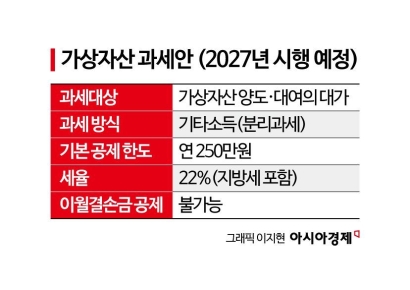 "Stocks Are Not Taxed, but Annual Crypto Gains Over 2.5 Million Won to Be Taxed Next Year... Investors Push Back"
- "Not Jealous of Winning the Lottery"... Entire Village Stunned as 200 Million Won Jackpot of Wild Ginseng Cluster Discovered at Jirisan
- "Rather Than Endure a 1.5 Million KRW Stipend, I'd Rather Earn 500 Million in the U.S." Top Talent from SNU and KAIST Are Leaving [Scientists Are Disappearing] ①
- "How Did an Employee Who Loved Samsung End Up Like This?"... Past Video of Samsung Electronics Union Chairman Resurfaces
- "Even With a 90 Million Won Salary and Bonuses, It Doesn’t Feel Like Much"... A Latecomer Rookie Who Beat 70 to 1 Odds [Scientists Are Disappearing] ③
This research was supported by the National Research Foundation of Korea's "Next-Generation Information Computing Technology Development Project" and "University Focused Research Center Support Project," and was published in the bioinformatics journal "Briefings in Bioinformatics."

Conceptual diagram of RAMP, a patient-tailored anticancer drug efficacy prediction model.
View original image© The Asia Business Daily(www.asiae.co.kr). All rights reserved.