Banks Stocks Slowly Rise on Year-End Dividend Expectations
Stock Prices of Hana Financial Group and Others Rise Around 10% in Last 3 Months
Dividend System Improvement is a Positive Factor... Caution Advised Due to Variables Like Reserve Accruals and Large-Scale Voluntary Retirements

[Asia Economy Reporter Myunghwan Lee] As the year-end dividend season approaches, investors' interest is focusing on bank stocks. This is because the ex-dividend date is gradually approaching, increasing expectations for dividend income. Securities firms have advised that while the financial authorities' intention to improve the dividend system is positive, investors should be cautious of variables that could reduce dividends.
According to the Korea Exchange on the 16th, the 'KRX Bank' index, composed of major banks and financial holding companies listed on the KOSPI market, closed at 652.74 on the previous trading day, the 15th. This index, which includes the five major commercial banks, regional financial holding companies, and internet-only banks, showed weakness by falling to the mid-500s at the end of September. However, since mid-October, it has rallied, rising by more than 100 points.
Looking at individual stocks, all bank stocks except KakaoBank, which experienced weakness as a growth stock, have risen. Over the recent three months (September 15 to December 15), Hana Financial Group rose 15.86%, JB Financial Group 14.01%, Industrial Bank of Korea 13.99%, BNK Financial Group 10.17%, and Woori Financial Group 9.52%, all showing price increases around 10%.

As investors' interest in year-end dividends of bank stocks grows, the prices of bank stocks appear to have risen consecutively. According to the Korea Exchange, the ex-dividend date for companies with December fiscal year-end is on the 28th of this month. Therefore, investors who purchase stocks by the 27th can receive dividends.
The financial authorities' announcement to minimize intervention in financial companies' dividend and shareholder return policies also influenced the rise in bank stocks. On November 28, Lee Bok-hyun, Governor of the Financial Supervisory Service, stated at a meeting with financial sector analysts, "We will respect the financial sector's autonomous decision-making regarding dividend and shareholder return policies and price determination of banks and financial holding companies, and minimize regulatory intervention."
The market is also positively receiving the regulatory authorities' intention to minimize intervention in dividends. Choi Jung-wook, a researcher at Hana Securities, said about Governor Lee's remarks, "Although it was more of a reiteration of fundamental directions rather than new content, the market seems to positively evaluate the repeated expressions of intent," adding, "The period when this year's dividends will be concretized is late January next year, so for now it remains in the realm of expectations, but since related expectations are likely to remain high for some time, the dividend momentum is expected to continue to be highlighted."
There is also an assessment that the financial authorities' ongoing efforts to improve the dividend system are favorable for bank stocks. The current dividend system confirms shareholders entitled to dividends at the end of December each year, then decides dividends at the shareholders' meeting in March of the following year, and pays them in April. The Financial Services Commission has announced plans to reform this system to confirm shareholders after the dividend decision date, similar to advanced countries' dividend systems. Eun Kyung-wan, a research fellow at Shinhan Investment Corp., said, "The dividend system improvement is expected to support a gradual increase in dividend payout ratios of bank stocks while highlighting their low valuations," adding, "In the process, the seasonality of stock prices linked to year-end dividends will also be alleviated."
On the other hand, some advice suggests considering the possibility that dividends of bank stocks ahead of dividends, like the Q4 earnings announcement, could decrease. Jeong Tae-jun, a researcher at Yuanta Securities, analyzed, "Variables affecting profits include proactive reserve fund accumulation and large-scale voluntary retirements," adding, "There have been many cases of earnings shocks in Q4 in the past, so the possibility of profit decline and dividend reduction cannot be excluded."
Hot Picks Today
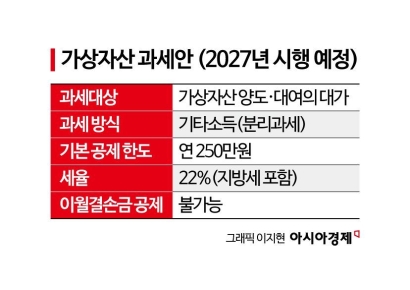 "Stocks Are Not Taxed, but Annual Crypto Gains Over 2.5 Million Won to Be Taxed Next Year... Investors Push Back"
- "Not Jealous of Winning the Lottery"... Entire Village Stunned as 200 Million Won Jackpot of Wild Ginseng Cluster Discovered at Jirisan
- "Even With a 90 Million Won Salary and Bonuses, It Doesn’t Feel Like Much"... A Latecomer Rookie Who Beat 70 to 1 Odds [Scientists Are Disappearing] ③
- General Strike D-1: Final Negotiations Between Samsung Electronics Labor and Management Over One Key Issue
- "How Did an Employee Who Loved Samsung End Up Like This?"... Past Video of Samsung Electronics Union Chairman Resurfaces
Another approach is to gain profits only from stock price increases without receiving dividends. Typically, stock prices drop on the ex-dividend date and take time to recover. Kim Eun-gap, a researcher at IBK Investment & Securities, advised, "Bank stocks with high year-end dividend yields may take some time to recover stock prices after the ex-dividend date," adding, "Considering this, enjoying stock price increases or downside rigidity due to dividend attractiveness until the end of December can also be considered an investment method."
© The Asia Business Daily(www.asiae.co.kr). All rights reserved.