DLF Disciplinary Action Overcome by Sohn Tae-seung, Chairman of Woori Financial... Reappointment Prospects Uncertain
Son Tae-seung, Chairman of Woori Financial Group, Wins Supreme Court Case on 'DLF Disciplinary Cancellation Lawsuit'
Supreme Court: "Woori Bank's Internal Controls Established, Financial Supervisory Service's Disposition Not Recognized"
Disciplinary Action Based on 'Duty to Establish' for Failure to Comply with Internal Controls Is Inappropriate
Son Tae-seung, Reprimanded for Lime Fund, Still Uncertain About Reappointment
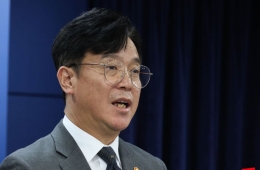
[Asia Economy Reporter Song Seung-seop] Sohn Tae-seung, Chairman of Woori Financial Group, has ultimately won the lawsuit to cancel the disciplinary action against him filed with the financial authorities over the overseas interest rate-linked derivative-linked fund (DLF). The Financial Supervisory Service (FSS) is now facing criticism for wasting supervisory resources by pursuing disciplinary measures that were not legally justified. However, it remains uncertain whether Chairman Sohn will be able to seek reappointment, as he also received a 'reprimand warning' in connection with the Lime Fund scandal.
On the 15th, the Supreme Court ruled, "Woori Bank established internal control standards that included all statutory matters, and it cannot be said that the internal control standards lack effectiveness," adding, "Disciplinary action cannot be taken on the grounds that internal control standards were not established, so all reasons for the FSS's disposition cannot be accepted."
DLF is a highly risky private fund product that caused massive losses to financial consumers in 2019. At that time, the banks selling the product promoted the DLF as having no possibility of principal loss, which led to significant damage. The FSS imposed a reprimand warning on Chairman Sohn, who was the bank president at the time, citing problems in the product launch and sales process. A reprimand warning is a severe disciplinary action that limits reappointment for up to five years. Chairman Sohn filed an administrative lawsuit in March 2020 to cancel the disciplinary action and won in both the first and second trials.
Chairman Sohn and the FSS legal teams disputed three main issues: ▲whether the CEO should be held responsible for internal control failures ▲whether the DLF incident occurred due to internal control failures ▲whether disciplinary action can be taken under the 'duty to establish' if internal controls were established but not strictly followed. Both the first and second trials recognized the CEO as responsible for internal control. However, the second trial court overturned the first trial's ruling, stating that the FSS's pointed facts were "marginal and detailed" regarding significant internal control flaws in the DLF incident.
Disciplinary action based on 'duty to establish' for failure to comply with internal controls is inappropriate
The most contentious issue was whether the FSS's disciplinary grounds were appropriate. Current regulations impose a duty on the CEO to properly establish internal controls, but there is no legal basis for disciplinary action if this duty is not followed. The FSS argued that failure to properly implement internal controls is effectively the same as not establishing them, thus justifying lawful disciplinary action. On the other hand, Chairman Sohn's side claimed the disciplinary action was unfair as it lacked legal grounds.
The Supreme Court's ruling has led to criticism that the FSS pushed the disciplinary action excessively. Despite the lack of legal grounds, the FSS decided on and pushed for severe disciplinary action against the CEO. The Supreme Court also explained the significance of the ruling, stating, "There is no legal basis under current laws to impose sanctions for violations of financial companies' internal control standards," and "the duties of establishment and compliance should be distinguished," thereby agreeing with the lower court's decision.
Chairman Sohn has removed the disciplinary risk, which was one of the obstacles to his reappointment. Nevertheless, it remains uncertain whether he will seek reappointment after his term ends in March next year. This is because the reprimand warning disciplinary action he received from the Financial Services Commission over the Lime Fund scandal still stands. He will need to file another cancellation lawsuit, but since it is a lawsuit against the government, persuading internal directors is expected to be difficult. The fact that FSS Governor Lee Bok-hyun expressed a practically unfavorable opinion on Chairman Sohn's reappointment possibility by saying, "We expect a wise decision," is also a burden.
For Ham Young-joo, Chairman of Hana Financial Group, expectations of winning have increased. Chairman Ham also received a reprimand warning for responsibility in the DLF incident and is currently pursuing a cancellation lawsuit. Unlike Chairman Sohn, he lost in the first trial and is now undergoing the second trial.
The financial authorities have begun efforts to strengthen CEO internal controls. The Financial Services Commission has formed a 'Financial Sector Internal Control System Improvement Task Force (TF)' to discuss related matters. According to the interim announcement on the 29th of last month, they plan to impose a duty on CEOs to manage internal controls and require appropriate measures to prevent financial accidents.
Hot Picks Today
 "Stocks Are Not Taxed, but Annual Crypto Gains Over 2.5 Million Won to Be Taxed Next Year... Investors Push Back"
- "Don't Throw Away Coffee Grounds" Transformed into 'High-Grade Fuel' in Just 90 Seconds [Reading Science]
- Signed Without Viewing for 1.6 Billion Won... Jamsil and Seongbuk Jeonse Prices Jump 200 Million Won in a Month [Real Estate AtoZ]
- "Groups of 5 or More Now Restricted"... Unrelenting Running Craze Leaves Citizens and Police Exhausted
- "Even With a 90 Million Won Salary and Bonuses, It Doesn’t Feel Like Much"... A Latecomer Rookie Who Beat 70 to 1 Odds [Scientists Are Disappearing] ③

© The Asia Business Daily(www.asiae.co.kr). All rights reserved.