Proposal to Dismiss Sangmin Lee, Opposition Weighs Impeachment... 'Likely to Be Decided Through Party Meeting on the 7th'
Advantages of Dismissal Recommendation Include Ability to Escalate Response Levels Stepwise
Possibility of Direct Impeachment Remains Open Due to Past Failed Dismissal Attempts
![[Image source=Yonhap News]](http://www.asiae.co.kr/news/img_view.htm?img=2022120611381641987_1670294296.jpg)
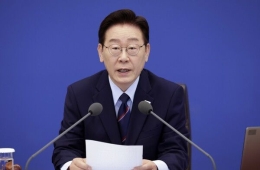
[Asia Economy reporters Naju-seok and Park Joon-yi] The Democratic Party of Korea is deliberating on how to hold Minister of the Interior and Safety Lee Sang-min accountable for the Itaewon tragedy. They are internally gathering opinions while keeping both options open: proceeding with the already submitted motion for dismissal after the budget bill is passed, or skipping the dismissal motion and moving directly to the impeachment process.
On the 6th, Park Hong-geun, the floor leader of the Democratic Party, emphasized the importance of passing the budget bill during the regular session, stating, "If the government and ruling party understand even a little of the public’s anxious feelings, they should stop politicizing by linking the budget bill with the minister’s accountability." Park has maintained a cautious stance without explicitly stating which response?dismissal motion or impeachment?they plan to pursue.
Earlier, the People Power Party warned that if they proceed with the dismissal motion or impeachment against Minister Lee, it could complicate the budget bill’s passage. Joo Ho-young, floor leader of the People Power Party, appeared on broadcasts and said, "We agreed to pass the budget bill, conduct a parliamentary investigation into the Itaewon tragedy, and hold those responsible accountable. If the dismissal motion or impeachment is pushed before the investigation, the budget could be affected."
Oh Young-hwan, the Democratic Party’s floor spokesperson, also told reporters, "We are currently collecting internal opinions through various channels, keeping all possibilities open." He added, "We will continue these efforts until the 7th, when we will hold a party meeting based on the situation and the diverse opinions gathered." The party plans to finalize its strategic response cards at the meeting on the 7th. He explained, "At this point, there is no clear tilt toward either option. We are going through an internal opinion-gathering process."
Summarizing official and unofficial explanations inside and outside the party, neither the dismissal motion nor impeachment seems favored for now, especially since the issue is intertwined with the budget bill’s passage.
The advantage of the dismissal motion is that it allows for a step-by-step response, potentially moving to impeachment after the dismissal motion is submitted.
Lee Hae-sik, a Democratic Party lawmaker and member of the special parliamentary committee investigating the Itaewon tragedy, appeared on MBC Radio’s "Kim Jong-bae’s Focus" the day before and said, "Personally, I think the dismissal motion is better," adding, "It is good to keep the impeachment option alive and proceed alongside the parliamentary investigation. Since this is all linked with the budget bill and government organization law, it might be wise to allow some leeway to resolve these issues together."
Hot Picks Today
 "Stocks Are Not Taxed, but Annual Crypto Gains Over 2.5 Million Won to Be Taxed Next Year... Investors Push Back"
- "Don't Throw Away Coffee Grounds" Transformed into 'High-Grade Fuel' in Just 90 Seconds [Reading Science]
- Signed Without Viewing for 1.6 Billion Won... Jamsil and Seongbuk Jeonse Prices Jump 200 Million Won in a Month [Real Estate AtoZ]
- "Groups of 5 or More Now Restricted"... Unrelenting Running Craze Leaves Citizens and Police Exhausted
- "Even With a 90 Million Won Salary and Bonuses, It Doesn’t Feel Like Much"... A Latecomer Rookie Who Beat 70 to 1 Odds [Scientists Are Disappearing] ③
However, since a dismissal motion was already attempted once but the plenary session did not convene, it remains to be seen whether they will try a step-by-step approach. Both dismissal motions and impeachment require complex procedures, including a 24-hour waiting period after submission and a 72-hour processing window, which necessitate the speaker’s cooperation. Moreover, considering the timing of the parliamentary investigation and other factors, securing the political conditions to pursue a stepwise response is crucial.
© The Asia Business Daily(www.asiae.co.kr). All rights reserved.