Paju Geumpari Shooting Range Also Designated as Noise Control Area
Ministry of National Defense Designates 11 Additional Military Training Areas as Noise Control Zones

On the 25th, at the Gyeonggi-do Bi-seung Shooting Range, during a large-scale air operation training conducted by the Army Aviation Command, an AH-64E Apache Guardian attack helicopter fired a 2.75-inch rocket and performed a turn. Photo by Joint Press Corps
View original image[Asia Economy Yang Nak-gyu, Military Specialist Reporter] Eleven military shooting ranges nationwide, including Paju Geumpa-ri Shooting Range, have been newly designated as noise control areas.
On the 5th, the Ministry of National Defense held the 'Central Noise Control Committee' and announced the resolution to additionally designate 11 military shooting ranges as noise control areas.
The 11 locations are Paju Geumpa-ri Shooting Range, Cheorwon Jaegunchon Shooting Range and Baekgol Shooting Range, Hwacheon Yeongbau Shooting Range, Pocheon Simjae Shooting Range, Jeongeup Baekho Shooting Range, Ulju Sinbulsan Shooting Range, Haman Haman Shooting Range, Jincheon Chungyong Shooting Range, Gwangju Pyeongdong Shooting Range, and Inje Science Training Center.
'Noise control areas' are regions designated and announced by the Minister of National Defense where noise damage occurs due to the operation of military airfields and shooting ranges, in order to promote compensation payments for noise damage. The total area of the newly designated 11 military shooting ranges is approximately 20 million square meters, which is about seven times the size of Yeouido.
Residents in the noise control areas will receive monthly noise damage compensation ranging from 30,000 to 60,000 KRW per person according to zones 1, 2, and 3, retroactively effective from November 27, 2020, the enforcement date of the 'Military Noise Compensation Act.' Individual compensation amounts will be determined by applying reduction criteria such as the time of moving into the noise control area. Topographic maps showing the location, area, and land registry of each zone in the 11 designated noise control areas will be sent to the mayors, county governors, and district heads in charge, and made available for public viewing for more than one month.
Mayors, county governors, and district heads responsible for the designated noise control areas will prepare informational materials regarding the compensation target areas, calculation standards, and payment procedures, and distribute them within the noise control areas or post them on the city, county, or district internet homepage by January 31 of next year.
Hot Picks Today
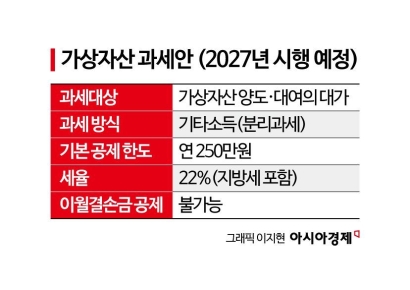 "Stocks Are Not Taxed, but Annual Crypto Gains Over 2.5 Million Won to Be Taxed Next Year... Investors Push Back"
- "Not Jealous of Winning the Lottery"... Entire Village Stunned as 200 Million Won Jackpot of Wild Ginseng Cluster Discovered at Jirisan
- "Rather Than Endure a 1.5 Million KRW Stipend, I'd Rather Earn 500 Million in the U.S." Top Talent from SNU and KAIST Are Leaving [Scientists Are Disappearing] ①
- "How Did an Employee Who Loved Samsung End Up Like This?"... Past Video of Samsung Electronics Union Chairman Resurfaces
- "Even With a 90 Million Won Salary and Bonuses, It Doesn’t Feel Like Much"... A Latecomer Rookie Who Beat 70 to 1 Odds [Scientists Are Disappearing] ③
Those wishing to apply for noise damage compensation must submit their application forms by February 28 of next year. The results of the application will be reviewed by the 'Local Noise Control Committee' under the jurisdiction of the mayor, county governor, or district head, posted on the city, county, or district internet homepage by May 31 of next year, and applicants will be notified. Compensation payments are scheduled to be made by August 31, 2023. Detailed information will be announced later this month on the Republic of Korea Electronic Official Gazette (http://www.gwanbo.go.kr).
© The Asia Business Daily(www.asiae.co.kr). All rights reserved.







