Cement Industry's Cumulative Loss Exceeds 100 Billion Won in 7 Days
Shipment Increase Accelerates Due to Work Commencement Order, Over 50% Recovery Expected Within Days
Temporary Passage Allowed for Overloaded Vehicles like BCT, Fines Exempted, Non-Members' Return Accelerates

[Asia Economy Reporter Kim Jong-hwa] Seven days into the general strike by the Cargo Solidarity of the Public Transport Union under the Korean Confederation of Trade Unions (hereafter Cargo Solidarity), the cumulative damage to the cement industry has exceeded 100 billion KRW.
According to the Korea Cement Association on the 1st, the cement industry shipped about 85,200 tons out of approximately 180,000 tons scheduled for shipment that day due to the Cargo Solidarity's collective refusal to transport. As it entered the second day of the government's work commencement order, the shipment volume rapidly increased, reaching about 47.3% of the scheduled amount. The 94,800 tons that were not shipped translate to approximately 9.5 billion KRW in losses, bringing the cumulative damage to 105.1 billion KRW. This approaches the damage amount (106.1 billion KRW) incurred during the first collective transport refusal by Cargo Solidarity, which lasted eight days in June.
Following the work commencement order, about 47,000 tons were shipped by 11 a.m. that day, surpassing the previous day's shipment volume of 45,500 tons. If this trend continues, shipments are expected to recover quickly, exceeding 50% of the usual volume by tomorrow.
The rapid increase in cement shipments is attributed to a combination of the cement industry's proactive shipping efforts and the government's determination to resolve the issue. Although bulk cement trailer (BCT) drivers affiliated with Cargo Solidarity still refuse to return to the site and continue to halt transportation despite the government's work commencement order, the cement industry's active persuasion of non-union BCT drivers and visits to cement production sites by high-ranking government officials such as Minister of Land, Infrastructure and Transport Won Hee-ryong and Second Vice Minister of Land, Infrastructure and Transport Eo Myeong-so have had a significant impact.
A cement industry official explained, "The resolution of difficulties caused by shipment stoppages through visits by high-ranking government officials, and the active involvement of law enforcement (police) minimizing Cargo Solidarity's transport refusal and obstruction, greatly contributed to the increase in shipment volume." He added, "The removal of fears among non-union BCT drivers regarding retaliation by Cargo Solidarity union members upon returning to transport, and the provision of justifications for return such as the work commencement order and pressure to withdraw the safe freight rate system, played a major role."
In particular, the Ministry of Land, Infrastructure and Transport announced from 7 p.m. that day, until Cargo Solidarity ends its collective transport refusal, temporary permission for overloaded vehicles transporting cement (BCT, BCC trucks) and exemption from fines, which is expected to accelerate the return of non-union drivers.
Hot Picks Today
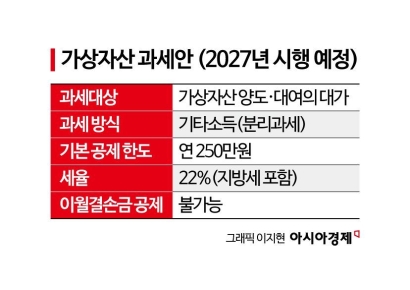 "Stocks Are Not Taxed, but Annual Crypto Gains Over 2.5 Million Won to Be Taxed Next Year... Investors Push Back"
- "Not Jealous of Winning the Lottery"... Entire Village Stunned as 200 Million Won Jackpot of Wild Ginseng Cluster Discovered at Jirisan
- "Even With a 90 Million Won Salary and Bonuses, It Doesn’t Feel Like Much"... A Latecomer Rookie Who Beat 70 to 1 Odds [Scientists Are Disappearing] ③
- General Strike D-1: Final Negotiations Between Samsung Electronics Labor and Management Over One Key Issue
- "How Did an Employee Who Loved Samsung End Up Like This?"... Past Video of Samsung Electronics Union Chairman Resurfaces
A Korea Cement Association official expressed deep gratitude for the government's efforts and requested, "In addition, please actively consider abolishing the supply and demand control system under the Freight Truck Transport Business Act (commonly known as the 'Total Registration System for Freight Trucks'), which has been in effect since 2004, to allow an increase in the insufficient number of BCT vehicles, along with police support for the safe operation of cement transport vehicles and increased frequency of railway freight car operations." The official also stated, "We plan to continue all necessary measures to ensure the smooth operation of BCT vehicles," and urged, "We ask BCT drivers to return quickly."
© The Asia Business Daily(www.asiae.co.kr). All rights reserved.