Naebanggasa and Samguk Yusa Inscribed on UNESCO World Heritage List... Decided at the Asia-Pacific Regional Committee General Assembly

Chairman Kim Gi-bae (left in the photo) of the UNESCO Memory of the World Asia-Pacific Regional Committee and Vice President Bae Seong-gil of the Korea National Institute of Korean Studies are holding up the certificate of registration for the Memory of the World.
View original image[Asia Economy Yeongnam Reporting Headquarters Reporter Koo Dae-sun] Gyeongbuk Province announced on the 28th that ‘Naebanggasa,’ evidence of Korean women’s autonomous literary activities, and ‘Samguk Yusa,’ a representative work of Korean ethnography, have been inscribed on the UNESCO Asia-Pacific Memory of the World Register.
The UNESCO Memory of the World Asia-Pacific Regional Committee, held at the Andong International Convention Center in Gyeongbuk, decided to finally inscribe ‘Naebanggasa’ and ‘Samguk Yusa’ on the afternoon of the last day of the 9th regular general meeting on the 26th.
On that day, a total of 13 agenda items were submitted for review, of which 9 were approved. From South Korea, two items applied by Gyeongbuk and three others, including the ‘Taean Oil Spill Damage Records,’ were all approved.
With this inscription, Gyeongbuk Province achieved a remarkable feat of holding a total of four Asia-Pacific Memory of the World records, following ‘Korean Pyeonaek’ (2016) and ‘Maninso’ (2018).
‘Naebanggasa,’ inscribed this time, is a lyrical literary work from the late 18th century to the mid-20th century, in which women in the male-centered society of East Asia used Hangul to autonomously express their thoughts and lives.
It has been evaluated as an effort by East Asian women to acquire self-subjectivity, distinct from Western women’s movements. Furthermore, it was recognized for its importance as a work depicting women’s unique thoughts and lives during a compressed period of historical transformation in the 20th century, marked by imperialist invasions, disconnection from tradition, loss of national sovereignty, and the Korean War.
Additionally, it received high praise for demonstrating the process by which the Hangul script, the only script in the world with a known creation principle, went through various stages of utilization to gain official status as a written language.
Along with ‘Naebanggasa,’ ‘Samguk Yusa,’ inscribed together, is a comprehensive record written by the monk Il-yeon between 1281 and 1285, encompassing ancient myths, history, religion, daily life, and literature of the Korean Peninsula.
Notably, this book was written during the Mongol invasions that shocked the world in the 13th century, serving as evidence that East Asian countries formed ‘nation-centered ethnic consciousness’ and ‘autonomous historical perspectives’ during this period.
Due to the Mongol Empire, which dominated the world at the time, East Asia began to move away from a China-centered worldview. Based on this, efforts were made to recognize their own people as ‘one nation,’ establishing a history unique to the Korean Peninsula starting from Dangun, thus acknowledging the book’s significant value as an important record.
Gyeongbuk Province has firmly established itself as a center of documentary heritage by holding five UNESCO-related records, including the ‘Confucian Woodblocks’ inscribed on the UNESCO Memory of the World Register, the Asia-Pacific records ‘Korean Pyeonaek’ and ‘Maninso,’ as well as the newly inscribed ‘Naebanggasa’ and ‘Samguk Yusa.’
Hot Picks Today
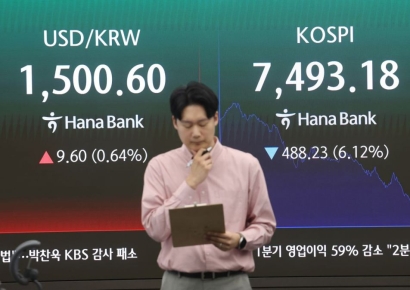 After Topping 8,000 Instead of Hitting 10,000... KOSPI Plunges—When Will It Rebound?
- "Samsung and Hynix Were Once for the Underachievers"... Hyundai Motor Employee's Lament
- [Breaking] Court Rules Against Samsung Electronics Union...1 Billion Won per Day Penalty for Exceeding Strike Scope
- Six Economic Organizations Urge Withdrawal of Samsung Electronics Strike Plan...Warn of National Loss of Opportunity
- "That? It's Already Stashed" Nightlife Scene Crosses the Line [ChwiYak Nation] ③
Lee Cheol-woo, Governor of Gyeongbuk, said, “With this inscription decision, Gyeongbuk has been recognized not only as a center for world heritage in Korea but also in the field of documentary heritage. Going forward, we will enhance the cultural brand value of Gyeongbuk and lead K-culture through the preservation, management, and utilization of both local documentary heritage and world heritage.”
© The Asia Business Daily(www.asiae.co.kr). All rights reserved.