Where Did All Those Many Bungeoppang Street Vendors Go?
Many Stores Closing Due to Rising Raw Material Prices Like Flour and Cooking Oil
Difficult to Find Bungeoppang Shops... App Appears to Help Locate Stores

On the afternoon of the 10th, fish-shaped bread is being baked at a fish-shaped bread shop inside Gwangjang Market, Jongno-gu, Seoul. Photo by Yonhap News
View original image[Asia Economy Intern Reporter Lee Gyehwa] When the cold wind blows and the weather gets chilly, street vendors selling snacks like Bungeoppang, fish cake, and Hotteok appear, offering filling treats for just 1,000 won. However, this year, it is not easy to find Bungeoppang street vendors. Recently, the rise in prices has also affected Bungeoppang, a representative winter street food.
According to the Price Monitoring Center of the Korea Consumer Agency Council, the price of flour in the third quarter of this year rose by 42.7% compared to the previous year. Due to the Russia-Ukraine war, raw material prices have increased significantly, causing the price of flour needed to make Bungeoppang to rise sharply.
The price increase of imported red beans (40kg), used to make the Bungeoppang filling, is also considerable. According to the Korea Agro-Fisheries & Food Trade Corporation (aT) Agricultural Products Distribution Information (KAMIS), the wholesale price of imported red beans (40kg) was recorded at an average of 270,200 won as of the 15th. Compared to the average price of 177,938 won, this is a sharp increase of 51.7%.
The price of cooking oil has also risen similarly. The price of cooking oil in the third quarter increased by 32.8% compared to the previous year. This is largely influenced by raw material supply instability as well as the rise in the won-dollar exchange rate.
Some street vendors who have opened their stalls are raising the price of Bungeoppang. They say the price increase is inevitable due to the sharp rise in ingredient costs. Last year, Bungeoppang was priced at 1,000 won for 2 pieces and 2,000 won for 5 pieces. This year is different. In some areas of Seoul, there are places where one piece costs 1,000 won.
Despite the price increase, the number of people seeking Bungeoppang has not significantly decreased, but as it has become harder to find Bungeoppang shops nearby, applications (apps) that provide shop locations have appeared. Apps like 'Gaseumsok Samcheonwon' and 'Bungeoppang' inform users of locations selling various winter snacks such as Bungeoppang, Hotteok, Octopus bread, Carp bread, and Egg bread. Visitors can also check reviews and ratings left by other users. Users can report Bungeoppang shop locations and request deletion of incorrect information.
Hot Picks Today
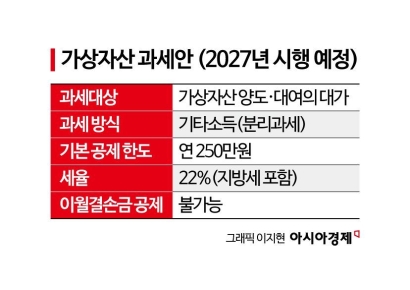 "Stocks Are Not Taxed, but Annual Crypto Gains Over 2.5 Million Won to Be Taxed Next Year... Investors Push Back"
- "Not Jealous of Winning the Lottery"... Entire Village Stunned as 200 Million Won Jackpot of Wild Ginseng Cluster Discovered at Jirisan
- "Jeong Yu-kyung Is a Neighbor"...Itaewon Standalone House with Record 23.2 Billion Won Appraisal Up for Auction [Real Estate AtoZ]
- "How Did an Employee Who Loved Samsung End Up Like This?"... Past Video of Samsung Electronics Union Chairman Resurfaces
- "Even With a 90 Million Won Salary and Bonuses, It Doesn’t Feel Like Much"... A Latecomer Rookie Who Beat 70 to 1 Odds [Scientists Are Disappearing] ③
Bungeoppang can also be enjoyed at home through delivery and online orders. Mr. A, who purchased Bungeoppang online, said, "It is very chewy and delicious," adding, "My children look for Bungeoppang every evening."
© The Asia Business Daily(www.asiae.co.kr). All rights reserved.







