Delivery Payment Linkage System Fully Activated On Site... 334 Linkage Agreements Made
Pilot Operation Participating Companies Complete 334 Linked Agreements Signed

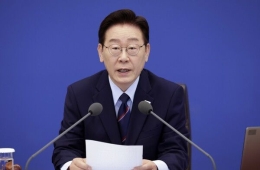
Minister Lee Young is speaking at the TF meeting on the delivery payment linkage system. (Photo by Yonhap News)
View original image[Asia Economy Reporter Kim Cheolhyun] The Ministry of SMEs and Startups (Minister Lee Young) announced on the 13th that companies participating in the pilot operation of the Delivery Price Linkage System have signed 334 delivery price linkage agreements. The 334 cases are the total results of delivery price linkage agreements signed by 44 consignor companies and 317 consignee companies. This means that the delivery price linkage system has practically started operating in the field.
The Ministry of SMEs and Startups explained that through the process of signing delivery price linkage agreements by companies participating in the pilot operation, it was confirmed that the delivery price linkage system can be expanded to all companies in the future and can operate in the field. In addition, the data analyzing the special delivery price linkage agreements actually signed by companies was referenced in preparing the delivery price linkage system legislation.
The delivery price linkage system is a system designed to solve the problem of small and medium-sized enterprises bearing the risk of raw material price fluctuations alone and to create an environment where large and small-medium enterprises can grow together. The Ministry of SMEs and Startups recruited companies to participate in the pilot operation of the delivery price linkage system from August 12.
Consignor and consignee companies participating in the pilot operation agreed to record key raw materials, adjustment conditions, adjustment cycles, price reference indicators, and linkage formulas in the agreement through voluntary consultation and to adjust delivery prices accordingly. According to the analysis of 334 special delivery price linkage agreements submitted by companies, 181 cases (54.2%) set one key raw material as the linkage target, 82 cases (24.6%) set two, and 71 cases (21.3%) set three or more. As a result, a total of 669 raw materials subject to linkage were counted in the 334 agreements.
The key raw materials subject to linkage were specifically steel scrap, rolled steel products (such as thick plates, thin plates, bars, and wire rods), galvanized steel, steel pipes, pig iron, and other steel products, accounting for 49.9%, the largest share. Next, non-ferrous metals such as copper, aluminum, zinc, lead, tin, silver, and nickel accounted for 31.1%. Petrochemical raw materials such as synthetic resins (PP, PA, ABS, GPPS, etc.), synthetic rubber (NBR, CR, EPDM, FKM, etc.), ethylene, and naphtha followed with 10.9%. Agreements were also made for various other raw materials such as wood, agricultural products, helium, and paper.
As price reference indicators that can confirm the degree of raw material price fluctuations, 65.6% of cases used indicators announced by reputable institutions such as raw material exchanges (London Metal Exchange, etc.), SME cooperatives (Korea Foundry Industry Cooperative, Korea Electric Wire Industry Cooperative, etc.), professional price survey agencies (Korea Price Information, Korea Price Association, etc.), and specialized publications (Steel & Metal News, Steel Daily, etc.). Cases using publicly announced prices from specific raw material sellers accounted for 14.6%. Among companies that have operated the linkage system for a long time, some used the average price of multiple raw material sellers as an indicator. As the delivery price linkage system expands in the future, demand from SMEs for raw material price reference indicators is expected to increase.
Regarding adjustment conditions based on raw material price fluctuation rates, '0%' accounted for 48.6%, meaning about half of the cases adjust delivery prices even if the raw material price changes by just 1 won. Including adjustment conditions of '±3% or less' increases this to 64.1%. Cases setting adjustment conditions exceeding ±10% accounted for only 0.4%. Also, in 99.7% of cases, both increases and decreases in raw material prices were linked. The most common adjustment cycle for delivery prices was 'quarterly' at 39.6%, followed by 'monthly' at 29.7%. Some cases set a long cycle of one year, and cases with irregular cycles adjust prices whenever raw material prices fluctuate or at each delivery.
Hot Picks Today
 "Stocks Are Not Taxed, but Annual Crypto Gains Over 2.5 Million Won to Be Taxed Next Year... Investors Push Back"
- "Don't Throw Away Coffee Grounds" Transformed into 'High-Grade Fuel' in Just 90 Seconds [Reading Science]
- Despite Warnings of "Do Not Enter, You May Not Make It Out Alive"... Foreign Tourist Stranded After Unauthorized Climb on Jeju Sanbangsan
- Signed Without Viewing for 1.6 Billion Won... Jamsil and Seongbuk Jeonse Prices Jump 200 Million Won in a Month [Real Estate AtoZ]
- "Even With a 90 Million Won Salary and Bonuses, It Doesn’t Feel Like Much"... A Latecomer Rookie Who Beat 70 to 1 Odds [Scientists Are Disappearing] ③
Minister Lee Young said, "With the signing of linkage agreements by companies participating in the pilot operation, the delivery price linkage system has officially started operating," and "we will spare no support to enable more companies to participate in the pilot operation for the system to settle firmly in the field."
© The Asia Business Daily(www.asiae.co.kr). All rights reserved.