Reemergence One Month Earlier Than Expected... Health Authorities Say "This Is the 7th Wave"
![[Image source=Yonhap News]](http://www.asiae.co.kr/news/img_view.htm?img=2022110910495210393_1667958592.jpg)
[Asia Economy Reporter Byeon Seon-jin] The quarantine authorities have officially designated the current COVID-19 outbreak as the '7th wave.' The previous 6th wave was dominated by the Omicron subvariant BA.5, which caused up to 180,000 confirmed cases per day, beginning in June. Early November is likely the start of the 7th wave, with the peak expected in December or later, depending on the influx of new variants.
At a regular briefing on the 9th, Lee Sang-won, head of the Epidemiological Investigation and Analysis Team at the Central Disease Control Headquarters (CDCH), responded to a question about whether the current spread of COVID-19 could be considered the '7th wave.' He said, “(So far) we have been cautious to avoid confusion by numbering waves, but it is acceptable to call this the 7th wave,” adding, “There is no disagreement that this is indeed a wave.” Lee Sang-min, the 2nd Deputy Head of the Central Disaster and Safety Countermeasures Headquarters for COVID-19 (Minister of the Ministry of the Interior and Safety), also stated that “the scale of the COVID-19 outbreak has been increasing for four consecutive weeks, and the effective reproduction number has exceeded 1 for three consecutive weeks, indicating that the winter resurgence is in full swing.” An effective reproduction number above ‘1’ means the outbreak is spreading, and the number has been rising from 1.09 to 1.13 to 1.21.
Some Experts Say the 7th Wave Began in Late October... Authorities 'Declare' It for the First Time
This is the first time the authorities have officially labeled the recent COVID-19 spread as the '7th wave.' Experts believed the 7th wave started from late October to early November, but the authorities had previously taken a cautious stance, saying “Currently, the trend is just shifting to an upward phase” (Im Suk-young, CDCH Situation General Manager, briefing on the 2nd), showing prudence. However, the authorities now judge that immunity from vaccination and prior infection has waned, and with more in-person events, the spread has accelerated more sharply than expected. Accordingly, Jung Ki-seok, head of the COVID-19 Special Response Team and member of the National Infectious Disease Crisis Response Advisory Committee, who first predicted on October 17 that the wave would start in early December, now acknowledges the wave began about a month earlier. In a recent briefing, Jung said, “BA.5 remains dominant in Korea, but variants like BQ.1 and BQ.1.1 are gradually moving, so by December, it will be clear whether a new variant will become dominant.”
According to the CDCH, on the 9th, there were 62,472 new confirmed COVID-19 cases, the highest in 55 days since September 15 (71,444 cases). The weekly new cases for the first week of November (October 30 to November 5) totaled 297,335, a 27.5% increase from the previous week. The number of critically ill patients hospitalized is 336, and the nationwide intensive care unit (ICU) bed occupancy rate is 27.8%, showing an upward trend. The ICU bed occupancy rate has risen continuously from 15.8% in the second week of October to 18.1% in the third week, 23.5% in the fourth week, and 25.7% in the first week of November. The previous day's COVID-19 deaths increased by 29 from the day before (30 deaths), marking the highest daily death toll in 45 days since September 25 (73 deaths). The authorities estimate that daily confirmed cases could reach up to 200,000 as early as December.
Professor Kim Woo-joo of the Infectious Diseases Department at Korea University Guro Hospital said, “Typically, from late October, the colder weather leads to increased indoor activities, creating 3Cs environments (closed spaces, crowded places, close-contact settings) that leave embers for resurgence,” adding, “With the full removal of outdoor mask mandates and the lifting of mandatory PCR testing before and after entry, quarantine measures have loosened, and vaccination rates are low, so an early start to the 7th wave was predictable.” Professor Kim had previously anticipated a resurgence between September and late October as immune-evading variants BQ.1.1 and BF.7 expanded their territory in the US and Europe.
Hot Picks Today
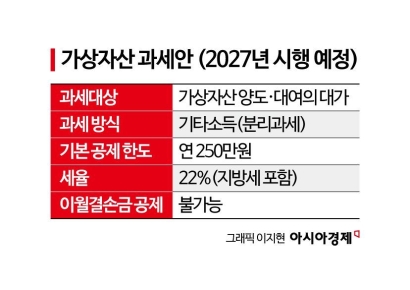 "Stocks Are Not Taxed, but Annual Crypto Gains Over 2.5 Million Won to Be Taxed Next Year... Investors Push Back"
- "Not Jealous of Winning the Lottery"... Entire Village Stunned as 200 Million Won Jackpot of Wild Ginseng Cluster Discovered at Jirisan
- "Rather Than Endure a 1.5 Million KRW Stipend, I'd Rather Earn 500 Million in the U.S." Top Talent from SNU and KAIST Are Leaving [Scientists Are Disappearing] ①
- "How Did an Employee Who Loved Samsung End Up Like This?"... Past Video of Samsung Electronics Union Chairman Resurfaces
- "Even With a 90 Million Won Salary and Bonuses, It Doesn’t Feel Like Much"... A Latecomer Rookie Who Beat 70 to 1 Odds [Scientists Are Disappearing] ③
Social Distancing and Mandatory PCR Testing Before and After Entry Remain Lifted... Government Says 'Quarantine and Medical Capacity Are Sufficient'
The government forecasts the scale of the 7th wave to be similar to or smaller than the summer wave and plans to maintain the overall quarantine policies. They state that “current quarantine and medical capacities are sufficient.” The system can handle up to 850,000 PCR tests per day, has about 6,000 dedicated hospital beds, and has secured treatment drugs sufficient for over 2 million people to prevent severe cases. The government will not reinstate previous social distancing or mandatory PCR testing before and after entry but will respond to the resurgence by increasing vaccination and treatment prescriptions for high-risk groups and protecting vulnerable facilities.
© The Asia Business Daily(www.asiae.co.kr). All rights reserved.







