Bank Net Interest Margin Expected to Slow Down in the First Half of Next Year
[Asia Economy Reporter Song Hwajeong] As banks' funding environment continues to deteriorate, the upward trend in net interest margin (NIM), which has driven banks' earnings growth so far, is expected to reverse in the first half of next year.
According to Hana Securities on the 9th, due to the steep rise in NIM this year, the annual cumulative NIM for 2023 is expected to increase further compared to the previous year, but quarterly NIM is anticipated to decline in the first half. With the base interest rate hike, the average bank NIM is expected to rise by 20bp (1bp=0.01%) this year, but next year it is projected to increase by only 9bp.
This is because the base interest rate has risen more sharply than expected, increasing pressure to reduce the loan-deposit interest rate spread and the burden of rising funding costs, which act as factors slowing NIM growth. Choi Jungwook, a researcher at Hana Securities, analyzed, "Due to the sharp rise in market interest rates, significant changes have occurred in banks' funding mix, such as a reduction in low-cost deposits and an increase in time deposits. While bank bond issuance is being restrained to stabilize the bond market, expansion of loans through liquidity supply is expected to increase time deposit funding, making funding cost increases inevitable."
As the funding environment worsens, the ability to defend low-cost deposits is expected to become more important. The proportion of low-cost deposits in banks currently stands at around 41%, but it is forecasted to fall to the 30% range next year. By bank, as of the third quarter this year, KB Kookmin Bank has the highest at 46.9%, followed by Shinhan Bank at 43.2%, Woori Bank at 40.6%, and Hana Bank at 35.6%.
Hot Picks Today
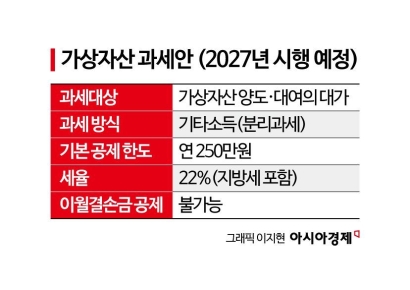 "Stocks Are Not Taxed, but Annual Crypto Gains Over 2.5 Million Won to Be Taxed Next Year... Investors Push Back"
- "Not Jealous of Winning the Lottery"... Entire Village Stunned as 200 Million Won Jackpot of Wild Ginseng Cluster Discovered at Jirisan
- "Jeong Yu-kyung Is a Neighbor"...Itaewon Standalone House with Record 23.2 Billion Won Appraisal Up for Auction [Real Estate AtoZ]
- "How Did an Employee Who Loved Samsung End Up Like This?"... Past Video of Samsung Electronics Union Chairman Resurfaces
- "Even With a 90 Million Won Salary and Bonuses, It Doesn’t Feel Like Much"... A Latecomer Rookie Who Beat 70 to 1 Odds [Scientists Are Disappearing] ③
Monthly Active Users (MAU) of mobile apps, corporate customer loyalty, and the ability to attract city and district treasury accounts are expected to determine the defense capability of low-cost deposits. As of the second quarter, the MAU of major banks are KB 9.6 million, Shinhan 8.1 million, Woori 5.1 million, and Hana 4.6 million. As of the end of October, regarding the possession status of city and district treasury accounts in Seoul, Shinhan holds the Seoul city treasury and Gangnam, Gangbuk, Guro, Seocho, and Sangdong Eunpyeong district treasuries; Woori Bank holds Gangdong, Gangseo, Geumcheon, Gwanak, Mapo, Seodaemun, Seongbuk, Songpa, Yangcheon, Yeongdeungpo, Yongsan, Jongno, Jung-gu, and Jungnang district treasuries; and KB holds Gwangjin, Nowon, Dobong, Dongdaemun, and Dongjak district treasuries. Researcher Choi explained, "With the deterioration of banks' funding environment, funding competitiveness such as the ability to defend low-cost deposits will emerge as a core competitive advantage for banks. Securing city and district treasury accounts allows banks to raise large-scale low-cost deposits, and factors such as mobile app MAU and corporate customer loyalty will also affect the defense capability of low-cost deposits."

© The Asia Business Daily(www.asiae.co.kr). All rights reserved.