[Lee Boram's Senior Trend] The Third Act of Life: 'Activities' Call the Prime Time
![[Lee Boram's Senior Trend] The Third Act of Life: 'Activities' Call the Prime Time](http://www.asiae.co.kr/news/img_view.htm?img=2022092809194949236_1664324390.jpg)
Recently, the family of Yvon Chouinard, chairman (83) of the American outdoor brand Patagonia, announced a donation worth around 4 trillion won. They expressed hope that this would help form a new type of capitalism, not one that results in a few wealthy individuals and many poor, while reminding the world of the seriousness of climate change and giving us a gentle reflection on what it means to age with dignity.
Donations and volunteering are not activities reserved for special people. The word volunteer originates from the Latin voluntas, meaning free will. Just as spontaneity is an important element in the characteristics of ‘play’ and leisure, volunteering depends on the willingness to help others while respecting their dignity.
As of 2020, South Korea ranks within the top 10 OECD (Organisation for Economic Co-operation and Development) countries by GDP, but its donation index is in the 20th range. According to the 2021 World Giving Index published by the UK charity research organization CAF (Charities Aid Foundation), South Korea ranked near the bottom. This survey combined three areas: the rate of helping strangers, monetary donations, and volunteer hours. Korea had a high rate of monetary donations but very low in the other two areas. This is thought to be because many people are unsure of what and how to do volunteer work, so a brief introduction is provided here.
Types of volunteer activities include labor volunteering, cultural volunteering, caregiving, medical volunteering, and technical volunteering. Labor volunteering, such as delivering lunch boxes or community work, can be done by anyone, while dental or ophthalmic treatments require medical skills. There are also cultural volunteer activities like traditional Korean music (gugak) and theater, which serve as forms of encouragement, as well as specialized skills such as haircuts or appliance repair. The Korea International Cooperation Agency (KOICA) offers volunteer activities such as senior volunteer groups and advisory teams supporting overseas aid. To easily find volunteer activities suitable for you and near your location or nationwide, there is the government-operated ‘1365 Volunteer Portal.’
The effects of volunteering as a ‘meaningful activity’ can be summarized in three points. First is a sense of fulfillment in life. Positive influence first provides healthy self-esteem and joy to oneself. Second is an opportunity for personal growth. It allows one to utilize their abilities, rediscover themselves, and reconnect with society. Third is understanding the local community and contributing to problem-solving. By directly participating in the community, one builds solidarity with neighbors.
In the book ‘Honjamal Jal Salmyun Museun Jaemin-gyeo’ (What’s the Point of Living Well Alone), author Jeon Woo-ik says, ‘Life is about dedicating oneself sincerely to something or someone.’ As we age, wisdom grows, and as a result, the range of choices broadens. Therefore, ‘aging,’ ‘opportunity,’ and ‘potential’ are words that best fit the ‘meaningful activity’ category, especially ‘charitable activities.’ An interesting point is that the three pillars of the third act portfolio of life?‘work, play, and meaningful activities’?are interconnected and influence each other.
Senior citizens tend to focus their post-retirement charitable activities more on their local communities compared to other generations. This has led to village hall lectures on digital skills donation evolving into paid municipal courses, and local travel clubs growing into senior-specialized travel agencies. Through a writing hobby class promoting local restaurants on social media, some seniors have become influencers and earned income as bloggers. Voluntarily offering time, talent, and experience to neighbors and community without compensation has even led to job creation. Healthiness follows naturally.
Susan Raymond, a consultant at an American public interest consulting firm, predicts that with the retirement of the baby boomer generation, charitable activities will become more active, ushering in a golden age of civil society. According to her, seniors are key players in charitable and social activities. Moreover, as people age, their interest in the public good of their communities increases, and they tend to donate their assets. Therefore, vibrant older adults can be the engine for community prosperity.
The MZ generation (Millennials + Generation Z) grows up observing the senior generation. Our youth still lack leisure. This year, the average university tuition is 6.76 million won, and 6 out of 10 young people graduate with debts in the tens of millions of won. The outlook for future planning in a low-growth society is not bright. It is time for the senior generation to take the lead and set a desirable example for the public good.
‘Heal the world. Make it a better place For you and For me and the entire human race.’ This is a song Michael Jackson sang during his lifetime. The future for everyone has begun. That future will last longer than you think and be a better world than you expect.
Hot Picks Today
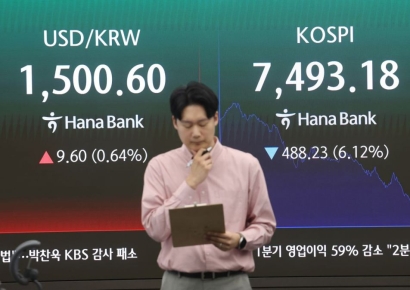 After Topping 8,000 Instead of Hitting 10,000... KOSPI Plunges—When Will It Rebound?
- "Samsung and Hynix Were Once for the Underachievers"... Hyundai Motor Employee's Lament
- [Breaking] Court Rules Against Samsung Electronics Union...1 Billion Won per Day Penalty for Exceeding Strike Scope
- Global Big Tech Joins AI Firms in Full-Scale AI Agent Showdown
- "That? It's Already Stashed" Nightlife Scene Crosses the Line [ChwiYak Nation] ③
Lee Boram, CEO of Third Age
© The Asia Business Daily(www.asiae.co.kr). All rights reserved.