[Insight & Opinion] Kakao's Challenge: Achieving a 'Trust Surplus'
![[Insight & Opinion] Kakao's Challenge: Achieving a 'Trust Surplus'](http://www.asiae.co.kr/news/img_view.htm?img=2022110111240890420_1667269449.jpg)
Corporate decision-making has a significant impact on the market. Major conglomerate groups criticized for listing subsidiaries through physical spin-offs include LG, SK, and Kakao. In its 2021 corporate governance report, Kakao stated that the listing of its major subsidiaries would proceed in a way that enhances shareholder value. However, Kakao Group's sprawling subsidiary listings have led to a severe stock price decline, compounded by market conditions. KakaoBank, which was listed at 39,000 KRW, has fallen more than 50% below its IPO price, pushing employee stockholders into credit delinquency levels. Without innovation, Kakao has faced criticism for moral insensitivity due to fragmented listings and sprawling management. One CEO announced before taking office that he would forgo salary and incentives until Kakao’s stock price reached 150,000 KRW, accepting only minimum wage. Unfortunately, he recently resigned, taking responsibility for the KakaoTalk outage. The Kakao service disruption caused significant inconvenience to consumers in their daily communication, various payments, and deposits and withdrawals.
Stocks are a representative risky asset. When management exhibits moral hazard and complacency about safety, a falling stock price has no wings to fly. Have we already forgotten the backlash over the massive stock option sales by KakaoPay’s CEO and executives? What implications did the controversies over the sale and listing of Kakao Mobility and discord with labor unions leave for the company? Kakao Games, the first Kakao subsidiary to go public, withdrew the listing of its subsidiary Lionheart, which was criticized for excessive fragmentation, offering a weak excuse. The dreadful statement that the withdrawal report was submitted after comprehensively considering the difficult domestic and international environment for proper company valuation tarnished market trust. Even leaving aside the controversy over the subsidiary’s IPO price being higher than Kakao Friends, the market was stunned by the bold claim that the listing was postponed rather than withdrawn. In an era where ESG (Environmental, Social, Governance) management is becoming increasingly important, should we believe that Kakao is engaging in impact washing (pretending to do valuable work without genuine interest)? By the end of last year, Kakao’s stock had surpassed 2 million individual investors, becoming a national stock following Samsung Electronics.
Reflecting on the KakaoTalk outage incident brings to mind the broken windows theory. Let us consider each controversial issue surrounding Kakao as a broken window. If left unattended, moral hazard spreads from the broken cracks. Kakao must realize how dangerous the consequences can be if the disorder and disappointment it has shown so far are ignored. The reason Kakao has grown to what it is today is absolutely due to the public’s trust in KakaoTalk. The deficit of trust caused by the monopolistic platform Kakao made headlines on the front page. This overlaps with Heinrich’s Law (the 1:29:300 rule), which states that before a major accident, there are 29 minor incidents and 300 easily overlooked signs.
In industrial settings, only deaths or serious injuries are reported to the state or society. Minor injuries are handled internally by companies or concealed by the injured parties themselves. For 22 years, Kakao outsourced without having its own data center and had previously experienced service outages due to fire. On April 28, 2012, there was an incident where LG CNS’s Gasan data center’s power supply failure caused a service outage lasting over four hours. Since Kakao outsources both servers and crisis response, it must be even more diligent in preventing recurrence. The iceberg’s tip becomes a major accident. Bird’s Iceberg Theory (1:10:30:600), which urges detecting crisis signals, goes a step beyond Heinrich’s Law. It emphasizes including near-miss incidents in statistics to pay extra attention. Now is the time for Kakao to solve the challenge of creating a ‘trust surplus (黑子)’ through backup distribution, curbing opportunistic listings, and embracing innovation and coexistence.
Hot Picks Today
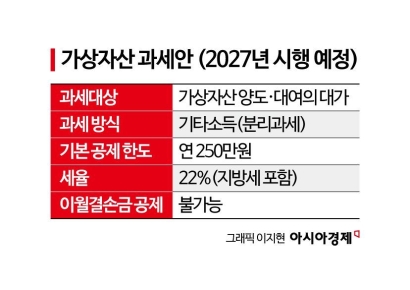 "Stocks Are Not Taxed, but Annual Crypto Gains Over 2.5 Million Won to Be Taxed Next Year... Investors Push Back"
- "Not Jealous of Winning the Lottery"... Entire Village Stunned as 200 Million Won Jackpot of Wild Ginseng Cluster Discovered at Jirisan
- "Even With a 90 Million Won Salary and Bonuses, It Doesn’t Feel Like Much"... A Latecomer Rookie Who Beat 70 to 1 Odds [Scientists Are Disappearing] ③
- General Strike D-1: Final Negotiations Between Samsung Electronics Labor and Management Over One Key Issue
- "How Did an Employee Who Loved Samsung End Up Like This?"... Past Video of Samsung Electronics Union Chairman Resurfaces
Wonkyung Cho, Professor at UNIST / Director of the Global Industry Cooperation Center
© The Asia Business Daily(www.asiae.co.kr). All rights reserved.