Shipbuilding Industry 'Financial Stagnation' Fixed with This... HJ Junggongup "Blockchain-Based Ship Financing Can Revitalize Shipbuilding"
Busan City Hosts 'BWB 2022' Conference Featuring Presentation on 'Collaboration Between Shipbuilding Industry and Blockchain Technology'
First Use of STO in Ship Financing in Shipbuilding Industry Draws Attention as a New Direction for Revitalizing

[Asia Economy Yeongnam Reporting Headquarters Reporter Kim Yong-woo] The enormous costs involved in shipbuilding, yet the chronic issue in the shipbuilding industry has been the ‘cash flow stagnation’ phenomenon, where more than half of the remaining payment after deducting deposits can only be received after the ship is delivered.
What if blockchain technology is applied to ship financing? A new study and proposal suggesting that advanced ship financing methods based on blockchain could serve as a catalyst to revitalize the shipbuilding industry has attracted attention.
HJ Heavy Industries (CEO Hong Moon-gi) will present a new direction for revitalizing the shipbuilding industry under the theme of ‘Collaboration between the Shipbuilding Industry and Blockchain Technology’ at the BWB (Blockchain Week in Busan) 2022 conference hosted by Busan City on the 28th.
BWB 2022 is a global blockchain event held at BEXCO for three days from the 27th to the 29th, following last year’s ‘NFT Busan 2021’.
Last year, it was successfully held with over 10,000 visitors on-site. This year, it is expected to be a venue for information exchange and trend analysis in the blockchain industry.
HJ Heavy Industries’ Vice President Yoo Sang-chul will be a speaker. Vice President Yoo, who oversees the Corporate Planning Division at HJ Heavy Industries, was the first in Korea to establish a ship fund in the ship financing sector and has handled financial procurement. He is recognized as an expert with experience in both shipbuilding and ship financing.
HJ Heavy Industries will showcase practical funding methods for ship financing using STO (Security Token Offering), a blockchain-based security token, addressing the reality of the domestic shipbuilding industry, which, despite ranking 5th among domestic export industries with $29.1 billion in exports in 2021, faces various challenges.
They also plan to focus on the innovative effects on various upstream and downstream ecosystems and propose directions for the domestic shipbuilding industry in the blockchain era.
STO refers to security-type digital assets issued based on traditional assets such as companies, real estate, artworks, and stocks. Recently, as discussions on adopting STO using blockchain technology have intensified, attention has been drawn to the tokenization of rights related to ships, enabling individuals or institutions to own ships in fractional shares.
Traditional ship orders rely on the shipowner’s capital and loans from financial institutions to commission shipbuilders, but with STO issuance based on blockchain technology enabling small-scale distributed investments, funding methods could diversify.
Currently, over 90% of the funds required for shipbuilding are needed before delivery, but the reality is that the remaining 60% of the ship price is only received after delivery, making it impossible to avoid cash flow difficulties before delivery.
If ship financing investment using STO is activated in the future, shipyards will be able to secure construction payments, enabling stable construction and competitive orders.
Furthermore, it is expected to greatly contribute to related industry development by expanding shipowners’ fleet capacity and increasing orders for domestic shipyards.
The establishment of digital asset exchanges using STO platforms and the establishment of related systems would also be good news for Busan City, which is promoting itself as a marine finance specialized hub and a global blockchain city.
In fact, it is known that STOs for various assets, including real estate, artworks, and stocks, are currently being attempted worldwide.
In the domestic industry, since the 2008 financial crisis, the participation of traditional financial institutions such as banks in ship financing has been decreasing, and the need to revitalize a ship financing ecosystem where the private sector participates in a distributed investment form has been continuously raised.
An HJ Heavy Industries official explained, “The securitization of ship financing into tokens enables convenient and safe transactions through small-scale distributed investments, creating new opportunities across the shipping and shipbuilding industries.”
Hot Picks Today
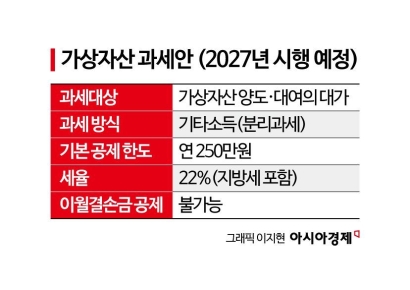 "Stocks Are Not Taxed, but Annual Crypto Gains Over 2.5 Million Won to Be Taxed Next Year... Investors Push Back"
- "Not Jealous of Winning the Lottery"... Entire Village Stunned as 200 Million Won Jackpot of Wild Ginseng Cluster Discovered at Jirisan
- "Even With a 90 Million Won Salary and Bonuses, It Doesn’t Feel Like Much"... A Latecomer Rookie Who Beat 70 to 1 Odds [Scientists Are Disappearing] ③
- "Rather Than Endure a 1.5 Million KRW Stipend, I'd Rather Earn 500 Million in the U.S." Top Talent from SNU and KAIST Are Leaving [Scientists Are Disappearing] ①
- "How Did an Employee Who Loved Samsung End Up Like This?"... Past Video of Samsung Electronics Union Chairman Resurfaces
He added, “If stable order supply is achieved through the development of blockchain-based digital business models and financial products, a new horizon will open for the development of the domestic shipbuilding industry.”
© The Asia Business Daily(www.asiae.co.kr). All rights reserved.







