Growing Importance of 'Digital Transformation'... Construction Industry's Level of 'Information Digitization'
![[Provided by Construction Industry Research Institute]](http://www.asiae.co.kr/news/img_view.htm?img=2022101911535774248_1666148037.jpg)
[Asia Economy Reporter Noh Kyung-jo] Although the importance of digital transformation is increasing, it has been found that its practical application in the domestic construction industry is still insufficient. It is analyzed that creative ideas that transcend fixed notions and prejudices must operate on the basis of information and work digitalization.
According to the report "Trends and Response Directions of Digital Transformation in the Construction Industry" published by the Korea Construction Industry Research Institute on the 19th, even companies ranked within the top 30 were found to be stuck at the first stage of digital transformation, "information digitalization." Only some companies ranked 1st to 10th were at the second stage, "work digitalization."
Information digitalization refers to digitizing existing analog materials and content. The stage called "work digitalization" is when new work scopes, organizations, processes, and systems are integratively applied through work innovation and optimization. The final stage, "digital transformation," means implementing new business models beyond existing business areas through digitalization.
Most companies ranked 1st to 10th use Building Information Modeling (BIM), possess Project Management Information Systems (PMIS), and partially apply smart construction technologies such as Radio Frequency Identification (RFID), biometric technology, drones, 3D scanners, smart sensors, and Virtual Reality (VR).
Among companies ranked 11th to 30th, only about half use BIM, and many do not have PMIS. The application of smart construction technologies was also limited. Companies ranked below 31st performed about 70% of their work using general-purpose software such as Excel. The usage rate of Enterprise Resource Planning (ERP) or PMIS was confirmed to be below 20%.
The report noted that although smart construction technologies are introduced by leading companies, if the construction industry as a whole does not develop, sustaining smartification will be difficult.
Kim Woo-young, a research fellow at the Korea Construction Industry Research Institute, said, "The overall level of digital transformation in Korea's construction industry is understood to remain at the level of information digitalization," adding, "Attempts at full-fledged digital transformation are limited to developing existing products packaged as advanced products without changing existing business areas."
Hot Picks Today
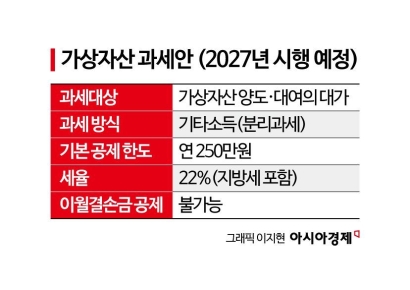 "Stocks Are Not Taxed, but Annual Crypto Gains Over 2.5 Million Won to Be Taxed Next Year... Investors Push Back"
- "Not Jealous of Winning the Lottery"... Entire Village Stunned as 200 Million Won Jackpot of Wild Ginseng Cluster Discovered at Jirisan
- "Rather Than Endure a 1.5 Million KRW Stipend, I'd Rather Earn 500 Million in the U.S." Top Talent from SNU and KAIST Are Leaving [Scientists Are Disappearing] ①
- "How Did an Employee Who Loved Samsung End Up Like This?"... Past Video of Samsung Electronics Union Chairman Resurfaces
- "Even With a 90 Million Won Salary and Bonuses, It Doesn’t Feel Like Much"... A Latecomer Rookie Who Beat 70 to 1 Odds [Scientists Are Disappearing] ③
He continued, "The construction industry has a clear self-identity, which ironically makes it difficult to expand business areas," and advised, "While digitalization required an industry-wide approach rather than that of a single company or organization, digital transformation needs to be approached from the perspective of individual companies' market competitiveness, along with addressing issues of fixed notions and perceptions."
© The Asia Business Daily(www.asiae.co.kr). All rights reserved.