"Herbal Medicine 'Cheonsugeun' Confirmed Effective for Treating Spinal Stenosis"
Research Team Led by Senior Researcher Hong Jin-young at Jaseng Hospital of Korean Medicine
![Inflammatory macrophages, which were concentrated at the silicone implant site, decreased in a concentration-dependent manner in the flexor retinaculum. <br>[Photo by Jaseng Hospital of Korean Medicine]](http://www.asiae.co.kr/news/img_view.htm?img=2022101715023171243_1665986551.png)
Inflammatory macrophages, which were concentrated at the silicone implant site, decreased in a concentration-dependent manner in the flexor retinaculum.
[Photo by Jaseng Hospital of Korean Medicine]
[Asia Economy Reporter Kim Young-won] The research team led by Senior Researcher Hong Jin-young at the Spine and Joint Research Institute of Jaseng Korean Medicine Hospital announced on the 17th that they confirmed the cell-protective and motor function improvement effects of Harpagophytum procumbens through cell and animal experiments and elucidated the treatment mechanism for spinal canal stenosis.
Harpagophytum procumbens (scientific name Harpagophytum procumbens), known as the "Devil's Claw," is highly effective in suppressing inflammation and pain and is used in the treatment of spinal diseases such as spinal canal stenosis. Spinal canal stenosis is a condition where degeneration of the spine causes surrounding ligaments to thicken, leading to inflammation and narrowing of the spinal canal, the nerve passage in the center of the spine.
The research team confirmed the effects of Harpagophytum procumbens through experiments using rat spinal cord cells. First, they isolated and cultured rat spinal cord cells and conducted cell experiments, then induced iron accumulation and cell death in the spinal cord cells using ferrous sulfate (FeSO). After treating the cells with three concentrations (50, 100, 200 μg/mL) of Harpagophytum procumbens, they confirmed the inhibition of iron accumulation and cell protection effects. The team explained that iron accumulation was suppressed, and cells that had died or had severed neurites showed recovery proportional to the concentration of Harpagophytum procumbens.
Additionally, the team found that Harpagophytum procumbens activates the Nrf2 (Nuclear factor erythroid-2-related factor 2) metabolism, which regulates intracellular antioxidant responses, promoting neurite recovery. Observing fluorescently stained cells with a confocal microscope revealed that Nrf2, which had decreased due to iron, increased as the concentration of Harpagophytum procumbens rose.
Animal experiments were also conducted to demonstrate the therapeutic effects and mechanisms of Harpagophytum procumbens on spinal canal stenosis. The team induced spinal canal stenosis artificially by removing the fifth lumbar vertebra (L5) of rats and inserting biocompatible silicone, controlling the degree of nerve damage and severity according to the hardness of the silicone, and examined the inflammation level in spinal cord tissue. The results showed that inflammatory macrophages concentrated at the silicone implantation site decreased in a concentration-dependent manner after administration of Harpagophytum procumbens.
Furthermore, the team confirmed the motor function improvement effect of Harpagophytum procumbens. Analyzing the foot slip rate through a ladder walking test with 3 cm intervals each week, they found that the foot slip rate decreased as the concentration of Harpagophytum procumbens increased.
Senior Researcher Hong Jin-young stated, "This study is significant as it is the first to reveal the treatment mechanism of Harpagophytum procumbens for spinal canal stenosis," adding, "It is expected that Korean medicine treatments using Harpagophytum procumbens could be considered an effective option not only for spinal canal stenosis but also for various spinal diseases."
Hot Picks Today
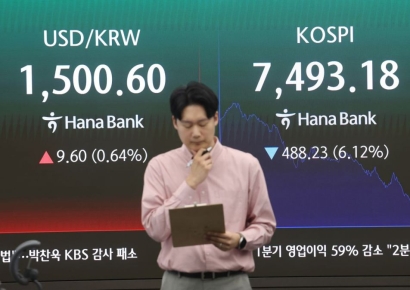 After Topping 8,000 Instead of Hitting 10,000... KOSPI Plunges—When Will It Rebound?
- [Breaking] Court Rules Against Samsung Electronics Union...1 Billion Won per Day Penalty for Exceeding Strike Scope
- "What? It Wasn't a Wristwatch?" This Brand's Stock Soared 15%, Then Plunged After Official Announcement
- [Breaking] Court Rules Against Samsung Electronics Union...1 Billion Won per Day Penalty for Exceeding Strike Scope
- "That? It's Already Stashed" Nightlife Scene Crosses the Line [ChwiYak Nation] ③
Meanwhile, this paper was published in the September issue of the SCI(E)-level journal Oxidative Medicine and Cellular Longevity (IF=7.310).
© The Asia Business Daily(www.asiae.co.kr). All rights reserved.