Foreign Seasonal Worker Supply Rate Down 30%, Rural Labor Shortage Persists
13,297 Supplied Among 45,130 from 2017 to 2022
Rural Population Decline and Workday Limits Cited for Short Stay Periods
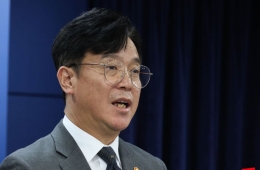
Assemblyman Noh Yong-ho Urges Active Consideration of Stay Extension

[Asia Economy Reporter Kwon Hyun-ji] It has been revealed that the supply rate of foreign seasonal workers over the past five years is only 29.5%, failing to resolve the labor shortage in rural farming and fishing areas.
According to data analyzed by the National Assembly Legislative Research Office at the request of Assemblyman Noh Yong-ho (People Power Party), a member of the National Assembly Industry, Trade, Energy, Small and Medium Enterprises Committee, from 2017 to July 2022, the number of foreign seasonal workers applied for by 119 metropolitan and local governments nationwide to the Ministry of Justice was 45,130, while the number of entrants was 13,297.
Looking at the 17 metropolitan local governments, ▲Gangwon Province had 6,293 entrants out of 13,930 applicants, ▲Gyeongsangbuk-do 1,871 out of 7,804, ▲Chungcheongbuk-do 2,145 out of 6,047, ▲Jeollanam-do 580 out of 5,107, ▲Chungcheongnam-do 1,102 out of 4,956, ▲Jeollabuk-do 759 out of 3,191, ▲Gyeonggi-do 222 out of 1,788, ▲Gyeongsangnam-do 180 out of 1,364, ▲Jeju-do 127 out of 889, and ▲Sejong-si 18 out of 54 were recorded as having entered the country.
By country of origin of foreign seasonal workers, ▲the Philippines was the highest with 4,973 people, followed by ▲Vietnam 3,839, ▲Cambodia 928, ▲Nepal 805, ▲Uzbekistan 447, ▲China 374, ▲Mongolia 305, ▲Kyrgyzstan 202, ▲Russia 15, ▲Thailand 15, and ▲Indonesia 4.
The foreign seasonal worker system is a program that allows agricultural and fishery workers to employ foreigners for a short period during peak labor demand times such as sowing and harvesting seasons. It was introduced to solve the chronic labor shortage in rural farming and fishing areas. However, concerns have been raised that the stay period, limited to a maximum of five months due to issues such as the accelerating population decline in rural areas, adaptation problems of foreign workers after entry, and restrictions on working days, is too short.
Hot Picks Today
 "Stocks Are Not Taxed, but Annual Crypto Gains Over 2.5 Million Won to Be Taxed Next Year... Investors Push Back"
- "Don't Throw Away Coffee Grounds" Transformed into 'High-Grade Fuel' in Just 90 Seconds [Reading Science]
- Signed Without Viewing for 1.6 Billion Won... Jamsil and Seongbuk Jeonse Prices Jump 200 Million Won in a Month [Real Estate AtoZ]
- "Groups of 5 or More Now Restricted"... Unrelenting Running Craze Leaves Citizens and Police Exhausted
- "Even With a 90 Million Won Salary and Bonuses, It Doesn’t Feel Like Much"... A Latecomer Rookie Who Beat 70 to 1 Odds [Scientists Are Disappearing] ③
Assemblyman Noh said, “Even excluding 2020-2021 when entry was restricted due to COVID-19, the ratio of entrants to applicants is only 40%,” and added, “The relevant authorities should actively consider extending the stay period within the scope that does not conflict with other employment programs, in order to uphold the purpose of the system.”
© The Asia Business Daily(www.asiae.co.kr). All rights reserved.