"Metastatic Gastric Cancer Patients: Predicting Immune Checkpoint Inhibitor Efficacy Using Tumor Mutational Burden Levels"
Professor Lee Geun-wook's Team at Bundang Seoul National University Hospital
High TMB May Indicate Potential Effectiveness of Immunotherapy

Professor Lee Geun-wook, Department of Hematology and Oncology, Seoul National University Bundang Hospital.
View original image[Asia Economy Reporter Lee Kwan-joo] Professor Lee Geun-wook's team from the Department of Hematology and Oncology at Bundang Seoul National University Hospital announced on the 29th that conducting 'Tumor Mutational Burden (TMB)' testing in metastatic gastric cancer treatment and utilizing it can enable effective immuno-oncology therapy.
Before using cancer therapeutics, performing panel testing of multiple cancer genes through next-generation sequencing (NGS) can somewhat predict the effectiveness of targeted anticancer drugs. The recent trend in cancer treatment is to implement patient-specific personalized therapy by using optimal therapeutics based on such tests, which serves as the foundation for precision medicine.
In particular, although several studies have shown that utilizing TMB values can more precisely predict the therapeutic outcomes of immuno-oncology drugs, there has been almost no research targeting metastatic gastric cancer patients, resulting in a lack of scientific evidence for personalized immuno-oncology treatment in these patients.
Professor Lee's team conducted a study to understand the expression patterns of TMB in metastatic gastric cancer and to predict the efficacy of immuno-oncology drugs for each patient by comparing the effects of immuno-oncology therapy and cytotoxic chemotherapy in metastatic gastric cancer patients.
The study results showed that in the TMB-High group (TMB 10 or higher), immuno-oncology treatment was superior to cytotoxic chemotherapy in various aspects such as tumor response rate and survival period, whereas the opposite was observed in the TMB-Low group (TMB below 10). It is expected that performing TMB testing before starting treatment for metastatic gastric cancer patients and deciding on immuno-oncology therapy based on the results can lead to favorable outcomes.
Professor Lee explained, "Through this study, we confirmed that TMB is a biomarker that can predict the efficacy of immuno-oncology drugs in metastatic gastric cancer, as in other tumors," and added, "If TMB results are used together with existing tests when treating metastatic gastric cancer patients, more effective anticancer treatment can be achieved."
Hot Picks Today
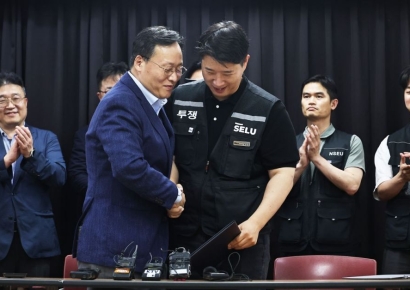 Up to 600 Million Won for Semiconductors, 160 Million Won Bonus for Loss-Making Non-Memory… Samsung Electronics Labor and Management Reach Tentative Deal on Unprecedented Performance Compensation (Comprehensive)
- "Could I Also Receive 370 Billion Won?"... No Limit on 'Stock Manipulation Whistleblower Rewards' Starting the 26th
- "From a 70 Million Won Loss to a 350 Million Won Profit with Samsung and SK hynix"... 'Stock Jackpot' Grandfather Gains Attention
- Opening a Bank Account in Korea Is Too Difficult..."It Costs 150,000 Won Just to Open a Child's Account or Check Card" [Foreigner K-Finance Status]②
- "Who Is Visiting Japan These Days?" The Once-Crowded Tourist Spots Empty Out... What's Happening?
This study was published in the international academic journal 'Clinical Cancer Research.'
© The Asia Business Daily(www.asiae.co.kr). All rights reserved.
!["Please Help": How Much Do Those Bowing 90 Degrees Really Earn? [Data Pick]](https://cwcontent.asiae.co.kr/asiaresize/307/2026052010120870131_1779239528.png)