If Military Forces of the US and China Clash

[Asia Economy Yang Nak-gyu, Military Specialist Reporter] Recently, as military tensions between the United States and China over Taiwan have intensified, attention is focusing on the potential outcomes if the two countries go to war. In the event of a sudden local conflict, the situation could escalate beyond the Third Taiwan Strait Crisis of 1995-1996, when the Chinese military launched multiple missiles into the waters surrounding Taiwan.
If a Taiwan Strait conflict actually breaks out, China is expected to deploy missile, air, submarine, and surface ship forces to block the U.S. military. CNN recently pointed out that, compared to the third aircraft carrier Fujian, destroyers, submarines, civilian merchant ships, and militias pose a greater threat to the U.S.
The destroyers mentioned by CNN are stealth guided missile destroyers (13,000 tons), launched in 2017. These destroyers are equipped with 112 vertical launch cells capable of firing everything from anti-ship missiles to long-range land-attack missiles. China’s main submarines are the domestically developed conventional submarines of the Type 039 class. Their strength lies in being quiet, powered by diesel-electric engines. According to the 2021 Chinese military report submitted by the U.S. Department of Defense to the U.S. Congress, China has built 17 Type 039A/B submarines and plans to increase the total to 25 within the next three years.
China’s civilian merchant ships are considered auxiliary forces of the Chinese Navy. The civilian fleet is three times larger than all of China’s naval landing ships combined. China has also organized a maritime militia by mobilizing civilian fishing vessels. Their role is to prevent foreign ships from entering disputed waters such as those in the South China Sea. The U.S. Center for Strategic and International Studies (CSIS) estimates that China’s maritime militia consists of 122 to 174 vessels.
Conversely, if the U.S. confronts China, it will deploy air forces under the U.S. Forces Japan and the U.S. Indo-Pacific Command to gain air superiority. The Indo-Pacific Command’s fighter aircraft, including those based in Japan, number around 600, about half the number of Chinese fighters. However, in terms of capability, they are formidable. The core consists of fifth-generation fighters such as the F-35, and EF-18 (Growler) electronic warfare aircraft capable of jamming enemy radar and communication networks are also deployed.
The U.S. naval power is also considered superior to China’s. The U.S. Third Fleet of the Indo-Pacific Command, based in San Diego, possesses two aircraft carriers and 35 submarines, including strategic nuclear-powered ballistic missile submarines (SSBNs). In contrast, China’s North Sea Fleet has only one aircraft carrier and three strategic nuclear-powered submarines.
However, the U.S. is unlikely to launch a reckless attack due to China’s possession of the Dongfeng-21 series ballistic missiles. China developed the Dongfeng-21 anti-ship ballistic missile to target large surface combatants such as aircraft carriers. The Dongfeng-21D is known as a U.S. aircraft carrier killer. It is estimated that the Dongfeng-21D has a range of 1,500 to 2,000 km and is equipped with multiple warheads, each with its own propulsion system, enabling maneuverable reentry vehicles (MaRV) to evade interception.
Hot Picks Today
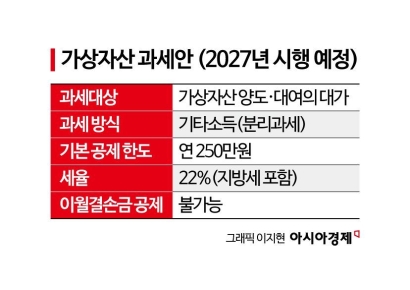 "Stocks Are Not Taxed, but Annual Crypto Gains Over 2.5 Million Won to Be Taxed Next Year... Investors Push Back"
- "Not Jealous of Winning the Lottery"... Entire Village Stunned as 200 Million Won Jackpot of Wild Ginseng Cluster Discovered at Jirisan
- "Jeong Yu-kyung Is a Neighbor"...Itaewon Standalone House with Record 23.2 Billion Won Appraisal Up for Auction [Real Estate AtoZ]
- "How Did an Employee Who Loved Samsung End Up Like This?"... Past Video of Samsung Electronics Union Chairman Resurfaces
- "Even With a 90 Million Won Salary and Bonuses, It Doesn’t Feel Like Much"... A Latecomer Rookie Who Beat 70 to 1 Odds [Scientists Are Disappearing] ③
China also holds a geographical advantage. The U.S. operates about 750 overseas military bases worldwide, maintaining military power over a wide area. In contrast, China’s military power is concentrated in Northeast Asia, which is advantageous. Utilizing this geographical advantage, if China confronts the U.S., its approximately 1,100 fighter jets can operate near Taiwan without aerial refueling.
© The Asia Business Daily(www.asiae.co.kr). All rights reserved.