"Service Industry as New Growth Engine" Known but... Subcontracting Act Stagnates for 11 Years
Design Industry Faces Estimated 151.1 Billion KRW Loss from Unfair Trade in 2020
Despite 20 Trillion KRW Market, Average Sales of Design Firms Only 600 Million KRW
Both Ruling and Opposition Parties Agree on Need for Seobalbeop... Civic Groups 'Oppose'

The design industry, a representative knowledge labor and service sector, faces similar challenges. Although the domestic design industry is worth 20 trillion won, 'design specialist firms' that generate revenue by providing outsourced services are generally small in scale and often suffer from unfair trade practices due to their subordinate position.
◆Design Industry Suffers 151.1 Billion Won in Unfair Trade Losses... "Introduce Standard Contracts and Raise Awareness" = According to the Korea Institute of Design Promotion, as of 2020, there were 7,229 design specialist firms with an average revenue of 607.24 million won. The average number of designers per design specialist firm is only 2.38, while the number of freelance designers increased by 25.4% year-on-year to 62,516.
Yoon Sang-heum, president of the Korea Institute of Design Promotion, said, "Most design specialist companies are small-scale with an average revenue of about 600 million won," adding, "Since designers often do subcontracted work, they frequently do not receive fair pay or proper treatment."
According to the 'Design Company Fair Trade Survey' released by the Korea Design Industry Federation in December last year, the average damage amount from unfair trade in design services in 2020 was 87.28 million won. Based on 9,720 design specialist firms that reported to the Design Promotion Institute, the total estimated damage is approximately 151.1 billion won.

The average annual sales per company in 2020 for 'design specialized firms' that focus on design development work was 607 million KRW, a decrease from 633 million KRW the previous year. Many design specialized firms are small-scale, with an average of only 2.38 designers per company. There was a common opinion that smaller firms tend to endure unfair trade damages, with more than half of respondents (59.9%) attributing this to their relationship with clients.
View original imageMany respondents believed that smaller workforce sizes correlate with greater tolerance of damage, with the most common reason for enduring losses being "relationship with clients such as disadvantages in repeat transactions (59.9%)." When asked about the government's role in preventing unfair damage, the responses were "expanding the use of standard contracts and criteria for design services (51.2%)" and "education and campaigns to raise awareness of design value and standards (39.4%)."
An industry insider remarked, "When you go to a restaurant, the word 'service' is used to mean 'providing food for free,'" pointing out that "the reality of the service industry being undervalued is reflected in the language."
◆Lower Added Value and Labor Share in Service Industry Compared to Advanced Countries = Because the service industry has not been recognized with appropriate value in the market, the share of added value has stagnated at around 60% over the past decade, maintaining a gap of 10 to 20 percentage points compared to major countries such as the United States, Japan, and Germany. The employment share in the service sector is also around 70%, which is 5 to 10 percentage points lower than in major countries. Last year, the service sector accounted for only 5.5% of total government research and development (R&D) investment.
In March last year, the government jointly announced the 'Service Industry COVID-19 Response and Development Strategy,' stating, "While manufacturing and exports have driven Korea's economic growth so far, the development of the service industry is crucial for new economic growth momentum," and "We stand at a crossroads of survival, depending on whether we successfully adapt to mega-trend transformations such as COVID-19."

◆Government and National Assembly Move to Enact Service Industry Basic Act... Civic Groups Oppose = The new government also recognizes the need to foster the service industry. The enactment of the Service Industry Development Basic Act (Seobalbeop) is included in the Yoon Suk-yeol administration's national agenda. The Seobalbeop was first proposed in 2011 during the Lee Myung-bak administration and has been repeatedly automatically discarded and reintroduced over 11 years since the 18th National Assembly. The government aims to establish service-friendly systems that overcome discrimination between manufacturing and service sectors and support the activation of service exports through the Seobalbeop.
In the National Assembly, three versions of the Seobalbeop, each sponsored by Lee Won-wook and Ryu Seong-geol of the Democratic Party and Chu Kyung-ho of the People Power Party, are pending. The content of the bills is largely similar between the ruling and opposition parties. The government will set a basic plan every five years containing policy goals and directions for service industry development and continuously discover and improve support systems for the service industry, which has been relatively disadvantaged compared to manufacturing.
Both the government and political circles agree on the need to establish an institutional foundation to lead the service industry as an engine of economic growth. If the Seobalbeop is enacted, government policies on digital platform services such as LegalTech and Gangnam Unnie are expected to gain consistency.
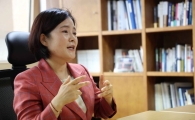
However, some civic groups, including the People's Solidarity for Participatory Democracy, oppose the Seobalbeop discussions, claiming that the government intends to privatize services such as health, welfare, and education. In response, Moon Kyung-ho, head of the Service Economy Division at the Ministry of Strategy and Finance, rebutted, "Changes in the healthcare sector require amendments to individual laws such as the Medical Service Act and the Pharmaceutical Affairs Act, so concerns about medical commercialization through the Seobalbeop are unfounded criticisms." He predicted, "If the Seobalbeop passes, a system will be established to systematically foster the service industry across ministries, supporting balanced economic development in employment and growth."
© The Asia Business Daily(www.asiae.co.kr). All rights reserved.