Lee Chang-yang "Factors for Electricity Rate Increase: Reduced Nuclear Share, Increased LNG and Renewable Energy Share"
"Share of Nuclear Power Decreases by 3%p, LNG and Renewable Energy Increase by 5%p"

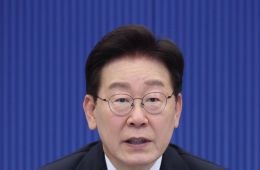
Minister Lee Chang-yang of the Ministry of Trade, Industry and Energy is attending the government questioning session on economic affairs held at the National Assembly on the 26th, responding to questions from lawmakers. Photo by Yoon Dong-joo doso7@
View original image[Asia Economy Reporter Han Jinju] Lee Chang-yang, Minister of Trade, Industry and Energy, cited the reduction in the share of nuclear power and the increase in the shares of LNG (liquefied natural gas) and renewable energy as factors for the rise in electricity rates on the 26th.
Minister Lee stated during the National Assembly's government questioning session, "The decrease in the share of low-cost nuclear power and the increase in the share of high-cost liquefied natural gas (LNG) and renewable energy are significant factors contributing to the rate hike."
In response to a question from Han Mu-gyeong of the People Power Party asking, "Do you agree that the responsibility for the electricity rate increase lies with the previous administration's nuclear phase-out policy?" Minister Lee said, "Externally, fuel prices such as thermal coal and LNG surged sharply, and domestically, the energy mix changed due to the energy transition policy."
Minister Lee explained, "During the previous administration, the share of nuclear power decreased by 3 percentage points, while the shares of LNG and renewable energy increased by 5 percentage points. Because more expensive fuels like LNG were used, the recent sharp rise in international energy prices had a considerable vulnerable impact."
Regarding the scheduled electricity rate increase in October this year, he said, "The previous administration raised rates by 9.8 won due to rising fuel costs, which should have been implemented in January but was split into April and October. Rates increased by 4.9 won in April and are set to increase by another 4.9 won in October."
Hot Picks Today
 "Samsung and Hynix Were Once for the Underachievers"... Hyundai Motor Employee's Lament
- After Topping 8,000 Instead of Hitting 10,000... KOSPI Plunges—When Will It Rebound?
- "What? It Wasn't a Wristwatch?" This Brand's Stock Soared 15%, Then Plunged After Official Announcement
- [Breaking] Court Rules Against Samsung Electronics Union...1 Billion Won per Day Penalty for Exceeding Strike Scope
- "That? It's Already Stashed" Nightlife Scene Crosses the Line [ChwiYak Nation] ③
In response to a question from Representative Han asking, "Did the Moon Jae-in administration intentionally underestimate electricity demand in the 9th Basic Plan for Electricity Supply and Demand in 2020 to promote nuclear phase-out?" he replied, "It is difficult to conclude that it was intentionally underestimated."
© The Asia Business Daily(www.asiae.co.kr). All rights reserved.