In the Past 3 Years, 3 out of 10 Homebuyers Were from the 'MZ Generation'
Among 2.5 million homebuyers, about 722,000 (28.89%) are from the MZ generation
The share of MZ generation homebuyers has increased annually: 27.24% in 2019, 29.36% in 2020, and 30.1% in 2021
Bank of Korea raises base interest rate by 0.5%, increasing repayment burden for MZ generation with high loans
Kim Young-joo, Deputy Speaker of the National Assembly, says "Interest burden on ordinary people and repayment issues are serious; government must prepare alternatives"
[Asia Economy Reporter Oh Ju-yeon] Among those who purchased homes in the past three years, 3 out of 10 were from the 'MZ Generation (born early 1980s to early 2000s)'. Concerns are rising that the loan burden on the 2030 generation, who recklessly bought homes through 'Yeongkkeul' during the interest rate hike period, may increase.

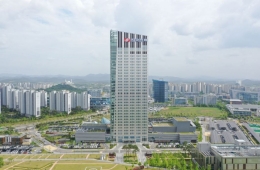
On the 17th, a view of apartments was seen from Lotte World Tower Seoul Sky in Songpa-gu, Seoul. The Korea Real Estate Board announced that the actual transaction price index for apartment sales in Seoul in March was 175.1, up 1.4 points from the previous month (173.7). This marks the first time in five months since October last year, when the Seoul apartment sales actual transaction price index recorded 180.0, that the index has turned upward again. Photo by Kang Jin-hyung aymsdream@
View original image![[Image source=Yonhap News]](http://www.asiae.co.kr/news/img_view.htm?img=2022072414242161364_1658640262.jpg)
According to data received by Kim Young-joo, Deputy Speaker of the National Assembly, from the Ministry of Land, Infrastructure and Transport on the 24th, a total of about 2.5 million people purchased homes from January 2019 to December 2021, of which about 722,000 were from the MZ Generation, accounting for 28.89% of all buyers.
The number of MZ Generation homebuyers was about 190,000 (27.24%) in 2019, about 290,000 (29.36%) in 2020, and about 230,000 (30.1%) in 2021, showing a continuous increase in the proportion of MZ Generation homebuyers each year.
The region with the highest proportion of MZ Generation homebuyers was Seoul, where among about 344,000 total homebuyers in the Seoul area over the past three years, about 115,000 (33.38%) were from the MZ Generation.
Following Seoul were Ulsan (33.27%), Gyeonggi (31.12%), Sejong (29.82%), and Gwangju (29.07%) in order of high proportions of MZ Generation homebuyers.
However, with the recent sharp rise in interest rates, concerns are emerging that the burden on the MZ Generation, who purchased homes beyond their repayment capacity, may increase. At the end of last month, the U.S. Federal Reserve implemented a 'Giant Step', and this month, the Bank of Korea's Monetary Policy Committee also took a 'Big Step' by raising the base interest rate by 0.5%.
As a result, interest rates on mortgage loans and credit loans at commercial banks have risen sharply, increasing the loan burden on ordinary citizens. In particular, the average interest rate for new mortgage loans at first-tier financial institutions was 2.74% in 2019, 2.5% in 2020, 2.94% in 2021, and 3.9% in May 2022, rising by 1.24% compared to 2019.
Deputy Speaker Kim Young-joo pointed out, "In recent years, a social atmosphere has formed where people feel they must buy a house, leading young people to recklessly take out loans to purchase homes. There are reports predicting that mortgage loan interest rates at first-tier financial institutions could rise to 9% by the end of the year, putting so-called Yeongkkeul borrowers with insufficient repayment ability at risk of suddenly becoming house-poor."
Hot Picks Today
 "Stocks Are Not Taxed, but Annual Crypto Gains Over 2.5 Million Won to Be Taxed Next Year... Investors Push Back"
- "Don't Throw Away Coffee Grounds" Transformed into 'High-Grade Fuel' in Just 90 Seconds [Reading Science]
- Signed Without Viewing for 1.6 Billion Won... Jamsil and Seongbuk Jeonse Prices Jump 200 Million Won in a Month [Real Estate AtoZ]
- "Groups of 5 or More Now Restricted"... Unrelenting Running Craze Leaves Citizens and Police Exhausted
- "Even With a 90 Million Won Salary and Bonuses, It Doesn’t Feel Like Much"... A Latecomer Rookie Who Beat 70 to 1 Odds [Scientists Are Disappearing] ③
He added, "For the sake of ordinary citizens who purchased homes relying solely on government policies, the government must conduct a survey on the loan balances and interest rates of the ultra-high-risk group. In particular, it is necessary to preemptively examine the risks of multiple debtors who have taken loans from three or more financial institutions to buy homes."
© The Asia Business Daily(www.asiae.co.kr). All rights reserved.