Will There Be a Solution for the 'Kkangtong Jeonse' That Troubled Tenants?
Sharp Increase in 'Kkangtong Jeonse' Listings Where Jeonse Price Exceeds Sale Price
Deposit Refund Accident Amount Reaches 340.7 Billion Won in First Half of This Year
Government "Selecting Areas of Concern for Kkangtong Jeonse... Proactive Management"
![As the risk of jeonse fraud, such as "empty can" jeonse, increases, the government has prepared measures to protect tenants' deposits. The photo shows real estate agencies clustered in a commercial area in Seoul on the afternoon of the 4th. <br>[Image source=Yonhap News]](http://www.asiae.co.kr/news/img_view.htm?img=2022072111052858541_1658369128.jpg)
As the risk of jeonse fraud, such as "empty can" jeonse, increases, the government has prepared measures to protect tenants' deposits. The photo shows real estate agencies clustered in a commercial area in Seoul on the afternoon of the 4th.
[Image source=Yonhap News]
[Asia Economy Reporter Yoon Seul-gi] As real estate prices have recently turned downward, the risk of so-called 'empty-can jeonse' is increasing. This is because if house prices fall and the jeonse price surpasses the sale price, tenants may suffer losses by not being able to recover their deposit. The government has announced plans to implement measures to prevent empty-can jeonse and other jeonse frauds.
According to real estate big data company Asil on the 21st, a jeonse contract for an apartment (exclusive area 30㎡) in Pyeongtaek City, Gyeonggi Province, ranked first nationwide for gap speculation, was made at 70 million KRW. This is 30 million KRW higher than the previous sale price (40 million KRW). In Gimhae City, Gyeongnam Province, ranked second nationwide for gap speculation, a jeonse contract for an apartment (exclusive area 59㎡) was 165 million KRW, while the previous sale price was 154 million KRW. Again, the jeonse price was 11 million KRW higher than the sale price.
Generally, in the real estate market, if the jeonse price exceeds 70-80% of the sale price, concerns about empty-can jeonse are considered significant. This is because if the house is auctioned off or the house price falls below the jeonse price, there is a high possibility that the deposit cannot be returned.
![The apartment sales market has fallen into an unprecedented slump due to a severe ongoing "transaction cliff." On the other hand, transactions such as apartment exchanges, gifts, direct trades, and lease renewals, which practically do not go through real estate agencies, are on the rise, causing double difficulties for licensed real estate agents. The photo shows a view of downtown Seoul from Namsan on the 3rd. <br>[Image source=Yonhap News]](http://www.asiae.co.kr/news/img_view.htm?img=2022072111072558546_1658369245.jpg)
The apartment sales market has fallen into an unprecedented slump due to a severe ongoing "transaction cliff." On the other hand, transactions such as apartment exchanges, gifts, direct trades, and lease renewals, which practically do not go through real estate agencies, are on the rise, causing double difficulties for licensed real estate agents. The photo shows a view of downtown Seoul from Namsan on the 3rd.
[Image source=Yonhap News]
However, recently, cases where jeonse prices are similar to or exceed sale prices have been increasing. According to Real Estate R114 on the 10th, an analysis of nationwide apartment sale and jeonse prices reported to the Ministry of Land, Infrastructure and Transport's actual transaction price system from January to June this year showed that there were a total of 29,300 cases where both sale and jeonse transactions occurred at least once during the period.
Among these, cases where the average jeonse price exceeded the average sale price accounted for 7.7% (2,243 cases). This means that 7.7% of housing types with both sale and jeonse transactions this year are already empty-can jeonse or at risk of becoming so. Expanding the scope to cases where the lowest sale price during the period was lower than the highest jeonse price increases the risk transactions to 16% (4,687 cases).
By amount, low-priced apartments with sale prices under 100 million KRW accounted for 36% nationwide. This is because the price gap between sale and jeonse prices is smaller for low-priced housing.
The risk of empty-can jeonse is expanding from provincial areas to the metropolitan area. While provincial areas account for 76.4% (1,714 cases), the metropolitan area also accounts for 23.6% (529 cases).
The problem is that with recent interest rate hikes and expected house price declines, empty-can jeonse is expected to increase further. Especially, damage is feared among young people and social newcomers with no real estate transaction experience. Also, since low-priced housing under 100 million KRW is more likely to be empty-can jeonse, low-income groups are at greater risk of damage.
Already, the amount of jeonse deposit return guarantee accidents reached a record high of 340.7 billion KRW in the first half of this year alone. On an annual basis, it has been increasing with 344.2 billion KRW in 2019, 468.2 billion KRW in 2020, and 579 billion KRW in 2021.
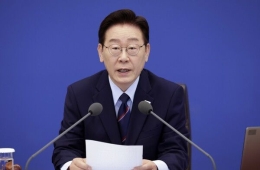
![President Yoon Suk-yeol is speaking at the 3rd Emergency Economic and Livelihood Meeting held at the Jungtap Comprehensive Social Welfare Center in Mugunghwa Village Jugong Complex 1 Apartment, Bundang-gu, Seongnam-si, Gyeonggi-do on the afternoon of the 20th. <br>[Image source=Yonhap News]](http://www.asiae.co.kr/news/img_view.htm?img=2022072017231357650_1658305392.jpg)
President Yoon Suk-yeol is speaking at the 3rd Emergency Economic and Livelihood Meeting held at the Jungtap Comprehensive Social Welfare Center in Mugunghwa Village Jugong Complex 1 Apartment, Bundang-gu, Seongnam-si, Gyeonggi-do on the afternoon of the 20th.
[Image source=Yonhap News]
The government has prepared measures to protect rental deposits so that tenants do not lose their deposits due to empty-can jeonse. On the 20th, President Yoon Seok-yeol chaired the 3rd Emergency Economic and Livelihood Meeting at a welfare center within a permanent rental complex in Bundang-gu, Seongnam City, Gyeonggi Province, stating, "We will selectively manage areas where so-called 'empty-can jeonse' is a concern in a proactive manner."
Also, areas where the jeonse price ratio (jeonse price compared to sale price) exceeds 90% or where the auction rate (winning bid price compared to appraised value) is lower than the jeonse price ratio will be notified to local governments as 'caution areas' for special management. For caution areas, local governments will conduct inspections of risky properties, provide education to licensed real estate agents, and monitor abnormal transactions.
Plans are also underway to publicly disclose the list of 'bad landlords' who habitually withhold deposits and to check compliance with deposit guarantee subscription obligations by registered rental business operators. By the first half of next year, a database (DB) related to jeonse and monthly rent listing price information that allows easy price verification will also be established.
Hot Picks Today
 "Stocks Are Not Taxed, but Annual Crypto Gains Over 2.5 Million Won to Be Taxed Next Year... Investors Push Back"
- "Don't Throw Away Coffee Grounds" Transformed into 'High-Grade Fuel' in Just 90 Seconds [Reading Science]
- Signed Without Viewing for 1.6 Billion Won... Jamsil and Seongbuk Jeonse Prices Jump 200 Million Won in a Month [Real Estate AtoZ]
- "Groups of 5 or More Now Restricted"... Unrelenting Running Craze Leaves Citizens and Police Exhausted
- "Even With a 90 Million Won Salary and Bonuses, It Doesn’t Feel Like Much"... A Latecomer Rookie Who Beat 70 to 1 Odds [Scientists Are Disappearing] ③
Support for victims of jeonse fraud will also be expanded. By September, a 'Jeonse Damage Support Center' (tentative name) will be established to provide emergency financial support matching services, legal consultation referrals, and other assistance to victims.
© The Asia Business Daily(www.asiae.co.kr). All rights reserved.