"Is 'Super Dollar' a Duty-Free Shop or Department Store... Changes in the Popularity of Overseas Direct Purchase"
Rising Won-Dollar Exchange Rate Raises Duty-Free Shop Concerns
Record-Breaking 'Enjeo Phenomenon' Boosts Direct Purchases from Japan
Experts Say "Positive Effect on Domestic Consumption Stimulation"

The price competitiveness of duty-free shops is declining due to exchange rate effects. Photo unrelated to the article.
View original image[Asia Economy Reporter Intern Lee Gyehwa] The duty-free industry, which was filled with anticipation as COVID-19 subsided, has encountered difficulties. With the dollar showing a super-strong trend, there are talks that department stores, which are less affected by exchange rates than duty-free shops, are actually cheaper. Additionally, trends in popular overseas direct purchases are also changing. Compared to China, where delivery has been disrupted due to COVID-19 related lockdowns, Japan direct purchases are gaining popularity due to the weakening yen.
On the previous day (18th), the won-to-dollar exchange rate in the Seoul foreign exchange market closed at 1,317.4 won per dollar, down 8.7 won from the previous trading day's closing price. Although the sharp rise has calmed, evaluations such as 'super dollar,' 'highest in 20 years,' and 'strong dollar' are still being made.
As a result, the concerns of duty-free shops are growing. The reason for purchasing duty-free goods is generally because they are cheaper than department stores, but since duty-free shops sell based on the dollar, if the won-to-dollar exchange rate rises, their price competitiveness inevitably decreases. This is why consumers hesitate between duty-free shops and department stores.
Given this situation, the duty-free industry is seeking breakthroughs by preparing alternatives such as exchange rate compensation policies. They have introduced a policy that returns up to 60% more points, which can be used like cash, to compensate for losses if the exchange rate exceeds 1,300 won at the time of purchase. Also, they are continuously opening reverse direct purchase malls where foreigners can buy domestic duty-free products online without visiting Korea.

The situation of overseas direct purchases from China has decreased by 14.8% compared to one year ago. On the other hand, the Japanese direct purchase market is emerging due to the unprecedented yen depreciation (decline in yen value).
View original image◆ Delivery Disruptions Due to China Lockdowns... Popularity of Japanese Direct Purchases Amid Yen Weakness
Meanwhile, as the COVID-19 spread rapidly shifted consumer trends from offline to online, the overseas direct purchase market is also growing sharply.
According to Statistics Korea on the 20th, the scale of online overseas direct purchase transactions last year recorded 5 trillion won, an increase of 26.4% compared to the previous year. The increase in overseas direct purchases was particularly notable in China (63.6%). The United States (15.0%) and the European Union (10.9%) also saw increases of over 10%.
However, in China, which is popular for cheap prices and free shipping, the number of shopping mall payment transactions decreased by 14.8% compared to a year ago. This is largely attributed to the won-to-yuan exchange rate rising from the 187 won level at the beginning of the year to around 195 won recently, as well as delivery disruptions caused by China's lockdown measures.
On the other hand, amid an unprecedented yen depreciation (yen value decline), the Japanese direct purchase market is emerging instead of China, the U.S., and Europe. The won-to-yen exchange rate, which was in the 1,030 won range per 100 yen at the beginning of the year, has now dropped to the lowest level in five years at around 950 won. At Moltail, a major delivery forwarding service, the volume of Japanese direct purchases increased by 20% year-on-year during April and May.
Hot Picks Today
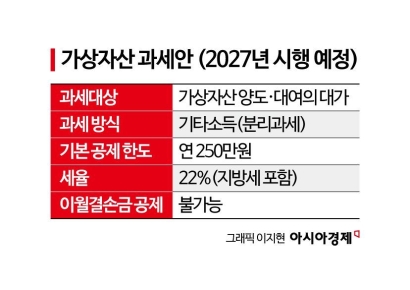 "Stocks Are Not Taxed, but Annual Crypto Gains Over 2.5 Million Won to Be Taxed Next Year... Investors Push Back"
- "Not Jealous of Winning the Lottery"... Entire Village Stunned as 200 Million Won Jackpot of Wild Ginseng Cluster Discovered at Jirisan
- "Even With a 90 Million Won Salary and Bonuses, It Doesn’t Feel Like Much"... A Latecomer Rookie Who Beat 70 to 1 Odds [Scientists Are Disappearing] ③
- General Strike D-1: Final Negotiations Between Samsung Electronics Labor and Management Over One Key Issue
- "How Did an Employee Who Loved Samsung End Up Like This?"... Past Video of Samsung Electronics Union Chairman Resurfaces
Experts predict that consumer behavior can also change depending on exchange rates, and such phenomena are likely to occur actively among price-sensitive people in their 20s and 30s. Professor Lee Eunhee of Inha University's Department of Consumer Studies said, "If there is a big price difference depending on the exchange rate, consumers are likely to flock to the cheaper option. The MZ generation, who are good at using the internet and sensitive to prices, are likely to flock to Japanese direct purchases, but overall, there will be some positive effects on stimulating domestic consumption," she analyzed.
© The Asia Business Daily(www.asiae.co.kr). All rights reserved.