Economic Crisis in Pakistan, Agreement Reached to Resume IMF Bailout Program

On the 16th of last month (local time), an employee at a gas station in Karachi, Pakistan, is putting up a new price list following the government's announcement of an increase in petroleum product prices the previous night.
Pakistan is expected to receive International Monetary Fund (IMF) bailout support again.
On the 14th, according to local Pakistani media such as Geo News and foreign media, the IMF announced that it had agreed in working-level negotiations to provide an additional $1.17 billion (approximately 1.538 trillion KRW) to Pakistan through the Extended Fund Facility (EFF) program.
In 2019, Pakistan agreed to receive a $6 billion (approximately 7.9 trillion KRW) bailout from the IMF over three years. However, due to disagreements over tax revenue expansion and other issues, only $3 billion (approximately 3.9 trillion KRW) was received before the support was suspended.
The IMF demanded stringent tax revenue expansion policies, including reducing fuel subsidies and ending exemptions on business taxes.
Pakistan has been negotiating support while complying with the IMF's conditions. It made efforts to resume support by significantly raising fuel prices and announcing in late last month that it would impose an additional 10% tax for one year on large industries such as steel, textiles, and automobiles.
If this working-level agreement is approved by the IMF board and funds are supplied, Pakistan's support amount will increase to $4.2 billion (5.51 trillion KRW). The IMF is also considering expanding the total support amount to $7 billion (9.2 trillion KRW) and extending the support period until June next year.
Hot Picks Today
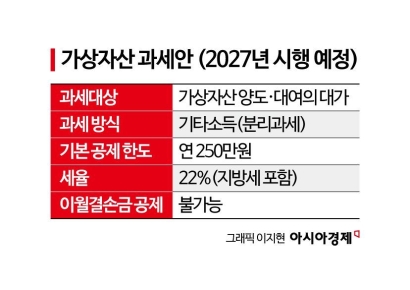 "Stocks Are Not Taxed, but Annual Crypto Gains Over 2.5 Million Won to Be Taxed Next Year... Investors Push Back"
- "Not Jealous of Winning the Lottery"... Entire Village Stunned as 200 Million Won Jackpot of Wild Ginseng Cluster Discovered at Jirisan
- "Jeong Yu-kyung Is a Neighbor"...Itaewon Standalone House with Record 23.2 Billion Won Appraisal Up for Auction [Real Estate AtoZ]
- "How Did an Employee Who Loved Samsung End Up Like This?"... Past Video of Samsung Electronics Union Chairman Resurfaces
- "Even With a 90 Million Won Salary and Bonuses, It Doesn’t Feel Like Much"... A Latecomer Rookie Who Beat 70 to 1 Odds [Scientists Are Disappearing] ③
Pakistan has fallen into a severe economic crisis due to large external debt from massive infrastructure investments combined with the COVID-19 pandemic. Consumer prices in June rose 21.3% compared to the same period last year, marking the highest in 14 years. As of the fourth quarter of last year, total external debt reached $130 billion (approximately 170.7 trillion KRW), but the central bank's foreign currency reserves have recently decreased to around $10 billion (approximately 13.1 trillion KRW).
© The Asia Business Daily(www.asiae.co.kr). All rights reserved.