[BoK Big Step] Additional Interest This Year Hits 3.9 Trillion Won, Companies Face 'Interest Bomb'... SMEs Say "Survival Threatened" (Comprehensive)
Concerns Over Increasing Number of Zombie Companies
Additional Interest Burden of 1.1 Trillion Won for Large Corporations and 2.8 Trillion Won for SMEs
IPO Market Shrinks...New Corporate Investments Become Difficult
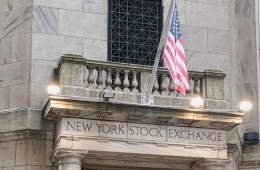
![The photo is not directly related to the article. [Image source=Yonhap News]](http://www.asiae.co.kr/news/img_view.htm?img=2022051516211967224_1652599279.jpg)
[Asia Economy Reporter Jeong Dong-hoon] As the Bank of Korea has taken a 'big step' (a 0.5% increase in the base interest rate) for the first time in history, the burden on companies, already contracted due to the global economic slowdown and high exchange rates, is expected to intensify further. It is feared that corporate loan interest payments due this year will increase by about 4 trillion won, and a slowdown in sales due to reduced consumption will also be inevitable.
According to the Bank of Korea and industry sources on the 13th, as the Monetary Policy Committee raised the base interest rate from 1.75% to 2.25%, corporate loan interest payments this year are estimated to increase by 3.9 trillion won. According to a recent report released by the Korea Chamber of Commerce and Industry, of the 3.9 trillion won increase in interest payments, 2.8 trillion won is the burden on small and medium-sized enterprises (SMEs), more than double the 1.1 trillion won borne by large corporations.
Kim Cheon-gu, a researcher at the Korea Chamber of Commerce and Industry, said, "Since the spread of COVID-19, the number of marginal companies that cannot even cover interest expenses with operating profits has greatly increased," and added, "It is a time to be cautious about short-term economic contraction, corporate financial burdens, and foreign capital outflows during interest rate hikes." In fact, the proportion of marginal companies in Korea last year was 16%, about 3.6 percentage points higher than 12.4% in December 2019, before the COVID-19 crisis.
In particular, domestic SMEs and small business owners, who have increased their loans while enduring the COVID-19 pandemic, are complaining that the rapid interest rate hike threatens their survival. In a situation where companies' sense of crisis is already heightened due to supply chain disruptions and the resurgence of COVID-19, they now have to bear the additional financial cost burden caused by the interest rate hike.

Bank of Korea Governor Lee Chang-yong is answering questions from the press at the Monetary Policy Direction press conference held at the Bank of Korea in Jung-gu, Seoul on the 13th. Photo by Kang Jin-hyung aymsdream@
View original imageAccording to a Bank of Korea survey, as of the end of last month, bank loans to companies amounted to 1,125.1959 trillion won. Of this, SME debt alone was 930.9196 trillion won, about 4.8 times the 194.2764 trillion won owed by large corporations. According to the Korea Federation of SMEs, when the base interest rate rises by 1 percentage point, interest expenses as a proportion of operating profit increase by 8.48 percentage points, indicating SMEs' vulnerability to interest rate hikes. This means that SMEs, which have not yet recovered from the COVID-19 shock, face a threat to their survival due to increased interest burdens caused by the big step.
An SME official said, "In a situation where management difficulties are intensifying due to rising raw material prices and economic contraction, the big step is like adding insult to injury for companies," and added, "Active financial support policies are needed to mitigate the shock of the interest rate hike."
Even large corporations, which have mechanisms to diversify risks through financial assets, are not in an easy position. In a situation where global uncertainties have increased, high inflation and exchange rate burdens combined with high interest rates inevitably become negative factors. An industry official said, "When interest rates rise by 1%, the combined effect of the increase in financial assets and the decrease in financial liabilities could result in a net positive effect," but added, "However, uncertainty due to demand reduction caused by economic contraction may increase." Professor Sung Tae-yoon of Yonsei University's Department of Economics said, "Companies that have taken out large loans to operate may be at risk," and suggested, "The government should consider policies such as tax support to help reduce costs."
As interest rates rise and liquidity in the capital market decreases, the IPO (Initial Public Offering) market is expected to freeze further. The number of companies withdrawing their listings has already been increasing since last year. Corporate new investments and business expansions are inevitably being restrained.
Hot Picks Today
 "Stocks Are Not Taxed, but Annual Crypto Gains Over 2.5 Million Won to Be Taxed Next Year... Investors Push Back"
- "Not Jealous of Winning the Lottery"... Entire Village Stunned as 200 Million Won Jackpot of Wild Ginseng Cluster Discovered at Jirisan
- "Jeong Yu-kyung Is a Neighbor"...Itaewon Standalone House with Record 23.2 Billion Won Appraisal Up for Auction [Real Estate AtoZ]
- "How Did an Employee Who Loved Samsung End Up Like This?"... Past Video of Samsung Electronics Union Chairman Resurfaces
- "Even With a 90 Million Won Salary and Bonuses, It Doesn’t Feel Like Much"... A Latecomer Rookie Who Beat 70 to 1 Odds [Scientists Are Disappearing] ③
The won-dollar exchange rate, which broke through the highest level in 13 years (1,316 won) the day before, slightly fell to 1,306.40 won per dollar as of 10 a.m. on the day, but still maintains a high exchange rate above 1,300 won. For companies that mainly import raw materials, the rise in the exchange rate and the sharp drop in the won's value inevitably increase profitability burdens. An industry official said, "In the past, a weak won was only a boon for export companies, but with raw material prices still high and the global economic slowdown, it is difficult to fully enjoy the benefits of a high exchange rate."
© The Asia Business Daily(www.asiae.co.kr). All rights reserved.