FSS Forces Removal of 'Knife' in Loan-Deposit Interest Rate Gap [Bank Interest Business]
Financial Supervisory Service Chief: "Criticism of Excessive Interest Income Is Strong"
Loan-Deposit Interest Rate Spread Increased Since Mid-2010s
FSS Changes Stance from 'Non-Intervention'
![[Image source=Yonhap News]](http://www.asiae.co.kr/news/img_view.htm?img=2022043011372450466_1651286244.jpg)
[Asia Economy Reporter Song Seung-seop] Controversies continue in the financial sector surrounding bank interest rates and interest income. This follows the head of the Financial Supervisory Authority publicly criticizing excessive interest profits based on the loan-deposit interest rate spread. While financial authorities acknowledge the market’s interest rate adjustment function, they maintain that the level of such interest income is excessive and inappropriate.
This stance is based on the recent perception that the loan-deposit interest rate spread in the banking sector has been widening continuously, unlike in the past. According to the Bank of Korea, the base interest rate, which peaked at 5.25% in October 2000, dropped to a low of 3.25% in November 2004, during which the lending interest rate fell by 4.27 percentage points. This decline was steeper than that of the deposit interest rate (3.46 percentage points). During the subsequent interest rate hike phase, the deposit interest rate increased by 2.49 percentage points, surpassing the lending interest rate increase of 1.78%.
However, over time, banks began to widen the loan-deposit interest rate spread. When the base rate cut phase began in November 2018, banks lowered lending rates slowly but reduced deposit rates quickly. While lending rates fell from 3.63% to 2.81%, deposit rates dropped more sharply from 1.96% to 1.07%. From May 2020, when the base rate hit a record low of 0.50%, until the rate hike started in August last year, lending rates rose by 0.37 percentage points from 3.18%. Deposit rates increased by only 0.10 percentage points, resulting in a loan-deposit interest rate spread of 2.07%, the largest in 11 years.
The financial authorities’ claim that banks raise their additional interest rates when the base rate rises also gains credibility. According to the Korea Federation of Banks, the additional interest rate on general credit loans (grade 1) at the five major banks rose by up to 0.55 percentage points within a year as of last May. A Financial Supervisory Service official explained, "We are not trying to criticize banks for innovatively earning money," adding, "The problem lies in the repeated increases in additional interest rates and the practice of ‘easy business’."
The 'Loan-Deposit Interest Rate' Controversy Banks Brought on Themselves Amid Base Rate Hikes
There are voices suggesting that the loan-deposit interest rate spread issue was partly self-inflicted by the banking sector. Initially, the Financial Supervisory Service did not directly address the banks’ interest rate issues and maintained that there was little the financial authorities could do. Nevertheless, as the loan-deposit interest rate spread widened and public opinion worsened, even the president and political circles began criticizing the banks’ profit-making methods.
The change in stance by former Financial Supervisory Service Governor Jeong Eun-bo is representative. Governor Jeong initially declared a principle of ‘non-intervention in interest rate issues.’ However, as the loan-deposit interest rate spread did not narrow, he shifted his position, stating, "We are monitoring the loan-deposit interest rate spread related to financial products’ loans," and "Excessive widening is undesirable from the consumer’s perspective." The financial authorities also began examining whether there were problems with the method of calculating the loan-deposit interest rate spread during Governor Jeong’s tenure.
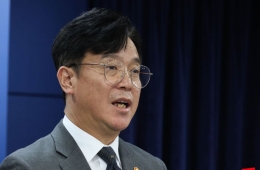
Financial Supervisory Service Governor Lee Bok-hyun holds the same view. While respecting the market’s autonomous interest rate adjustment function, he believes there is an aspect of excessive interest income. At a meeting with domestic bank CEOs on the 20th, Governor Lee pointed out, "Criticism of banks’ excessive profit-seeking is growing," and emphasized, "Interest rates need to be calculated and operated based on more rational and transparent standards and procedures."
Hot Picks Today
 "Stocks Are Not Taxed, but Annual Crypto Gains Over 2.5 Million Won to Be Taxed Next Year... Investors Push Back"
- "Don't Throw Away Coffee Grounds" Transformed into 'High-Grade Fuel' in Just 90 Seconds [Reading Science]
- Signed Without Viewing for 1.6 Billion Won... Jamsil and Seongbuk Jeonse Prices Jump 200 Million Won in a Month [Real Estate AtoZ]
- "Groups of 5 or More Now Restricted"... Unrelenting Running Craze Leaves Citizens and Police Exhausted
- "Even With a 90 Million Won Salary and Bonuses, It Doesn’t Feel Like Much"... A Latecomer Rookie Who Beat 70 to 1 Odds [Scientists Are Disappearing] ③
The characteristics of the banking industry have also influenced this issue. Banks require government licenses and are heavily regulated, but competitors rarely emerge. In economics, such a situation tends to create an ‘oligopoly market,’ which often leads to reduced innovation or prices unfavorable to consumers. The Bank of Korea analyzed in ‘The Future and Implications of the Domestic Banking Industry’ that "the domestic banking industry has solidified an oligopolistic structure under strict entry regulations," and "a portfolio concentration phenomenon pursuing low risk and high returns continues."
© The Asia Business Daily(www.asiae.co.kr). All rights reserved.