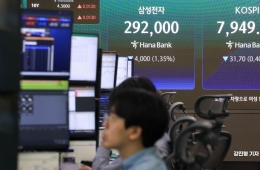
Regulations Drive Up Neighboring Area Housing Prices? Conflicting Views on the 'Balloon Effect' of Land Transaction Controls
Regulations Tighten Transactions in Apgujeong, Daechi, Samsung, Cheongdam, Jamsil Plummet
"Only Raising Prices in Surrounding Areas Like Banpo" Complaints
House Prices Have Risen Together Over the Past Two Years, but Regional Disparities Emerge Amid 'Transaction Drought'
"Changed Market Conditions Like Price Stabilization and Transaction Cliff Must Also Be Considered"

[Asia Economy Reporter Kim Hyemin] Opinions are divided over the actual impact of the so-called "balloon effect," a side effect of the land transaction permit system. In major areas designated as land transaction permit zones, such as Apgujeong-dong in Gangnam-gu and Jamsil-dong in Songpa-gu, voices are rising that only the surrounding house prices, such as Banpo, have increased. On the other hand, the Seoul Metropolitan Government has drawn a line, stating that there are no side effects from the balloon effect.
On the 17th, looking at the actual apartment sales transaction volume, it was confirmed that the areas designated as land transaction permit zones took a direct hit in transaction volume.
According to the Ministry of Land, Infrastructure and Transport's real transaction price disclosure system, the number of apartment sales transactions in Jamsil-dong was 1,366 from June 2019 to June 2020, the year before the land transaction permit system was designated, but it sharply dropped to 363 one year after implementation. Daechi-dong also sharply decreased from 822 to 253. On the other hand, Banpo saw a slight increase in transactions from 716 to 725 during the same period. Although it did not absorb the transaction volume of the land transaction permit zones, the land transaction permit system directly affected the transaction volume.
However, the decrease in transaction volume did not lead to a decline in house prices. According to KB Kookmin Bank's Liv Real Estate, from June 2020, when the land transaction permit system was implemented, until recently, the apartment price growth curves in the three Gangnam districts showed little difference. Gangnam-gu rose by 23.38%, Seocho-gu by 25.84%, and Songpa-gu was the highest at 27.98%.
A phenomenon of mixed record-high and declining prices is also commonly found. According to the Ministry of Land, Infrastructure and Transport's real transaction price disclosure system, Banpo Xi in Banpo-dong, with an area of 165.05㎡, was traded at 4.38 billion KRW in May last year and at 5.7 billion KRW in April this year, surpassing the previous record price (4.38 billion KRW). Shinhyundai 12th in Apgujeong-dong, 155.52㎡, was also traded at 5.9 billion KRW in April, rising 400 million KRW in one year. This is interpreted as a steady demand due to the influence of a smart single property, new construction premiums, and reconstruction issues. A Seoul city official said, "Regardless of whether the land transaction permit zone is designated, record prices continue to appear in the Gangnam area," adding, "It is difficult to say there has been a balloon effect in the past two years."
However, this year, as the pace of house price increases slows and the transaction cliff deepens, dissatisfaction among residents in the land transaction permit zones is rising. In Songpa-gu, after the temporary exclusion of multi-homeowners from the capital gains tax surcharge was implemented, tax-saving listings by multi-homeowners increased. When news came out that the land transaction permit zone would be extended for another year, transactions focused on quick sales, and house prices centered on Jamsil-dong declined.
On the other hand, according to the Korea Real Estate Board, Banpo was one of the only areas, along with Yongsan-gu, to see an increase in apartment prices despite the overall decline in Seoul apartment prices. Also, according to a Real Estate R114 survey, about 67% of apartment transactions in the three months after the presidential election were sold at record prices, showing the highest proportion of highest-price transactions. Although this is the result of policy influences beyond the land transaction permit system combined with location and market environment, residents in the land transaction permit zones inevitably feel the weight of the regulation more strongly.
Hot Picks Today
 Samsung Electronics Introduces New "Special Performance Bonus" for Semiconductors, Paid Entirely in Company Shares
- "Could I Also Receive 370 Billion Won?"... No Limit on 'Stock Manipulation Whistleblower Rewards' Starting the 26th
- Opening a Bank Account in Korea Is Too Difficult..."Over 150,000 Won in Notarization Fees Just for a Child's Account and Debit Card" [Foreigner K-Finance Status]②
- Jeon Du-hwan with a Starbucks Tumbler, "Donjjul" Proof Shots... Has Starbucks Become a Far-Right Symbol?
- "Who Is Visiting Japan These Days?" The Once-Crowded Tourist Spots Empty Out... What's Happening?
For this reason, some argue that the current real estate market environment, characterized by downward stabilization and a transaction cliff, should be considered, unlike the past when house prices were rising and transaction volumes were abundant. According to statistics from the Korea Real Estate Board, Seoul apartment prices have recorded negative growth for three consecutive weeks recently. Seoul apartment transaction volumes have remained in the 1,000 range for seven consecutive months since November last year. An industry official said, "During a period of rising house prices, it is necessary to control transactions through measures like the land transaction permit system to prevent speculation," but added, "It should be applied flexibly according to the market environment."
© The Asia Business Daily(www.asiae.co.kr). All rights reserved.
!["Please Help Us": How Much Do Those Bowing Deeply for Your Vote Really Earn? [Data Pick]](https://cwcontent.asiae.co.kr/asiaresize/307/2026052010120870131_1779239528.png)