[Stock Market Chaos] Research Center Director's Urgent Diagnosis "Do Not Recklessly Buy at the Bottom, Holding Cash Is Best"
![[Stock Market Chaos] Research Center Director's Urgent Diagnosis "Do Not Recklessly Buy at the Bottom, Holding Cash Is Best"](http://www.asiae.co.kr/news/img_view.htm?img=2022061411030712681_1655172187.jpg)
[Asia Economy Reporters Seon-ae Lee, Jae-hee Kwon, Min-ji Lee] "Do not recklessly buy at the bottom or join panic selling; holding cash is the best strategy."
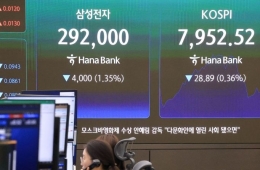
The uncontrolled 'inflation fear' has triggered convulsions in the global financial markets. On the 14th, the KOSPI index finally broke below 2500. The KOSPI moving in the 2400 range is the first time in about 1 year and 7 months since November 13, 2020 (2493.87). The previous day also saw a sharp market drop (KOSPI down 3.52%, KOSDAQ down 4.72%), wiping out 88 trillion won in market capitalization, creating a 'Black Monday.' Last month, as U.S. consumer prices surged to the highest level in 41 years, fears that the Federal Reserve (Fed) would tighten monetary policy more aggressively caused the market to collapse. With expectations that the Fed might go beyond a big step (50bp rate hike) to a giant step (75bp rate hike) to curb inflation, stagflation (rising prices amid economic recession) is expected to heavily weigh on the market. However, experts advise that joining panic selling driven by 'fear market conditions' is not beneficial. They urge investors not to rush into 'bottom fishing' but to 'hold cash.'
'Big Step' Inflation Fear: "Where is the KOSPI Bottom?"
Heads of securities firms' research centers generally foresee the KOSPI bottoming out around 2400. This is due to widespread fears that inflation is not under control. The 'inflation peak theory' continues to miss the mark. Lee Kyung-soo, head of Meritz Securities Research Center, said, "As prices, which were expected to peak in April and then decline, continue to rise, fears that the Fed is not controlling inflation have grown, significantly dampening investor sentiment and making volatility inevitable."
Concerns about stagflation are expected to continuously pressure the market. Yoon Chang-yong, head of Shinhan Financial Investment Research Center, said, "After a 50bp rate hike at the June FOMC, it is highly likely that 50bp hikes will be signaled again in July and September," adding, "The passing of the inflation peak is likely to be delayed until the second half of the year, and stagflation concerns will persist," suggesting the KOSPI bottom at 2400.
Yoon Seok-mo, head of Samsung Securities Research Center, also said, "The market interprets the rapid Fed monetary tightening and the early onset of the worst recession as a given, leading to increased volatility in domestic and international stock markets," adding, "If the current market sentiment instability is limited to levels seen during past global cyclical crises such as the U.S. credit rating downgrade, Eurozone fiscal crisis (Grexit), and Bernanke shock, the psychological floor is 2400."
However, Shin Young Securities stated that predicting the bottom is meaningless in the current market. Kim Hak-kyun, head of Shin Young Securities Research Center, said, "Concerns about whether the Fed can control inflation are growing and affecting the stock market," adding, "Predicting the KOSPI bottom itself is meaningless and futile."
Seo Sang-young, head of Media Content at Mirae Asset Securities, said, "With the OECD leading economic indicators slowing and the U.S. yield curve flattening, the 'recession' issue will be a factor dampening foreign investor sentiment," adding, "The probability of a 75bp rate hike at the July FOMC is 70%, so volatility in the domestic stock market will increase."
Reckless 'Bottom Fishing' Forbidden... Hold on to Stocks That Can Endure
Regarding investment strategy, the consensus is that 'holding cash' is best and 'bottom fishing' should be approached with caution. Kim Hak-kyun of Shin Young Securities Research Center said, "Prices tend to overshoot both on the upside with bubbles and on the downside with overkill beyond corporate value," warning against premature confidence in the bottom. However, he assessed that Korean stocks have reached undervalued territory. Being in undervalued territory does not mean prices will not fall further, but it means recovery is possible over time if endured. Kim emphasized, "Rather than hastily selling to realize losses when prices fall, holding quality stocks is a better strategy. However, this strategy applies to quality (sustainable) companies, not to distressed firms."
The view that 'holding cash' is the best strategy is shared by experts. Cho Byung-hyun, head of Investment Strategy at Daol Investment & Securities, advised, "Inflation may burden growth, so investors should look at the second half of the year and find the right buying opportunity," adding, "Even if there is a rebound, it is a technical rebound after a short-term sharp drop, so it is best to delay buying and increase cash holdings for now." He also recommended focusing on inflation-defensive sectors such as insurance and telecommunications stocks and building a portfolio centered on dividend stocks. Lee Kyung-soo of Meritz Securities Research Center also said, "Whether oil prices stabilize, acting as an inflation proxy, and meaningful production increases by oil-producing countries are the first steps to resolution," recommending a cash-holding strategy for long-term investors.
Yoon Chang-yong of Shinhan Financial Investment Research Center advised focusing on earnings. He said, "The key to a stock market rebound is likely to be confidence in 2023 earnings, so as the year progresses, the index is expected to be sensitive to earnings," adding, "Uncertainty will continue until September, and rebounds are more likely to be cyclical rather than trend-driven, so holding sectors with excessive declines is advisable."
Hot Picks Today
 If They Fail Next Year, Bonus Drops to 97 Million Won... A Closer Look at Samsung Electronics DS Division’s 600M vs 460M vs 160M Performance Bonuses
- Opening a Bank Account in Korea Is Too Difficult..."Over 150,000 Won in Notarization Fees Just for a Child's Account and Debit Card" [Foreigner K-Finance Status]②
- Seongdong Police Station Chief Placed on Standby for Misuse of Official Vehicle... National Police Agency Launches Audit
- Room Prices Soar from 60,000 to 760,000 Won and Sudden Cancellations: "We Won't Even Buy Water in Busan" — BTS Fans Outraged
- "Who Is Visiting Japan These Days?" The Once-Crowded Tourist Spots Empty Out... What's Happening?
Investment strategies considering stagflation risk hedging also emerged. Yoon Seok-mo of Samsung Securities Research Center said, "In the third quarter, concerns about tightening and economic debates will inevitably increase volatility threatening the psychological floor of the market, and in the fourth quarter, domestic and international markets will seek to reset after the September FOMC," advising, "Portfolio rebalancing priorities should consider stagflation risk hedging, with oil refining, defense, automotive, and IT blue-chip stocks as alternatives."
© The Asia Business Daily(www.asiae.co.kr). All rights reserved.
!["Please Help Us": How Much Do Those Bowing 90 Degrees These Days Actually Earn? [Data Pick]](https://cwcontent.asiae.co.kr/asiaresize/307/2026052010120870131_1779239528.png)