[IPR Forum] Post-Corona, Strategies to Overcome Complex Crises (Comprehensive)

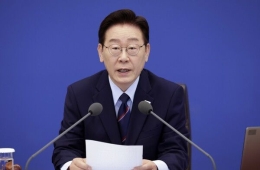
Woo Byung-hyun, CEO of Asia Economy, is delivering a welcome speech at the '2022 Asia Economy IPR Forum' held on the 8th at the Bankers Hall in Jung-gu, Seoul. Photo by Kang Jin-hyung aymsdream@
View original image[Asia Economy Capital Markets Department] The 2022 Asia Economy IPR Forum, held under the theme "Era of Crisis, Economy After Crisis," successfully concluded. At this forum, former Vice Minister of Strategy and Finance Kim Yong-beom, Kyobo Securities economist Lim Dong-min, Won Jong-hyun, chairman of the National Pension Service Risk Management and Performance Compensation Committee, and Park Hyung-gon, partner at Deloitte Consulting Korea, presented analyses and forecasts on global economic and industrial trends.
At the opening ceremony of the '2022 Asia Economy IPR Forum' held on the 8th at the International Conference Hall on the 2nd floor of the Bankers Hall in Jung-gu, Seoul, Woo Byung-hyun, CEO of Asia Economy, stated, "The investment environment has rapidly changed since the COVID-19 pandemic," adding, "We will provide information and content that investors want in accordance with the changed environment."

Park Hyung-gon, Managing Director at Deloitte Consulting Korea, is giving a lecture on the theme of "Next Generation Advanced Technology, Media, and Telecommunications Industry" at the "2022 Asia Economy IPR Forum" held on the 8th at the Bankers Hall in Jung-gu, Seoul. Photo by Kang Jin-hyung aymsdream@
View original imageThe first session featured Park Hyung-gon, partner at Deloitte Consulting Korea, delivering a lecture on "Next Era Advanced Technology, Media, and Telecommunications Industry." Partner Park introduced recent trends and future prospects divided into six chapters: screen, semiconductors, networks, medical services, eco-friendly technologies, and new technologies.
Partner Park first discussed the online video service (OTT) market, stating, "Subscription Video on Demand (SVOD) is entering maturity, and gradually, advertising-based models will become the foundation for market growth." He explained, "Media companies that expand their service areas beyond video streaming will gain competitive advantages and improve overall revenue."
He also introduced growth driven by increased semiconductor demand, fixed wireless access (FWA) and Wi-Fi 6 technologies in networks, health wearable technologies and mobile mental health apps in the medical services sector. Additionally, he presented the current status and outlook of various fields such as eco-friendly technologies, non-fungible tokens (NFTs), quantum computing, and artificial intelligence (AI).

Won Jong-hyun, Chairman of the Risk Management and Performance Compensation Committee of the National Pension Service, is giving a lecture on the topic of "Fund Management and Risk of the National Pension Service" at the "2022 Asia Economy IPR Forum" held at the Bankers Hall in Jung-gu, Seoul on the 8th. Photo by Kang Jin-hyung aymsdream@
View original imageThe second session was led by Won Jong-hyun, chairman of the National Pension Service Risk Management and Performance Compensation Committee, who lectured on "National Pension Fund Management and Risks." Chairman Won stated, "The direction of fund management in the post-COVID era focuses on managing the overall portfolio's 'Tail-Risk'." Tail-risk refers to risks where a massive one-time event can have a tremendous impact on asset value.
Chairman Won emphasized, "In the era of the pandemic, deglobalization, and the Fourth Industrial Revolution, it is necessary to seek a new paradigm for the fund to grow steadily without being shaken," adding, "It is time to proactively avoid or hedge risks arising from structural environmental changes through crisis and volatility management."
He further noted, "If differentiation by country, region, industry, and individual intensifies, investment strategies based on stable global economic growth or medium-term predictability may face limitations," emphasizing, "Because linear and individualized approaches have limits in crisis response, there is an increased need for active risk analysis and risk management using derivatives in addition to risk diversification through asset allocation."

Lim Dong-min, an economist at Kyobo Securities, is giving a lecture on the theme of "The New Economy of the 21st Century and the Future of Finance" at the "2022 Asia Economy IPR Forum" held on the 8th at the Bankers Hall in Jung-gu, Seoul. Photo by Kang Jin-hyung aymsdream@
View original imageThe third session featured Lim Dong-min, economist at Kyobo Securities, who lectured on "The New Economy of the 21st Century and the Future of Finance." Economist Lim stated, "We are focusing on the possibility of structural long-term stagnation and the growth of the digital economy after the COVID-19 crisis."
He explained, "From the economist's perspective analyzing the real economy and financial markets, the global economy is under pressure from structural long-term stagnation, which means chronic recession," predicting, "Potential growth rates and actual growth rates will notably decline."
Additionally, he emphasized, "The scope of companies is expanding from physical markets and spaces to digital and transnational domains," adding, "Companies will pursue value maximization that encompasses coexistence with new stakeholders such as environment, society, and governance."

Kim Yong-beom, Visiting Research Fellow at the Korea Institute of Finance, is giving a lecture on the topic "The Future of the Global Economy and Investment in an Era of Turbulence, Balance, and Complex Crises" at the '2022 Asia Economy IPR Forum' held at the Bankers Hall in Jung-gu, Seoul on the 8th. Photo by Kang Jin-hyung aymsdream@
View original imageThe final session was delivered by former Vice Minister of Strategy and Finance Kim Yong-beom, invited research fellow at the Korea Institute of Finance, on "Turbulence and Balance, the Future of the Global Economy and Investment in an Era of Complex Crises." Former Vice Minister Kim pointed out, "Over-indebted individuals with a Debt Service Ratio (DSR) over 70% are focusing on real estate investments such as housing and commercial properties, mainly through non-bank loans, and since most collateral is real estate, there is a high possibility of financial institution insolvency during market downturns."
Former Vice Minister Kim also expressed concerns that domestic financial institutions remain highly vulnerable during interest rate hikes due to maintaining high proportions of variable-rate loans and short-term illiquid funds. He explained, "The reason Korean financial institutions are very vulnerable to interest rate hikes is that the proportion of variable-rate loans is about 70% based on outstanding balances and even higher based on new loan amounts."
He continued, "We must be cautious about the possibility of a prolonged inflationary trend rather than a temporary price increase following post-COVID economic recovery," forecasting, "In advanced countries such as the United States, wage inflation pressures, especially in face-to-face service sectors, are clearly being passed on to prices, and global supply chain disruptions are becoming more complex and prolonged due to China's power shortages and rising logistics costs."
Hot Picks Today
 "Stocks Are Not Taxed, but Annual Crypto Gains Over 2.5 Million Won to Be Taxed Next Year... Investors Push Back"
- "Don't Throw Away Coffee Grounds" Transformed into 'High-Grade Fuel' in Just 90 Seconds [Reading Science]
- Signed Without Viewing for 1.6 Billion Won... Jamsil and Seongbuk Jeonse Prices Jump 200 Million Won in a Month [Real Estate AtoZ]
- [Breaking] Bloomberg: "Korean HMM Oil Tanker Attempts Escape from Strait of Hormuz"
- "Even With a 90 Million Won Salary and Bonuses, It Doesn’t Feel Like Much"... A Latecomer Rookie Who Beat 70 to 1 Odds [Scientists Are Disappearing] ③
© The Asia Business Daily(www.asiae.co.kr). All rights reserved.