Gyeongbuk Province Leads Eco-Friendly 'Hydrogen Vehicle Popularization' ... Selected for Charging Station Public Contest Project
Hydrogen Safety ... Expert Agency Verification Results Show 'Safer Than City Gas'

[Asia Economy Yeongnam Reporting Headquarters Reporter Dongguk Lee] Gyeongbuk Province participated in the Ministry of Environment's hydrogen charging station installation contest project and secured a total project cost of 22 billion KRW (14.2 billion KRW national funds, 7.8 billion KRW private funds) with 4 locations (9 units) selected this year.
The 4 selected locations are Andong, Gyeongsan, and Gumi (2 locations). The Cheonnyeon Forest at the provincial office in Andong (1 charger) and Otae-dong in Gumi (2 chargers) will be built as general charging stations mainly for passenger cars.
Gumi Seongi-dong (2 chargers) and Gyeongsan Gyerim-dong will be constructed as special charging stations capable of charging commercial vehicles such as buses and trucks, with Gyeongsan being promoted as a liquefied hydrogen pilot project.
When selected for the project, passenger car and bus charging stations receive national funding of 1.5 billion KRW, which is 50% of the total project cost of 3 billion KRW, and truck charging stations receive 4.2 billion KRW, which is 70% of the total project cost of 6 billion KRW.
For the liquefied hydrogen charging station construction promoted as a pilot project this year, national funding of up to 7 billion KRW, which is 70% of the total project cost of 10 billion KRW, will be supported.
Currently, two hydrogen charging stations are operating in the province: Seongju Rest Area on the Jungbu Naeryuk Expressway (operating since June 2019) and Oedap-dong in Sangju (operating since January 2021).
Ok-gye-dong in Gumi is currently in trial operation and is expected to begin full operation by the end of this month.
Pohang Jangheung-dong (4 chargers), Gyeongju Chunghyo-dong, Gyeongsan Hayang-eup, and two highway rest areas (Chilgok Rest Area Seoul direction, Gimcheon Rest Area Seoul direction), selected in last year's Ministry of Environment contest project, are being promoted with the goal of completion this year.
Additionally, the number of regional hydrogen charging stations is expected to increase to 8 locations with 10 chargers by the end of this year, and a total of 40 chargers will be expanded by 2025.
The current status of hydrogen vehicle distribution in the province shows 51 vehicles registered and operating. Through continuous expansion of charging infrastructure, an additional 250 vehicles will be supplied this year, with plans to supply more than 2,000 vehicles by 2025.
Regarding hydrogen safety, safety is proven through safety evaluations and certification tests conducted by domestic and international certification bodies before release.
Institutions such as the Korea Occupational Safety and Health Agency and the American Institute of Chemical Engineers evaluate hydrogen as having a lower risk than city gas, which is commonly used nearby, based on comprehensive risk analysis results including autoignition temperature, toxicity, flame temperature, and combustion rate.
Hot Picks Today
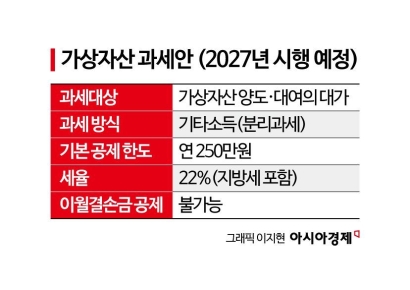 "Stocks Are Not Taxed, but Annual Crypto Gains Over 2.5 Million Won to Be Taxed Next Year... Investors Push Back"
- "Not Jealous of Winning the Lottery"... Entire Village Stunned as 200 Million Won Jackpot of Wild Ginseng Cluster Discovered at Jirisan
- "Even With a 90 Million Won Salary and Bonuses, It Doesn’t Feel Like Much"... A Latecomer Rookie Who Beat 70 to 1 Odds [Scientists Are Disappearing] ③
- "Rather Than Endure a 1.5 Million KRW Stipend, I'd Rather Earn 500 Million in the U.S." Top Talent from SNU and KAIST Are Leaving [Scientists Are Disappearing] ①
- "How Did an Employee Who Loved Samsung End Up Like This?"... Past Video of Samsung Electronics Union Chairman Resurfaces
Choi Young-sook, Director of the Environmental Forestry Resources Bureau of Gyeongbuk Province, said, “Expanding the distribution of eco-friendly vehicles such as hydrogen cars is an essential task for the era of popularizing zero-emission vehicles and achieving carbon neutrality by 2050,” adding, “We will do our best to provide administrative support for building hydrogen charging stations and to expand the distribution of various hydrogen vehicles such as hydrogen buses, trucks, and passenger cars.”
© The Asia Business Daily(www.asiae.co.kr). All rights reserved.







