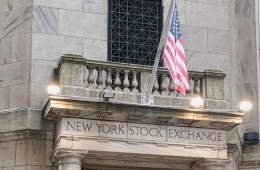
[New York Stock Market] Rollercoaster Continues with Decline on Last Day of May... Inflation Concerns Persist
![[Image source=Reuters Yonhap News]](http://www.asiae.co.kr/news/img_view.htm?img=2022052805224084148_1653682959.jpg)
[Asia Economy New York=Special Correspondent Joselgina] Major indices on the U.S. New York Stock Exchange closed lower on May 31 (local time), the last trading day of May, amid concerns over inflation and economic slowdown.
On the day at the New York Stock Exchange (NYSE), the Dow Jones Industrial Average closed at 32,990.12, down 222.84 points (0.67%) from the previous session. The large-cap S&P 500 index fell 26.09 points (0.63%) to 4,132.15, and the tech-heavy Nasdaq index dropped 49.74 points (0.41%) to 12,081.39.
The New York stock market showed a rollercoaster trend throughout May due to concerns about economic slowdown. However, buoyed by last week's rally, the Dow and S&P 500 ended the month with little change. The Nasdaq index fell about 2% during the month.
Among individual stocks, weakness in energy shares was notable. After an early rise, they plunged sharply. Schlumberger closed down 4.32% from the previous session. Chevron fell 2.03%, ExxonMobil dropped 1.63%, and Occidental Petroleum also declined 2.19%.
Major healthcare stocks also declined. UnitedHealth Group fell 2.04% from the previous session. While Tesla, Apple, and Microsoft saw slight declines, some tech stocks showed rallies. Amazon jumped 4.40%.
The market confirmed ongoing concerns about high inflation and the resulting economic slowdown. Investors particularly focused on the meeting between U.S. President Joe Biden and Federal Reserve (Fed) Chair Jerome Powell, inflation worries, and oil price movements.
With Eurozone inflation hitting record highs for seven consecutive months, inflation vigilance among New York stock investors continues. The previous day, Fed Governor Christopher Waller expressed a tightening stance, stating that the 0.5 percentage point rate hike would not be withdrawn until inflation approaches the 2% target.
In the New York bond market, the 10-year Treasury yield rose to 2.86%, reflecting inflation concerns.
President Biden and Chair Powell met at the White House for the first time in about six months to discuss the current state of the U.S. and global economies. Before the meeting, President Biden emphasized that inflation, which has reached its highest level in 40 years, is his top priority, stating, "My plan to address inflation starts from respecting the Fed's independence."
White House economic advisor Brian Deese briefed that President Biden emphasized during the subsequent talks that he would ensure the Fed has the space to address inflation issues. Local media are analyzing the meeting as a serious response to inflation concerns. President Biden’s approval ratings have recently plummeted to their lowest levels amid growing accountability debates over inflation ahead of the November midterm elections.
U.S. home price growth hit a record high. The seasonally adjusted S&P CoreLogic Case-Shiller National Home Price Index for March rose at an annual rate of 20.6%, the highest level since the data series began in 1987. The May Chicago Purchasing Managers' Index (PMI), reflecting manufacturing activity in the U.S. Midwest, came in at 60.3, exceeding market expectations of 55.9.
Market experts are cautious about how sustainable the recent rebound will be, warning of uncertainty. They point out that, as confirmed by recent earnings reports from companies like Walmart and Snap, high inflation is adversely affecting not only U.S. consumers but also corporate profits. Additionally, the prolonged Ukraine war and supply chain concerns due to China’s COVID-19 lockdown measures are exerting downward pressure on the stock market.
Sam Stovall, investment strategist at CFRA, said, "We still have doubts about the sustainability of this rally." Peter Boockvar, Chief Investment Officer at Bleakley Advisory Group, noted, "We have not yet escaped the major recession factors such as inflation, monetary tightening, and rising interest rates."
Hot Picks Today
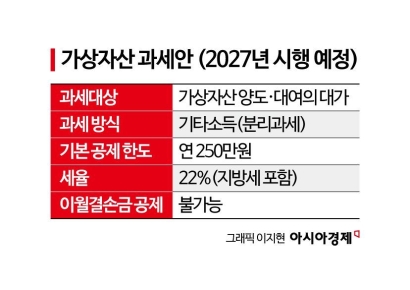 "Stocks Are Not Taxed, but Annual Crypto Gains Over 2.5 Million Won to Be Taxed Next Year... Investors Push Back"
- "Not Jealous of Winning the Lottery"... Entire Village Stunned as 200 Million Won Jackpot of Wild Ginseng Cluster Discovered at Jirisan
- "Jeong Yu-kyung Is a Neighbor"...Itaewon Standalone House with Record 23.2 Billion Won Appraisal Up for Auction [Real Estate AtoZ]
- "How Did an Employee Who Loved Samsung End Up Like This?"... Past Video of Samsung Electronics Union Chairman Resurfaces
- "Even With a 90 Million Won Salary and Bonuses, It Doesn’t Feel Like Much"... A Latecomer Rookie Who Beat 70 to 1 Odds [Scientists Are Disappearing] ③
Oil prices fell slightly on news that OPEC member countries would exclude Russia from the production agreement. On the day at the New York Mercantile Exchange, July West Texas Intermediate (WTI) crude oil closed at $114.67 per barrel, down 40 cents (0.35%) from the previous session. WTI front-month prices rose 9.53% over the month of May.
© The Asia Business Daily(www.asiae.co.kr). All rights reserved.