[Column] Is Increasing University Quotas the Way to Train Core Semiconductor Talent?
![[Column] Is Increasing University Quotas the Way to Train Core Semiconductor Talent?](http://www.asiae.co.kr/news/img_view.htm?img=2022042511593742607_1650855577.jpg)
[Asia Economy Reporter Kim Bong-su] Lee Jong-ho, Minister of Science and ICT and a global semiconductor expert, proposed increasing university enrollment as a solution to the semiconductor workforce shortage. On the 30th, he held a meeting with semiconductor industry representatives and presidents of the four major science and technology institutes, announcing measures such as increasing the undergraduate quota by 100 students within the science and technology institutes and training an additional 380 master's and doctoral students over the next five years.
The semiconductor industry's workforce shortage is already severe. Samsung Electronics recently transferred 300 employees from its display division to the semiconductor division due to this shortage. When SK Hynix offered high performance bonuses last year to recruit talent, a large number of employees left Samsung Electronics, intensifying fierce competition for talent among companies. To maintain the semiconductor industry's dominance amid global supply chain restructuring, the new Cold War dynamics, and the US-China technological hegemony competition, resolving this workforce shortage is a top priority.
It is commendable that Minister Lee made semiconductor workforce supply his first policy initiative after taking office. However, simply increasing the number of undergraduate and graduate students is not enough. More detailed, flexible, and precise policies that can respond to urgent field demands are necessary. Long-term talent development and retention strategies considering industry trends are also essential. In this regard, this measure feels somewhat crude and insensitive for a 'first work' by a global semiconductor expert like Minister Lee.
Active consideration is needed on how to supply skilled personnel as quickly as possible. Semiconductor research and production sites primarily require skilled talent who can be immediately deployed. At minimum, personnel who have conceptualized, designed, manufactured, tested, and revised semiconductors within university settings and gained field internship experience are needed. However, many students currently trained in universities, such as those in general electronic engineering departments, often only have superficial exposure to major subjects for about two years at best. Although there are semiconductor contract departments, four years of undergraduate education has its limits. As an alternative, academia and the semiconductor industry are calling for the establishment of integrated 5-6 year bachelor's and master's programs to supply well-trained professionals. Furthermore, to respond to the Fourth Industrial Revolution era, urgent consideration should be given to adjusting university quotas in the Seoul metropolitan area and overhauling curricula to align with industrial changes, thereby reforming the overall university education system.
Consideration for small and medium-sized enterprises (SMEs) is also necessary. Companies like Samsung Electronics and SK Hynix do not face significant problems because they receive a large number of applicants even when they need personnel. However, domestic equipment and fabless companies, which generally offer poorer working conditions, are at the bottom of the talent food chain and suffer from a vicious cycle of employees leaving as soon as they become useful. Additionally, efforts must be made to prevent the outflow of domestically trained talent and know-how to countries like China, while also attracting foreign students and overseas Koreans.
Hot Picks Today
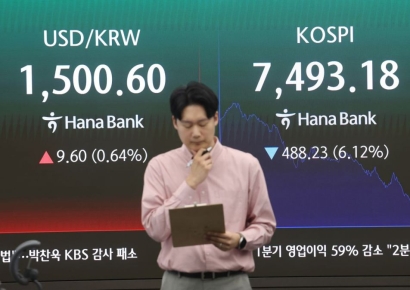 After Topping 8,000 Instead of Hitting 10,000... KOSPI Plunges—When Will It Rebound?
- "Samsung and Hynix Were Once for the Underachievers"... Hyundai Motor Employee's Lament
- "What? It Wasn't a Wristwatch?" This Brand's Stock Soared 15%, Then Plunged After Official Announcement
- [Breaking] Court Rules Against Samsung Electronics Union...1 Billion Won per Day Penalty for Exceeding Strike Scope
- "That? It's Already Stashed" Nightlife Scene Crosses the Line [ChwiYak Nation] ③
China, which lagged behind Western countries in science and technology, has risen rapidly due to its talent-focused policies from start to finish. A representative example is how, after the Tiananmen Square incident, it 'expelled' top university students abroad and later brought them back to serve as a foundation for rapid ICT technological advancement. Nowadays, China is aggressively recruiting overseas talent through programs like the Thousand Talents Plan to boost its semiconductor ambitions. Korea is reportedly an easy target. To realize a 'semiconductor super-gap powerhouse,' it is necessary to devise more detailed, robust, and systematic talent development and management policies beyond merely increasing university enrollment.
© The Asia Business Daily(www.asiae.co.kr). All rights reserved.